
How Governments Control Generic Drug Prices Without Direct Price Caps
When you pick up a prescription for generic sertraline or metformin, you probably don’t think about how the price got so low. It’s just $4 at your local pharmacy. But behind that simple price tag is a complex system of regulations, competition, and market forces - not government price-setting. Unlike brand-name drugs, which can cost hundreds or even thousands of dollars, generic drugs are priced by the market, not by bureaucrats. And that’s by design.
Why Generic Drugs Are Already Cheap
Generic drugs aren’t cheap because the government said so. They’re cheap because competition forces them to be. Once a brand-name drug’s patent expires, dozens of companies can start making the same medicine. No need to repeat expensive clinical trials. No need to pay for ads. Just prove the pill works the same way - and sell it for a fraction of the cost. According to the Congressional Budget Office, generics make up 90% of all prescriptions filled in the U.S., but only 23% of total drug spending. That’s because prices drop hard and fast after entry. The FDA found that within six months of a generic hitting the market, prices fall by about 75%. By the time two or more competitors are selling the same drug, prices often drop to 90% below the original brand price. This isn’t magic. It’s basic economics. When five companies are selling the same pill, they can’t charge $100. They fight for customers by lowering prices. The result? In markets with three or more generic manufacturers, prices stabilize at just 10-15% of the original brand price. No government cap needed.The Real Government Tool: Speeding Up Approval
The government doesn’t set prices for generics. It sets the rules that let competition happen faster. The Hatch-Waxman Act of 1984 created the Abbreviated New Drug Application (ANDA) pathway. Instead of spending $2.6 billion on new trials like brand-name companies, generic makers only need to prove their version is bioequivalent - meaning it delivers the same amount of medicine into the bloodstream at the same rate. That cuts development costs from billions to just $2-3 million. But approval times used to be slow. In 2017, it took an average of 18 months for the FDA to approve a generic drug. Today? It’s down to 10 months. How? The Generic Drug User Fee Amendments (GDUFA), reauthorized in 2022 with $750 million in industry fees, gave the FDA the money and tools to hire more reviewers and streamline the process. In 2023 alone, the FDA approved 1,083 generic drugs - a 35% increase since 2017. This isn’t just paperwork. It’s a direct line to lower prices. The faster a generic enters the market, the sooner prices drop. The FDA’s 2023 performance report shows they met their 10-month target for 92% of standard generics. For complex drugs - like inhalers or injectables - it’s harder, but even there, new submission templates have cut review times by 35%.Who’s Watching the Market? The FTC and Medicare
Competition doesn’t always work fairly. Sometimes, brand-name companies pay generic makers to delay their entry. These are called “pay-for-delay” deals. They’re illegal. And the Federal Trade Commission (FTC) is the cop on the beat. In 2023, the FTC challenged 37 of these agreements. Each one blocked cheaper generics from reaching the market. When those deals are stopped, consumers save an estimated $3.5 billion a year. The FTC also blocked the proposed Teva-Sandoz merger in January 2024 because it would have reduced competition for 13 generic drugs. That’s not price control. That’s market enforcement. Medicare doesn’t negotiate generic prices either. The Inflation Reduction Act of 2022 lets Medicare negotiate prices for 15 high-cost brand-name drugs by 2027 - but generics are explicitly excluded. Why? Because the Department of Health and Human Services says they already work. CMS documentation confirms that negotiation only applies to drugs with no generic or biosimilar alternatives. Even the rebates Medicare Part D plans get on generics are market-driven. On average, plans pay 15% below the manufacturer’s price and negotiate 28% rebates on preferred generics. That’s not a government rule. That’s private insurers using their buying power to squeeze better deals.
Why Don’t Governments Just Cap Generic Prices?
You might think: if we can cap prices for brand-name drugs, why not for generics too? Because it wouldn’t work - and it could backfire. A 2024 Stanford Medicine white paper estimated that extending price negotiation to generics would save only $1.2 billion annually. That’s tiny compared to the $9.5 billion in savings expected from negotiating just 15 brand-name drugs. The Congressional Budget Office found that applying international price references to generics would cut Medicare spending by just $2.1 billion - 0.4% of total generic spending. More importantly, price caps risk shortages. In 2024, the American Society of Health-System Pharmacists found that 18% of hospital pharmacists had experienced shortages of critical generic drugs. Why? Because manufacturers stopped making them. Prices had fallen so low they couldn’t cover production costs. When the government tries to set prices too low, companies walk away. And when they walk away, patients go without. The data shows it: 97% of generic price increases between 2019 and 2022 were below the inflation rate. For brand-name drugs? Only 46% were. That’s why regulators focus on keeping competition alive, not forcing prices down.What About Those Price Spikes?
You’ve probably heard stories. Someone pays $4 for a generic for years, then suddenly it’s $45. That’s real - but rare. The FDA’s 2023 Drug Shortage Report found that only 0.3% of generic drugs had extreme price spikes. These aren’t caused by government policy. They’re caused by supply chain issues - one manufacturer shuts down, no one else can make it fast enough, and the few remaining suppliers raise prices. The solution isn’t price controls. It’s more competition. That’s why the FDA created the Competitive Generic Therapy (CGT) designation in 2019. If a drug has too few generic makers, the FDA fast-tracks approval for new applicants. The goal? Prevent monopolies before they form. A 2024 KFF survey found that 76% of Medicare Part D users pay $10 or less for their generic prescriptions. And 82% of generic users say their meds are affordable. Compare that to just 41% of brand-name users. That’s the system working.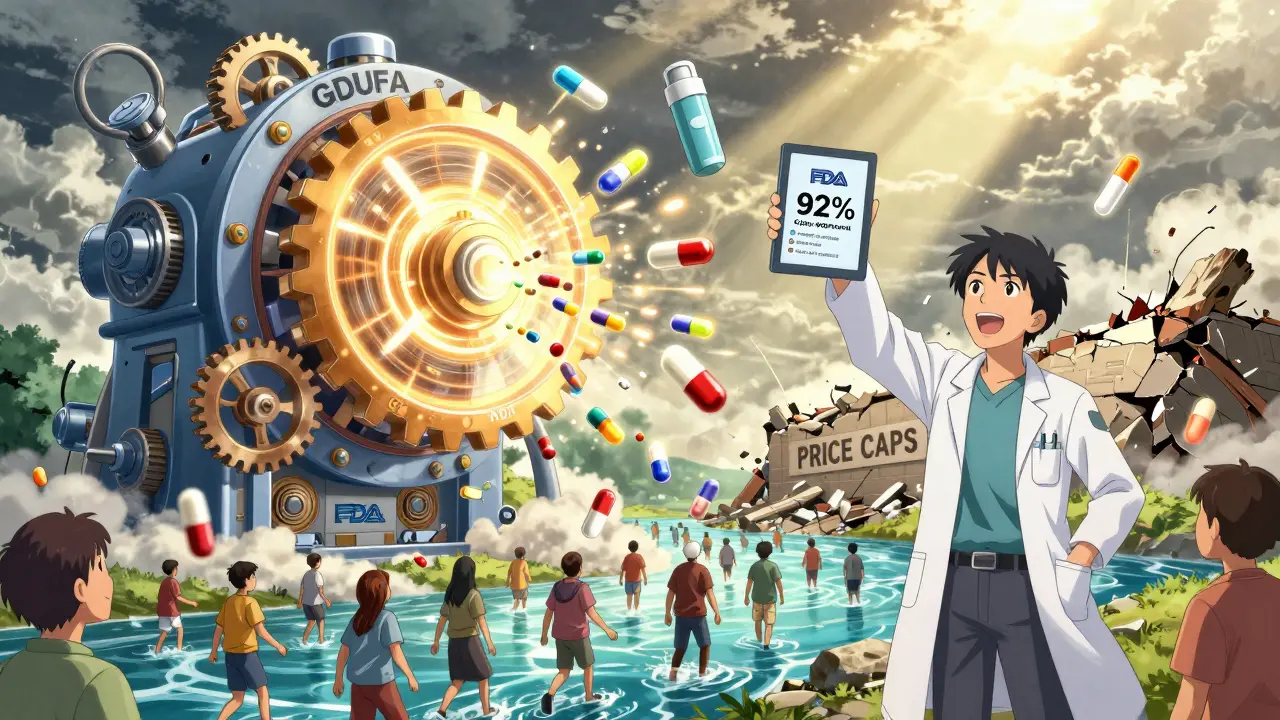
What’s Next? More Competition, Not More Control
The government’s next moves aren’t about setting prices. They’re about removing roadblocks. The FDA’s 2024-2026 Generic Drug Implementation Plan focuses on two things: complex generics and authorized generics. Complex generics - like patches, inhalers, or injectables - take longer to approve. The FDA is building new tools to speed them up. Authorized generics are brand-name drugs sold under a generic label by the original maker. Sometimes, brand companies use them to block competition. The FDA is now cracking down on that tactic. Meanwhile, CMS’s new Interoperability Rule, issued in April 2024, stops insurance plans from requiring unnecessary prior authorization for generics. That’s a hidden cost. Patients wait days for approval. Pharmacies lose money. The agency estimates this change will save beneficiaries $420 million a year. And the FTC? It’s still active. In 2024 alone, its Pharmaceutical Task Force brought 12 enforcement actions against companies trying to manipulate the generic market. They’ve recovered $1.2 billion in consumer refunds.What Works? What Doesn’t?
The data is clear: direct price controls on generic drugs don’t make sense. They’re unnecessary, ineffective, and risky. What works?- Fast approvals - GDUFA cuts approval times and gets more generics on shelves.
- Anti-monopoly enforcement - The FTC stops pay-for-delay deals and blocks mergers that reduce competition.
- Transparency - The FDA’s public dashboard lets anyone track application status in real time.
- Market incentives - Medicare Part D plans use rebates to drive down prices without government intervention.
- Price caps - They lead to shortages and drive manufacturers out of the market.
- International reference pricing - It saves pennies on generics but costs billions on brands.
- Expanding Medicare negotiation to generics - It’s not worth the cost or risk.
Bottom Line: Competition Is the Best Price Control
The U.S. doesn’t control generic drug prices. It creates the conditions for competition to do it for them. More manufacturers. Faster approvals. Fewer anti-competitive tricks. Better transparency. That’s the model. And it’s working. Generic drug prices keep falling. Patients keep paying less. And the system stays stable. If you want lower drug prices, don’t ask the government to set a cap. Ask them to keep the door open for more competitors. That’s how you get real, lasting savings - without the risk of running out of medicine altogether.Why aren’t generic drug prices regulated like brand-name drugs?
Generic drugs aren’t regulated like brand-name drugs because they already face intense market competition. Once a patent expires, dozens of manufacturers can produce the same drug, forcing prices down naturally. Government price controls aren’t needed - and could even cause shortages by making production unprofitable. The FDA and FTC focus on removing barriers to entry and stopping anti-competitive behavior instead.
Do generic drug prices ever go up?
Yes, but rarely - and usually for specific reasons. Most price increases are small and below inflation. Extreme spikes - like a drug jumping from $4 to $45 - happen in less than 0.3% of cases. These are typically caused by supply chain issues: one manufacturer shuts down, others can’t ramp up fast enough, and the few remaining suppliers raise prices. The FDA tracks these shortages and works to bring new manufacturers into the market.
Can the government force generic drug prices lower?
Technically, yes - but it’s not done because it doesn’t make sense. Studies show that forcing price controls on generics would save only $1-2 billion annually, while risking drug shortages. The same money and effort yield $9 billion+ in savings when focused on brand-name drugs. Policymakers have chosen to protect competition instead, which has proven far more effective and sustainable.
What’s the role of the FTC in generic drug pricing?
The FTC doesn’t set prices. It prevents companies from manipulating the market. It blocks "pay-for-delay" deals, where brand-name companies pay generic makers to delay launching cheaper versions. In 2023 alone, the FTC challenged 37 such agreements, which could save consumers $3.5 billion a year. It also blocked mergers that would reduce competition, like the Teva-Sandoz deal in 2024.
Why do some generic drugs disappear from shelves?
When prices fall too low, manufacturers can’t cover production costs - especially for low-volume or complex drugs. In 2024, 18% of hospital pharmacists reported shortages because manufacturers quit making certain generics. This isn’t a failure of the system - it’s a sign that prices are too low to sustain production. The solution isn’t price controls, but encouraging more manufacturers to enter the market through faster approvals and incentives.

About Author



It’s incredible how little most people understand about the real mechanics behind generic drug pricing. It’s not about government control-it’s about market dynamics, and honestly, that’s how it should be. When you have five companies fighting to sell the same pill, the price naturally collapses. No bureaucracy needed.
What’s impressive is how the FDA’s streamlined approval process has accelerated competition. Ten months instead of eighteen? That’s not just efficiency-it’s a public health win.
And the FTC stepping in on pay-for-delay deals? That’s the quiet hero of this whole system. They’re not setting prices-they’re making sure the game stays fair.
I’ve seen firsthand how a single manufacturer shutting down can spike prices overnight. That’s why the Competitive Generic Therapy designation matters. It’s preventative medicine for the market.
People panic when they hear about a $45 generic, but those are outliers. The system works 99.7% of the time. We should fix the broken pieces, not dismantle the whole machine.
Also, the fact that Medicare Part D plans negotiate 28% rebates on preferred generics? That’s private sector innovation doing what government can’t-without overreach.
Let’s keep rewarding competition, not punishing it with price caps that lead to shortages. We’ve got the model right. Just don’t break it.
Wow, this is so well-explained-I’ve been trying to understand this for years, and now it finally clicks.
I used to think the government was just being lazy by not capping prices, but now I see: it’s not laziness-it’s wisdom.
The fact that generics make up 90% of prescriptions but only 23% of spending? That’s a win-win-win: patients save, insurers save, and the system stays sustainable.
And the part about authorized generics being used to block competition? That’s sneaky-and I’m glad the FDA is cracking down.
Also, the $420 million saved by cutting prior authorization for generics? That’s huge for elderly folks on fixed incomes.
Can we make this into a pamphlet? Because everyone needs to read this. Not just policymakers-every patient, every pharmacist, every family member who’s ever stared at a $400 bill for a $4 pill.
Thank you for writing this. Truly.
P.S. I’m sharing this with my book club. We’re all on metformin. We need to know this.
Let’s be honest: this entire narrative is a neoliberal fairy tale dressed in FDA jargon.
Competition? Ha. You think the generic market is free? Try telling that to the 12 companies that own 80% of the active pharmaceutical ingredients, most of which are manufactured in China and India under opaque regulatory regimes.
The FDA doesn’t ‘streamline’ anything-it’s captured by industry fees, and GDUFA is just a backdoor subsidy for Big Pharma’s generic subsidiaries.
And don’t get me started on the FTC. They ‘blocked’ Teva-Sandoz? Please. That’s theater. The real consolidation happened years ago, quietly, through private equity buyouts and offshore shell entities.
Price caps? Maybe they’re imperfect-but so is letting a handful of oligarchs dictate whether diabetics get insulin or not.
This isn’t market efficiency. It’s market capture, sanitized with graphs and CBO reports.
True reform would nationalize API production. But that’s too radical for your think tank friends, isn’t it?
People keep saying competition lowers prices but they forget that in real life not everyone can start a drug company. You need millions in capital, regulatory expertise, and connections to get raw materials. So it is not really competition it is just a few big players who take turns lowering prices a little bit then raising them again when they can.
Also the FDA approves 1000 generics a year but how many of them are actually different from each other? Most are just copies of copies with tiny changes to avoid patent issues. This is not innovation it is just legal trickery.
And what about the people who live in rural areas? They get the same generic but sometimes it is from a different factory and it does not work the same. I know someone who had seizures after switching from one generic metformin to another. The FDA says they are bioequivalent but bioequivalent does not mean identical.
So yes the price is low but the risk is high. And no one talks about that.
Government should at least test batches before they go to market. But no that would cost money and the system prefers cheap over safe.
So now we have a system where people get their pills for $4 but sometimes they die because the pill was made in a factory with no quality control.
This is not a success story. This is a gamble.
This is the most reassuring thing I’ve read all week.
I’ve been worried about my dad’s blood pressure meds going up in price again. He’s on a fixed income and we’ve had to skip groceries before just to afford his prescriptions.
Knowing that the system is designed to keep these prices low-without heavy-handed control-gives me real peace of mind.
And the FTC’s work? That’s the kind of quiet, behind-the-scenes heroism we need more of.
I’m going to share this with my local senior center. They need to know they’re not being taken advantage of. This isn’t just policy-it’s dignity.
One point worth emphasizing: the 97% of generic price increases below inflation is a powerful data point. Most people assume all drug prices are rising uncontrollably. The reality is far more nuanced.
Generics are the unsung success story of American healthcare. They’re the reason we can treat chronic conditions like hypertension and diabetes at scale.
And yes, the occasional spike is terrifying-but it’s an exception, not the rule. The system’s resilience comes from its structure, not its regulation.
What’s missing from this conversation is the role of pharmacy benefit managers. They’re the hidden middlemen who sometimes drive up out-of-pocket costs even when the wholesale price is low.
That’s the next frontier. But for now, let’s protect what works.
I grew up in a country where the government sets drug prices. It’s stable-but you wait six months for a generic to arrive, and sometimes it’s out of stock for a year.
Here, the system is messy, fast, and sometimes chaotic-but it works.
That $4 sertraline? I got it last week. In my home country, it would’ve cost $12 and I’d have had to wait for a special import permit.
So yes, there are risks. But the trade-off is worth it.
The real threat isn’t lack of regulation-it’s political pressure to ‘fix’ something that isn’t broken.
Let the market compete. Let the FDA approve. Let the FTC enforce.
That’s the American way. And it’s working.
They say ‘competition lowers prices’ but they never tell you who owns the competition.
Who owns the FDA? Who owns the GDUFA fees? Who owns the 12 companies that make 90% of generics?
It’s the same conglomerates that make brand-name drugs.
They create the generic, wait for the patent to expire, then launch their own ‘authorized generic’ at the same time as the real competitors.
They flood the market with their own version, drive down prices, then buy out the small players.
Then they shut down production.
And when the price spikes? They say ‘supply chain issue.’
It’s not a market. It’s a controlled demolition.
The FTC? They’re just the PR arm of the same system.
They don’t stop monopolies-they manage them.
And you think this is freedom?
Wake up.
This isn’t capitalism. It’s corporate feudalism with a FDA badge.
My mom takes six generics. I used to stress every time the price went up a dollar. Now I just laugh. Because I know why it’s still cheap.
It’s not magic. It’s math.
More companies = lower prices.
Simple.
And the fact that the FDA has a public tracker? That’s next-level transparency.
So yeah, I’m not mad about the $45 spike last year. I’m mad that it took 18 months to get a new maker approved. That’s the real problem.
Fix that. Don’t cap prices.
Also-can we make a meme of this? Because I need to send it to my aunt who thinks ‘Medicare should negotiate everything.’
Competition drives prices down. Regulation ensures fair play. Both are necessary. Neither should be abandoned.
System works. Do not break.