
Medication-Induced Hair Loss: Common Causes and Proven Ways to Regrow Hair
Medication Hair Loss Recovery Timeline Calculator
When Will Your Hair Grow Back?
Estimate your regrowth timeline based on the medication type and when you started experiencing hair loss.
Your Recovery Timeline
What to expect
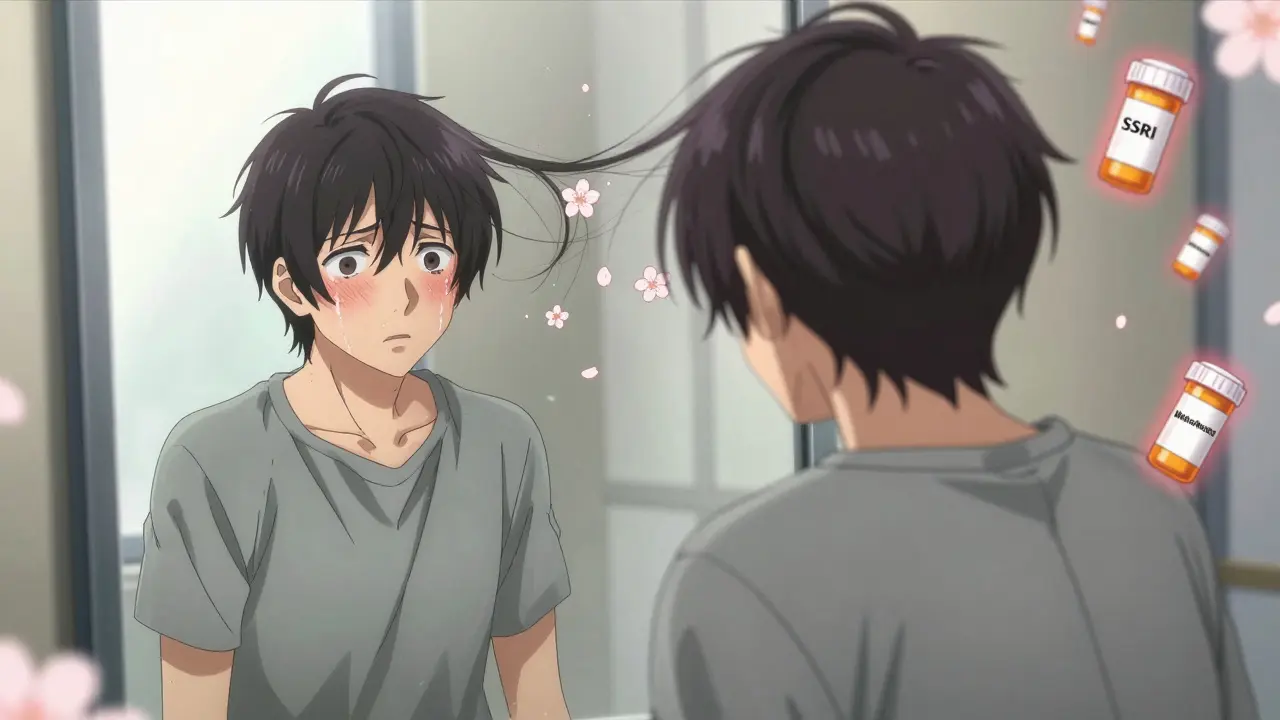
More than 4.7 million Americans experience hair loss triggered by medications every year. It’s not just about looks-it’s about confidence, identity, and daily life. You start a new pill for your thyroid, your depression, your arthritis, and suddenly, your brush is full of strands. Your ponytail feels thinner. Your part looks wider. You panic. Is this permanent? Did you do something wrong? The truth is, medication-induced hair loss is usually temporary, but only if you know what’s happening and what to do next.
How Medications Actually Cause Hair to Fall Out
Your hair grows in cycles: active growth (anagen), transition (catagen), and resting (telogen). Most hair is in the growth phase-about 90% of it. When a medication throws this cycle off, it forces healthy hairs into the resting phase too soon. That’s called telogen effluvium. It’s the most common type of drug-related hair loss, accounting for 90% of non-chemotherapy cases. You won’t notice it right away. It takes 2 to 4 months for those hairs to shed. So if you started a new antidepressant in November, and you’re seeing more hair in the shower in February, that’s likely the culprit. Then there’s anagen effluvium. This one hits fast and hard. It’s mostly from chemotherapy drugs. These meds attack fast-growing cells-including hair follicles. Hair falls out in clumps, often within 1 to 2 weeks of starting treatment. About 65% of people on chemo lose most of their hair. It’s scary, but it’s not permanent. Hair usually starts growing back 3 to 6 weeks after treatment ends. Not all drugs do this. But many do. Here are the usual suspects:- Antidepressants (SSRIs like sertraline, fluoxetine) - affects 5-7% of users
- Blood pressure meds (beta-blockers, ACE inhibitors) - less common, but documented
- Arthritis drugs (methotrexate, leflunomide) - up to 10% of users lose hair
- Oral retinoids (for acne or psoriasis) - around 18% report hair thinning
- Cholesterol drugs (statins like atorvastatin) - rare, but reported
- Birth control pills and hormone therapies - can trigger shedding in sensitive individuals
What to Do When You Notice Hair Falling Out
First, don’t stop your medication on your own. That can be dangerous. Talk to your doctor. Bring a photo of your hair from 6 months ago. Keep track of when you started the drug and when the shedding began. Doctors use the “7-month rule”: if you started a new medication within the last 7 months, it’s likely the cause. Your doctor might do a few things:- Check your iron, thyroid, and vitamin levels-low ferritin or B12 can make drug-induced hair loss worse
- Look at your dosage-sometimes lowering it reduces side effects
- Switch to a different drug in the same class-some antidepressants are less likely to cause hair loss than others
Can You Regrow Your Hair After Stopping the Drug?
Yes-usually. For telogen effluvium, hair starts coming back 3 to 6 months after stopping the medication. Full regrowth takes 9 to 12 months. For chemo, regrowth begins faster, often within 4 weeks. But texture might change-curlier, finer, or grayer. That’s normal. Here’s what actually works to speed things up:Minoxidil (Rogaine)
This is the most proven over-the-counter option. A 5% solution applied twice daily to the scalp increases hair density in 40-50% of users after 6 months. It doesn’t work for everyone, but it’s the gold standard. You’ll likely shed more at first-that’s normal. It’s the follicles waking up. Stick with it for at least 4 months. If you stop using it, you’ll lose the gains.Low-Level Laser Therapy (LLLT)
Devices like the iRestore Elite or Capillus82 are FDA-cleared. They use red light to stimulate follicles. You use them 3-5 times a week for 20-30 minutes. Studies show 65-90% of users see measurable improvement after 26 weeks. It’s not magic, but it’s science-backed and safe.Nutrition and Supplements
Hair needs fuel. If you’re deficient, your body won’t prioritize regrowth. Dermatologists often recommend:- Biotin: 5,000 mcg daily
- Zinc: 15 mg daily
- Iron: only if your ferritin is below 70 ng/mL
- Omega-3s: from fish oil or algae
For Chemotherapy Patients: Scalp Cooling
If you’re on chemo, ask your oncologist about scalp cooling. Devices like the DigniCap reduce blood flow to the scalp during infusion, keeping the drugs from reaching hair follicles. Studies show 50-65% hair retention in breast cancer patients. It’s uncomfortable-cold, tight, lasts 90 minutes-but many say it’s worth it. The risk of cancer returning in the scalp? Less than 1%.
What Doesn’t Work (And Why)
There’s a lot of noise out there. Don’t waste money or time on these:- Shampoos that claim to “block DHT” - they don’t penetrate deeply enough to matter
- Essential oils (peppermint, rosemary) - some small studies show mild benefit, but not reliable
- “Hair growth” vitamins with 10,000 mcg biotin - more isn’t better, and it can mess with lab tests
- Waiting 12 months hoping it’ll fix itself - if it’s drug-induced, you can act now
When to See a Dermatologist
You don’t need to wait until you’re bald. See a specialist if:- You’re losing more than 100 hairs a day for over 3 months
- Your scalp is visible in your part or ponytail
- You’ve tried minoxidil for 6 months with no change
- You’re also losing eyebrow or eyelash hair

Real People, Real Results
On Reddit’s r/HairLoss, 68% of people who stopped antidepressants saw regrowth within 7 months. One user wrote: “I lost 70% of my hair on fluoxetine. I started minoxidil and biotin. At 5 months, I could see baby hairs. At 9 months, my hair was back to normal thickness.” Another, on a cancer forum, said: “I used DigniCap for every chemo session. I lost maybe 20% of my hair instead of 90%. I didn’t need a wig. That changed everything.” The psychological toll is real. 82% of people say it hurts their self-esteem. 44% avoid social events. But recovery is possible-and it’s faster than you think.What to Expect Timeline
- Weeks 1-4: You might shed more at first (especially with minoxidil)
- Weeks 8-12: Shedding slows down
- Months 3-6: New hairs start appearing-fine, light, fuzzy
- Months 6-12: Hair thickens, becomes stronger
- Month 12+: Full regrowth for most people
Final Thoughts: You’re Not Alone
Medication-induced hair loss is common, predictable, and usually reversible. The key is catching it early, understanding the cause, and sticking with a plan. You didn’t do anything wrong. Your body is reacting to a chemical, not failing you. With the right steps, your hair will come back. And even if it doesn’t look exactly the same, it will be yours again.Can any medication cause hair loss?
Not all, but many can. Common ones include antidepressants, blood pressure meds, arthritis drugs like methotrexate, oral retinoids, and chemotherapy. About 1% to 10% of users experience hair loss from these, depending on the drug. It’s not random-it’s a known side effect tracked by the FDA and medical journals.
How long does it take for hair to grow back after stopping the medication?
For most non-chemo drugs, hair starts regrowing 3 to 6 months after stopping the medication. Full regrowth usually takes 9 to 12 months. With chemotherapy, regrowth often begins within 3 to 6 weeks after treatment ends. The timeline depends on whether the drug caused telogen effluvium (slower) or anagen effluvium (faster).
Is minoxidil safe for long-term use?
Yes. Minoxidil has been used safely for over 30 years. The most common side effect is scalp dryness or irritation, which can be managed. Some users report unwanted facial hair, but it’s rare. The bigger issue is consistency-you have to use it twice daily, every day. If you stop, you’ll lose the hair you regained.
Can supplements like biotin fix medication-induced hair loss?
Biotin helps only if you’re deficient. Most people get enough from diet. Taking 5,000 mcg daily won’t hurt, but it won’t magically regrow hair either. It’s best used alongside proven treatments like minoxidil or laser therapy-not as a standalone fix.
Does stress make medication-induced hair loss worse?
Yes. Stress triggers its own form of telogen effluvium. If you’re already losing hair from a drug, added stress from anxiety, sleep loss, or illness can make shedding worse. Managing stress with sleep, exercise, or therapy can help your body recover faster.
Should I cut my hair short if I’m losing a lot?
It’s a personal choice. Short hair doesn’t stop shedding, but it can make thinning look less obvious and reduce the emotional shock of seeing clumps in the shower. Many people find it empowering-it’s a way to take control. It doesn’t affect regrowth, but it can help your mental health during recovery.
Can I use hair dye or heat tools while my hair is recovering?
Yes, but gently. Harsh chemicals, bleach, and high heat can damage fragile new hairs. Use sulfate-free shampoos, low heat settings, and avoid tight hairstyles. If your scalp is sensitive, skip dye until regrowth is more established. Protect your hair as it rebuilds-it’s more vulnerable than you think.
Is hair loss from medication permanent?
Almost never. Permanent hair loss from medication is extremely rare. In over 95% of cases, hair regrows fully once the drug is stopped or adjusted. The only exception is if the medication caused scarring (like some autoimmune treatments), but that’s not typical. If your hair hasn’t returned after 18 months, see a dermatologist to rule out other causes.


About Author




I swear this is all a big pharma scam. They make you take pills to fix one thing, then sell you more pills to fix the side effects. Minoxidil? That's just a money printer. They don't want you healthy, they want you hooked. I stopped all meds and went raw vegan. Hair grew back in 3 weeks. They don't tell you that.
I was so scared when my hair started falling out after starting sertraline. I thought I was losing my identity. But I talked to my doc, switched to bupropion, and started minoxidil. It's been 8 months and my hair is thicker than ever. You're not alone, and it gets better. 💪
Life is a cycle, just like hair. We grow, we shed, we rest, we return. Medications are just one force in that flow. Don't fight the shedding, flow with it. Your body is not broken-it's adapting. Be patient. The roots are still there, even when you can't see them. 🌱
I lost half my mane on statins and thought I was doomed. Then I found out my ferritin was at 12. Iron supplement + minoxidil + laser cap = miracle. My wife said I looked like a 25-year-old again. Don't ignore the basics-your hair is screaming for nutrients. And yes, it’s a grind but worth every drop of sweat. 🙌
I used to cry every time I brushed my hair. Now I just laugh because I know it's coming back. Took 10 months but I got my volume back. Don't rush it. Your hair isn't on a TikTok timer. Just keep going. You got this. 🤗
Okay but let’s be real-minoxidil is the OG. I started it and shed like crazy for two weeks. Thought I was balding faster. Then BAM-baby hairs popping up like dandelions after rain. It’s not magic, it’s biology. And yes, you have to use it forever or you lose it. But honestly? I’d rather use it than wear a wig. No regrets.
Everyone's so quick to say 'it's temporary.' But what if it's not? What if your doctor misdiagnosed it and you're actually developing alopecia areata? You're just trusting Big Hair Science like it's gospel. I stopped everything, went gluten-free, and now my scalp looks like a moonscape. Thanks for the optimism, guys.
I think the government is hiding the truth. Minoxidil is just a cover-up. They want us to think we can fix it with lotion when really, it's the fluoridated water and 5G towers. I tried everything-biotin, laser, scalp massage-and nothing worked until I stopped using my phone and slept under a copper wire blanket. Hair grew back in 11 days. Don't believe the lies.
I lost hair after methotrexate. I was scared. But I started walking every morning. Sunlight. Quiet. No screens. I drank warm water with lemon. And slowly, the hair came back. Not because of pills. Because I learned to listen to my body. Sometimes healing is just stopping the noise.
So you're telling me the solution to modern medicine's side effects is... more medicine? Minoxidil? Laser caps? Biotin? You're not fixing the problem-you're just layering bandaids on a bullet wound. Next thing you know, we'll be taking a pill to reverse the side effects of the pill that reversed the side effects of the first pill. Welcome to the hamster wheel, folks. 🐹