
CPAP Machines: Types, Mask Fitting, and Adherence Strategies
Over 22 million Americans have sleep apnea, and most don’t even know it. If you’re struggling to sleep through the night-snoring loudly, waking up gasping, or feeling exhausted even after 8 hours-it might not just be bad sleep habits. It could be obstructive sleep apnea (OSA), a condition where your airway collapses while you sleep, cutting off oxygen. The most effective, non-surgical treatment? A CPAP machine. But here’s the catch: it only works if you actually use it. And that’s where most people fall short.
What Kind of CPAP Machine Do You Need?
Not all CPAP machines are the same. There are four main types, each built for different needs. The classic CPAP delivers one fixed pressure all night. It’s simple, reliable, and costs between $500 and $1,000. Models like the ResMed AirSense 10 and Philips DreamStation are common. But if your breathing changes during the night-maybe you snore more when you roll onto your back, or you’re a light sleeper who tenses up-this fixed pressure can feel too stiff. That’s where APAP (Auto-Adjusting Positive Airway Pressure) comes in. These machines scan your breathing in real time and adjust pressure automatically, usually between 4 and 20 cm H2O. They’re pricier-$1,700 to $3,000-but they adapt to your body. A 2021 study in Sleep Medicine Reviews found users stuck with APAP 15% longer than those on standard CPAP. Why? Because the pressure feels more natural. Dr. Raj Dasgupta from USC says APAP is now the first choice for many new patients, even though it costs 35% more. Then there’s BiPAP (Bilevel). This one gives you two pressures: higher when you inhale, lower when you exhale. It’s not for everyone, but if you need high pressure (over 15 cm H2O) or have other lung issues like COPD, it can be life-changing. Cleveland Clinic reports 25% higher comfort ratings among BiPAP users who couldn’t tolerate CPAP. The downside? It costs $600 to $1,600 and often needs a separate titration study, adding $300-$500 to the total. For mild sleep apnea (AHI under 15), some people turn to EPAP devices. These are small, disposable nasal valves that cost $50-$150 per month. They don’t use electricity or a mask-just resistance during exhale. But studies show they only work about 45% of the time for moderate-to-severe cases. CPAP still beats them 85% to 45%. And if you travel a lot? The ResMed AirMini is a game-changer. Weighing less than a pound, it fits in your palm. But it doesn’t have a built-in humidifier-you’ll need to buy a $80 add-on. It’s also louder (52 dBA vs. 30 dBA on standard machines), which some users hate. Still, 68% of reviewers praise its portability.Mask Fit: The #1 Reason People Quit
Here’s the hard truth: 20-30% of people stop using CPAP because of mask discomfort-not because the machine doesn’t work. It’s not about pressure. It’s about fit. There are four main mask types:- Nasal pillows: Tiny silicone cushions that sit at the nostrils. Best for side sleepers. Only 32% of users choose them, but those who do report the lowest leak rates. User u/NasalPillowFan on Reddit said switching from a nasal mask to AirFit P10 dropped leaks from 15 L/min to 3 L/min.
- Nasal masks: Cover the nose only. Used by 45% of people. Good balance of comfort and effectiveness.
- Full-face masks: Cover nose and mouth. For mouth breathers or those with nasal congestion. Only 18% use them, but they cause 35% more skin irritation than nasal pillows.
- Hybrid/oral masks: Rare. Used by 5% for severe nasal blockage.
Why You’re Not Using It (And How to Start)
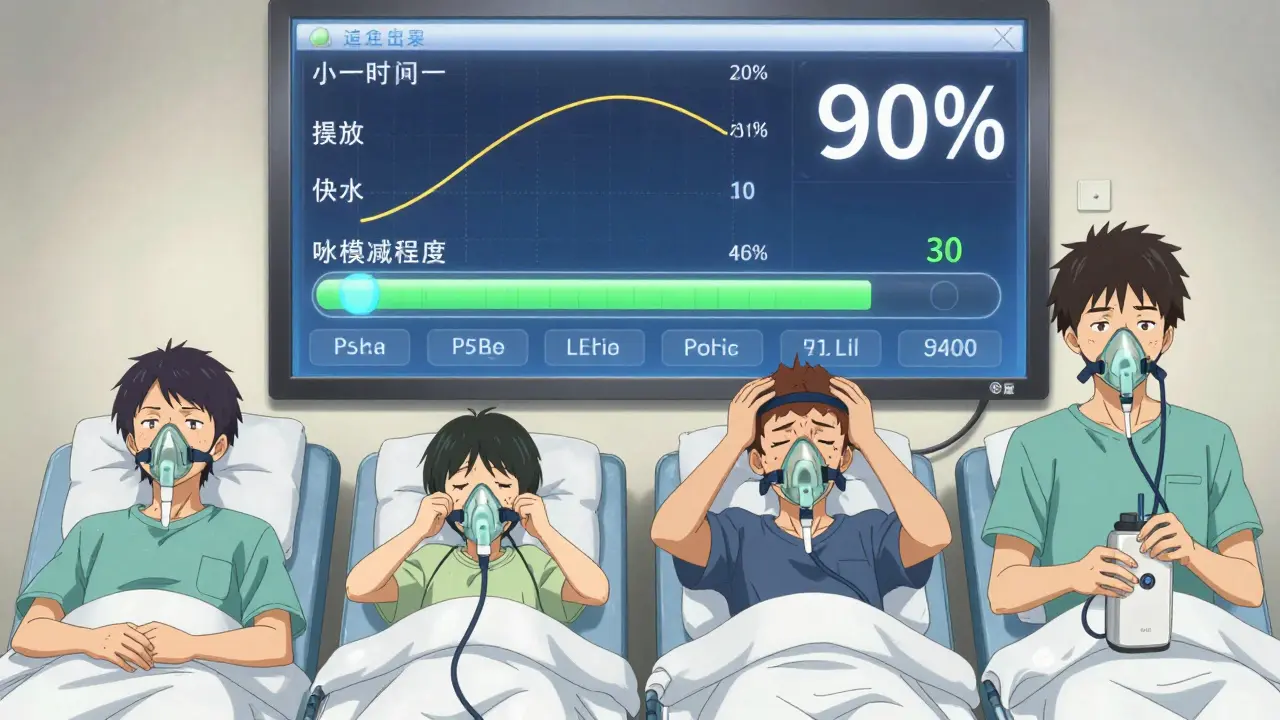
Only 46% of people use their CPAP machine 4+ hours a night, 70% of nights. That’s the threshold for therapeutic benefit. Yet, 42% quit within three months because of discomfort, dryness, or frustration. The good news? Adherence can be fixed. Here’s how:- Use the ramp feature. This slowly increases pressure over 5-45 minutes. 75% of users turn it on. If you’re struggling to fall asleep, this is your first tool.
- Turn on heated humidification. Dry mouth and nose are the #1 complaint. Humidifiers set between 86°F and 95°F cut dryness complaints by 50%. Most modern machines include this. If yours doesn’t, upgrade.
- Start with daytime practice. Wear the mask for 5-10 minutes while watching TV. Do it 3 times a day for a week. This builds tolerance. A 2022 study found users who did this adjusted faster than those who jumped straight into nighttime use.
- Track your data. Machines now record usage, leak rates, and AHI. ResMed’s myAir app gives personalized coaching. Users who check their data weekly have 27% higher adherence.
- Use heated tubing. Cold air in the tube causes condensation and discomfort. Heated tubing improves adherence by 26%.
What’s New in 2026?
The CPAP world has changed fast. In 2023, ResMed launched the AirSense 11 AutoSet with AI that predicts apnea events before they happen-cutting AHI by 22%. Philips’ DreamStation 3 operates at just 25 dBA-quieter than a whisper. These aren’t marketing gimmicks. They’re real improvements. Insurance rules have tightened too. Starting in 2024, Medicare and private insurers require devices to track usage. To keep coverage, you must use your machine 4+ hours a night, 90% of the days. If you don’t, they’ll stop paying. The market is shifting. Younger users-ages 18 to 45-are now the fastest-growing group. Social media, workplace wellness programs, and reduced stigma are driving this. Trucking companies like Schneider Logistics now require CPAP therapy for drivers with AHI over 20. Result? 32% fewer accidents.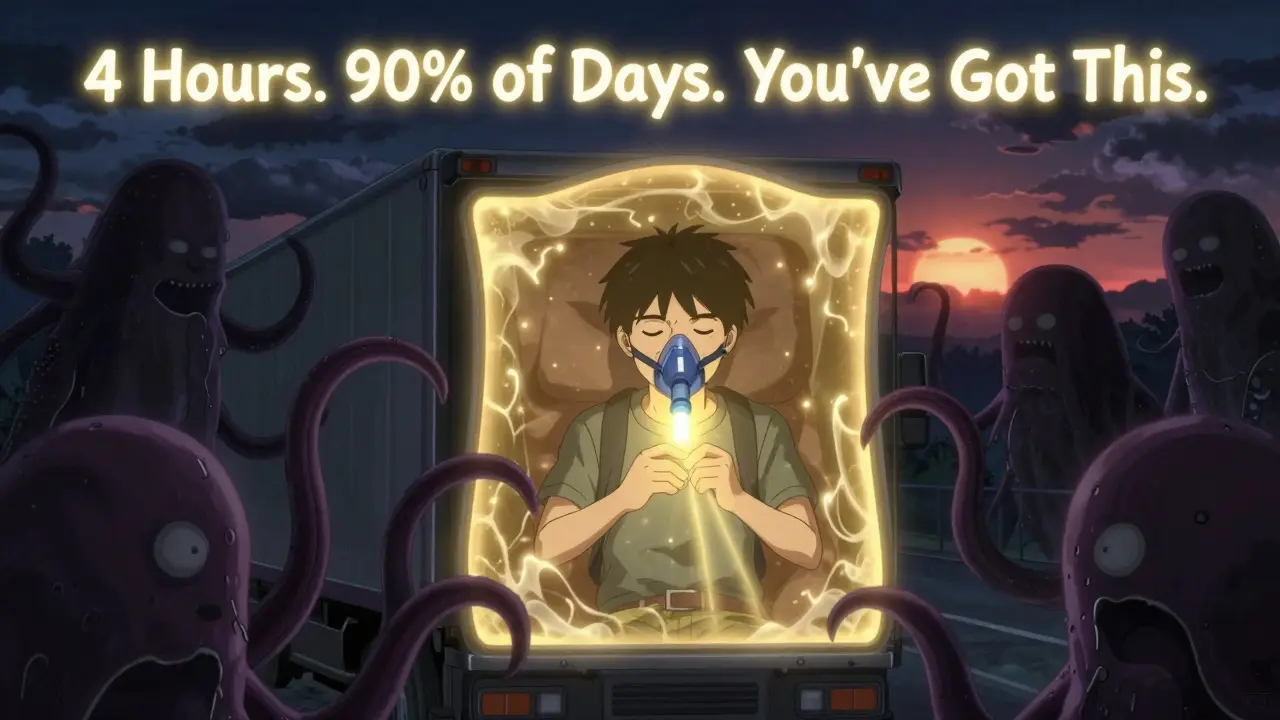
Real Talk: Is CPAP Worth It?
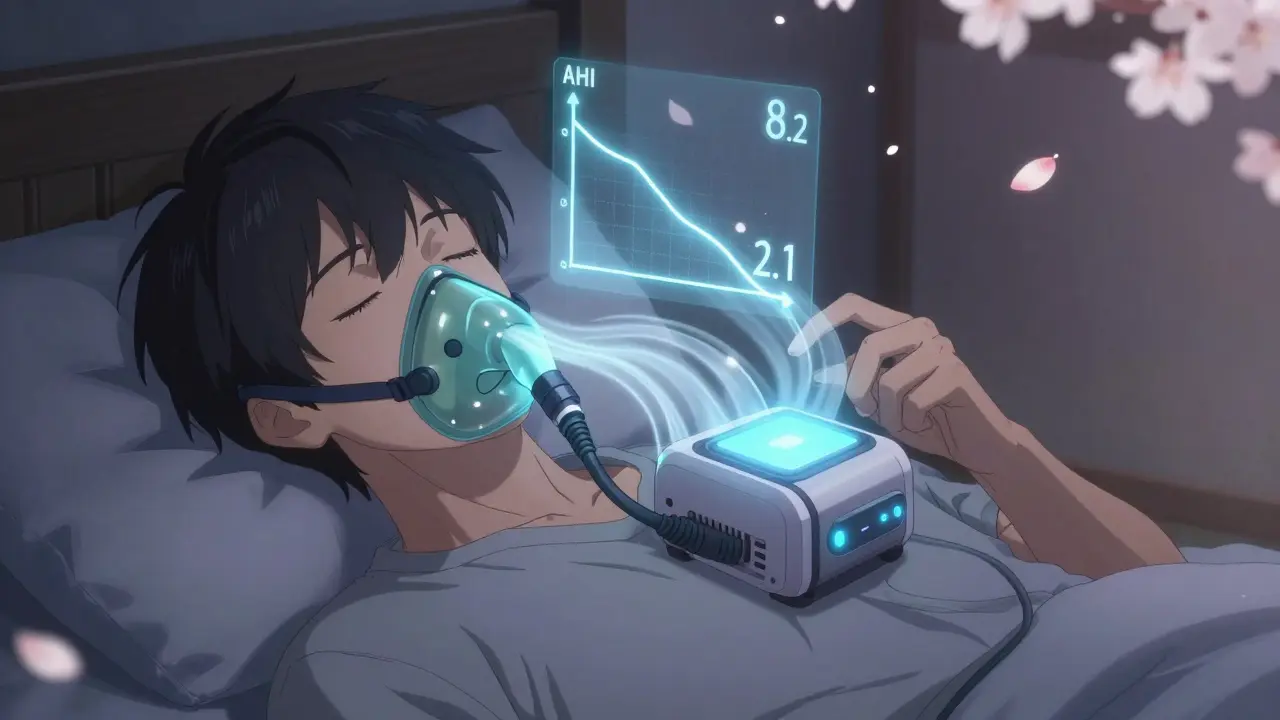
Yes. But only if you stick with it. Studies show consistent users cut their risk of heart attack and stroke by 20-30%. Daytime energy improves. Blood pressure drops. Mood lifts. One user on Reddit, u/SleepyEngineer, switched from CPAP to APAP and saw his AHI drop from 8.2 to 2.1-normal levels. It’s not magic. It’s work. You’ll need to find the right machine, the right mask, and the right routine. But if you’re serious about sleep, this is the most powerful tool you’ve got.What to Do Next
If you’ve been told you need CPAP:- Get a sleep study done. Don’t skip this. Your AHI number determines your treatment path.
- Ask your doctor about APAP as first-line therapy. It’s not just for “complicated” cases anymore.
- Request a mask fitting session. Don’t take the first one they hand you. Try at least two types.
- Use your machine’s data tracking. Review it weekly with your sleep specialist.
- Don’t quit after 2 weeks. The first month is the hardest. Stick with it. Your body will thank you.
Can I buy a CPAP machine without a prescription?
No. In the U.S., all CPAP, APAP, and BiPAP machines require a prescription. This is enforced by the FDA and insurance providers. You can buy EPAP devices (like Provent or NasalAid) without a prescription, but they’re only effective for mild sleep apnea. If you suspect moderate or severe OSA, get a sleep study first.
How do I know if my CPAP mask fits properly?
A well-fitted mask should feel snug but not painful. You shouldn’t need to tighten it so much that it leaves red marks. Check your machine’s leak rate-aim for under 24 L/min. If it’s higher, try adjusting the headgear straps or switching mask types. Nasal pillows often seal better than full-face masks for side sleepers. If leaks persist, visit a sleep clinic for a professional fitting.
Why does my CPAP machine feel so loud?
Older machines were noisy, but modern ones like the Philips DreamStation 3 operate at 25 dBA-quieter than a library. If yours sounds loud, check the air filter. A clogged filter forces the motor to work harder. Also, ensure your tubing isn’t kinked and your mask isn’t leaking. Leaks create rushing air noise. If you’re using a travel CPAP like the AirMini, it’s naturally louder (52 dBA) because of its small size.
Is it true that CPAP can help with high blood pressure?
Yes. Multiple studies, including one in the Journal of Clinical Sleep Medicine (2022), show that consistent CPAP use lowers nighttime blood pressure and improves daytime control. Sleep apnea causes repeated oxygen drops, which stress your heart and raise blood pressure. By preventing those drops, CPAP reduces strain on your cardiovascular system. The effect is strongest in people who use it 4+ hours a night.
What if I can’t afford a CPAP machine?
Most insurance plans cover 80% of the cost after you meet your deductible. Medicare and Medicaid also cover CPAP devices. If you’re uninsured, some clinics offer payment plans or loaner machines. ResMed and Philips have patient assistance programs. Also, consider renting first-many providers offer 30-day rentals to test comfort before buying. Don’t skip treatment because of cost. Untreated sleep apnea leads to far higher medical bills down the road.

About Author



It’s fascinating how something as simple as a machine can rewrite your entire relationship with sleep. I used to think CPAP was a last resort-something for old folks who couldn’t breathe. Then I saw my dad use it after his diagnosis. He went from snoring like a chainsaw to sleeping like a baby. The mask felt ridiculous at first, but the silence after? Pure gold.
It’s not about the tech. It’s about the quiet. The absence of gasping. The return of rest. We treat sleep like a luxury, but it’s the foundation of everything-memory, mood, metabolism. If you’re not using your CPAP, you’re not just losing sleep-you’re losing years.
And honestly? The mask discomfort? That’s ego talking. You wouldn’t refuse insulin because the needle stings. This is the same. Your body’s asking for help. Answer it.
So let me get this straight... you're telling me the cure for sleep apnea is a $2,000 air blower that makes you feel like you're being suffocated by a vacuum cleaner? And the solution is to just... wear it? Like a face-hugger from Alien? I mean, sure, if you're into nighttime torture with a side of condensation and red cheek marks.
Meanwhile, I'm over here just sleeping on my side with a pillow between my legs. No machine. No mask. Just me, my neck, and a very confused dog. Who's really winning here?
While I appreciate the thoroughness of this piece, I must emphasize that the underlying assumption-that CPAP is the gold standard-is dangerously oversimplified. The medical-industrial complex has long promoted this device as the panacea, yet long-term compliance rates remain abysmal. This is not a failure of patient discipline; it is a failure of design, of empathy, of systemic thinking.
There are alternative modalities-positional therapy, myofunctional exercises, even oral appliances-that have demonstrated efficacy in peer-reviewed literature. Yet they are rarely discussed, rarely covered by insurance, rarely even mentioned by sleep specialists. Why? Because CPAP generates recurring revenue. The mask, the tubing, the filters-all consumables. The machine itself? A one-time sale. The real profit is in the perpetuation of dependence.
It is not irrational to question whether the cure is more profitable than the disease.
Okay, I’m gonna say this gently, because I know how hard this is: if you’re thinking about quitting CPAP because of the mask, you’re not alone. I did it too. First mask? Full face. Looked like I was preparing for a sci-fi movie. Second? Nasal. Kept falling off. Third? AirFit P10 nasal pillows. Total game-changer.
It’s not about being ‘weak’ or ‘lazy.’ It’s about finding the version of this that works for YOUR face, YOUR sleep style, YOUR life. I’m a side sleeper. I move like a drunk octopus. The pillows? They don’t care. They just work.
And the ramp? YES. I set it to 45 minutes. I fall asleep to the sound of it slowly waking up. It’s weirdly soothing. Like a robot lullaby.
You’re not broken. You just haven’t found your fit yet. Keep trying.
Bro, I went from ‘I’m gonna die on this thing’ to ‘I forgot I was even wearing it’ in like 3 weeks. First week? I looked like a cyborg who got into a fight with a pillow. Red marks everywhere. Woke up with a dry throat like I’d been screaming into a wind tunnel.
But then I switched to heated tubing + humidifier at 85°. And I started wearing the mask while watching Netflix. Just 10 minutes a day. Felt dumb. Felt weird. Felt like a nerd.
Then one night-I woke up. No gasping. No snoring. No partner elbowing me. Just… peace.
It’s not sexy. It’s not Instagrammable. But it’s the closest thing to magic I’ve ever used. My brain feels like it’s been un-fogged. My blood pressure? Down. My mood? Less ragey. My wife? Hugs me now. No joke.
Don’t quit. Just tweak. Keep tweaking. You got this.
OMG YES. I just got my new AirSense 11 last month and I’m obsessed. The AI thing? It’s like it knows when I’m about to stop breathing before I do. It’s creepy… in a good way. 😍
And the app? I check it every morning like it’s my horoscope. ‘AHI: 1.8’ - YES. I’m basically a sleep ninja now. 🥷
Also-mask tip: if you’re a side sleeper, get the P10. I used to leak like a sieve. Now? Zero leaks. I even slept on my stomach once. No joke. My husband thought I was possessed.
Don’t give up. It’s worth it. You’re not weird for needing this. You’re a warrior. 💪💤
You know who really benefits from CPAP? The companies that make them. And the doctors who get paid every time you replace a mask. And the insurance companies who get to say they ‘covered’ you while charging you $500 a year for filters.
Meanwhile, the real cause? Obesity. Poor diet. Sedentary lifestyle. But nobody wants to talk about that. Too messy. Too real. So we slap a machine on your face and call it a solution.
And now they’re tracking your usage? So you can be punished if you don’t use it? That’s not healthcare. That’s surveillance with a side of oxygen.
Wake up. This isn’t medicine. It’s a business model.
I tried CPAP. Didn't work. Gave up. Went back to sleeping 4 hours. Still alive. Still functional. Still snoring. Still happy. Why make life harder?
Let me be clear: sleep apnea is not a lifestyle choice. It is a physiological crisis. And CPAP is not a luxury-it is a lifeline.
Every hour of consistent use is an hour your heart is not being strained. Every night you wear the mask is a night your brain is not being starved of oxygen. This is not about comfort. This is about survival.
I have seen patients who refused CPAP for years-then suffered strokes, heart attacks, or sudden cardiac death. All preventable. All avoidable.
If you’re struggling, it’s okay. But don’t stop. Adapt. Experiment. Ask for help. There are people who want to see you thrive-not just survive.
You are worth the effort. Your future self is already thanking you.