

Best Online Drug Databases for Patients: Your Guide to Safe Medication Info
Drug Database Selection Tool
Which drug database do you need? Select the scenario that best describes your goal to find the right professional resource.
Verify FDA Label
"I need the exact dosage instructions and official legal warnings for my medication."
Breastfeeding Safety
"I am nursing and need to know if a specific drug or herb is safe for my baby."
Mechanisms & Interactions
"I want to understand how this drug works chemically and its deep interactions."
Best for: The absolute "source of truth" for FDA-approved drug labels. Use this to verify dosages and read legal warnings.
Quick Facts:
- Readability: Technical (High School+)
- Updates: Daily
- Cost: Free
Best for: Evidence-based safety ratings for drugs and herbs during lactation. Specifically designed for parents.
Quick Facts:
- Readability: Accessible (Middle School)
- Updates: Weekly
- Cost: Free
Best for: Power users who want to understand pharmacological mechanisms, chemical structures, and comprehensive interaction data.
Quick Facts:
- Readability: Moderate/Technical
- Updates: Quarterly
- Cost: Free (Basic Tier)
Ever looked at the tiny print on a medication bottle and felt completely lost? You aren't alone. A 2022 study in the Annals of Internal Medicine found that 68% of patients feel confused by their medication instructions. When you're staring at a pill and wondering if it'll react with your morning coffee or if it's safe during pregnancy, a quick Google search often leads to ad-heavy sites that prioritize clicks over clinical accuracy. To truly protect your health, you need evidence-based tools that aren't funded by the pharmaceutical companies selling the drugs.
The gold standard for this is government-backed, non-profit resources. These platforms provide online drug databases that act as a direct bridge between the FDA's rigorous approval process and your medicine cabinet. Whether you need to verify a dose, check a breastfeeding safety rating, or dive deep into how a chemical affects your body, there is a specific tool for the job. The trick is knowing which one to use and how to translate the technical jargon into something you can actually use.
The Heavy Hitters: Which Database Should You Use?
Not all drug databases are created equal. Some are designed for doctors who speak "medicalese," while others are built for people who just want to know if a drug is safe. Depending on your goal, you'll want to navigate toward different platforms.
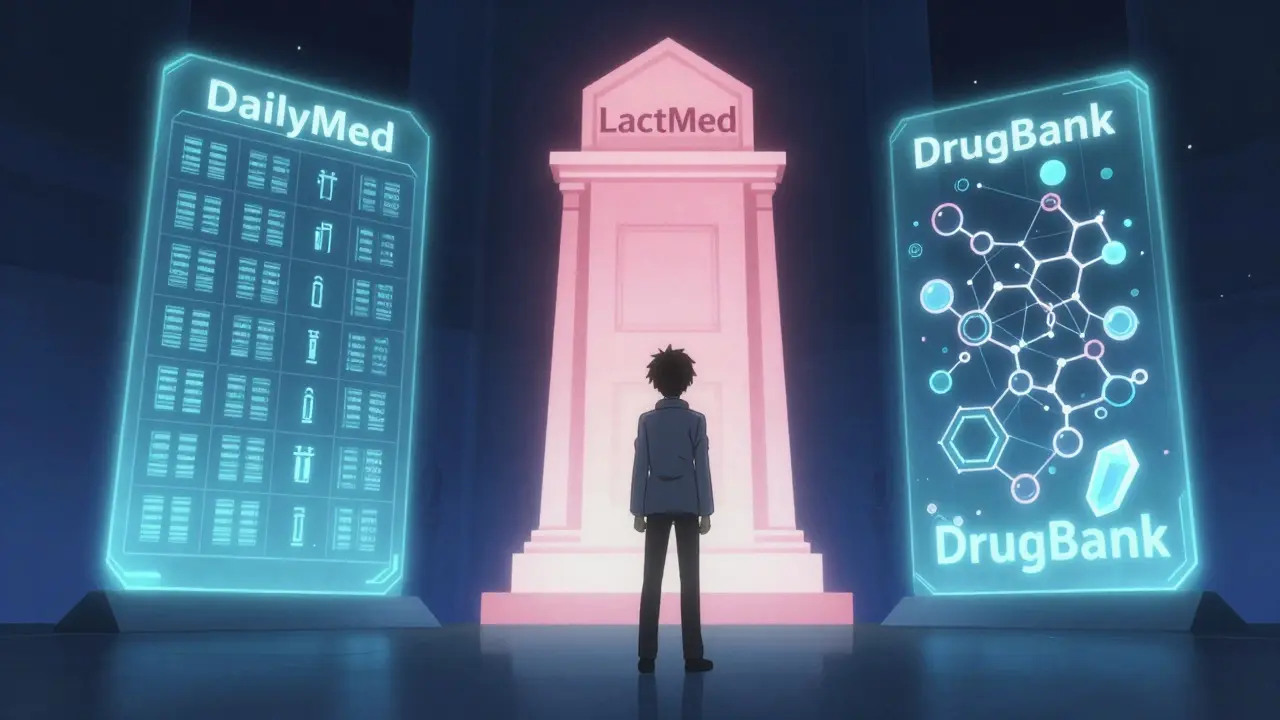
First, there's DailyMed is the official repository for FDA-approved drug labels, providing the exact text that accompanies a medication's approval. If you need to know the precise dosage instructions or the legal warnings associated with a drug, this is the source of truth. Because it's run by the National Library of Medicine (NLM), it's free and updated daily. However, be warned: it can feel like reading a legal contract. Many labels are written at a 12th-grade reading level or higher, which can be intimidating.
For those navigating motherhood, LactMed is a specialized database focusing on the safety of drugs and herbs during breastfeeding. It's a lifesaver for parents who need evidence-based answers without the guesswork. Unlike general sites, LactMed uses peer-reviewed monographs and offers summaries written at an 8th-grade reading level, making it one of the most accessible tools in the NLM ecosystem.
Then we have DrugBank, which is more like a pharmacological encyclopedia. DrugBank provides detailed data on drug mechanisms, chemical structures, and complex interactions. While it's heavily used by researchers, its public tier is incredible for "power users" who want to understand exactly how a drug works in the body. It covers over 13,000 entries, including thousands of FDA-approved meds, though its interface can feel a bit like a research paper.
| Feature | DailyMed | LactMed | DrugBank (Free) |
|---|---|---|---|
| Primary Use | Official FDA Labeling | Breastfeeding Safety | Pharmacological Depth |
| Readability | Technical (High School+) | Accessible (Middle School) | Moderate/Technical |
| Update Frequency | Daily | Weekly | Quarterly |
| Cost | Free | Free | Free (Basic Tier) |
Navigating the "Technical Wall": How to Actually Use These Tools
Walking into these databases can be overwhelming. You might see terms like "SPL" (Structured Product Labeling) or "Boxed Warnings" and feel like you need a medical degree to proceed. The key is to focus on the "Highlights" section. In June 2023, DailyMed launched Patient-Friendly Highlights for new drugs, which cuts through the noise to give you the most critical safety info in plain language.
If you're using DrugBank, don't get bogged down in the chemical structure diagrams unless you're a chemistry buff. Instead, head straight for the "Drug Interactions" section. While it can be complex, it offers a level of depth that commercial sites usually skip. Just remember that a listed interaction doesn't always mean you can't take the drug; it just means your doctor needs to be aware of it to manage your dose.
A pro tip for those struggling with the heavy terminology: pair these databases with MedlinePlus. This NLM portal acts as a translator, linking official DailyMed labels to summaries written in a way that's easy for anyone to understand, and it's available in over 40 languages.
Avoiding the Common Pitfalls of Self-Research
Having access to the same data as a doctor is empowering, but it can also be dangerous. There is a documented risk of "self-interpretation errors." For instance, some patients see a "Boxed Warning" on DailyMed and immediately stop taking a life-saving medication, thinking the drug is too dangerous. In reality, a boxed warning is often a signal for doctors to monitor a specific side effect, not a command for the patient to quit the drug.
Another trap is the "Search Rabbit Hole." Commercial sites like WebMD or Drugs.com are great for quick searches, but they often rely on ad-revenue, which can subtly influence which "related conditions" are pushed in your face. While they are more user-friendly, their accuracy is often lower than the sterile, unedited labels found on DailyMed. The best approach is a "trust but verify" method: find a general answer on a commercial site, then verify the dosage and warnings on DailyMed.
Integrating Drug Data Into Your Safety Plan
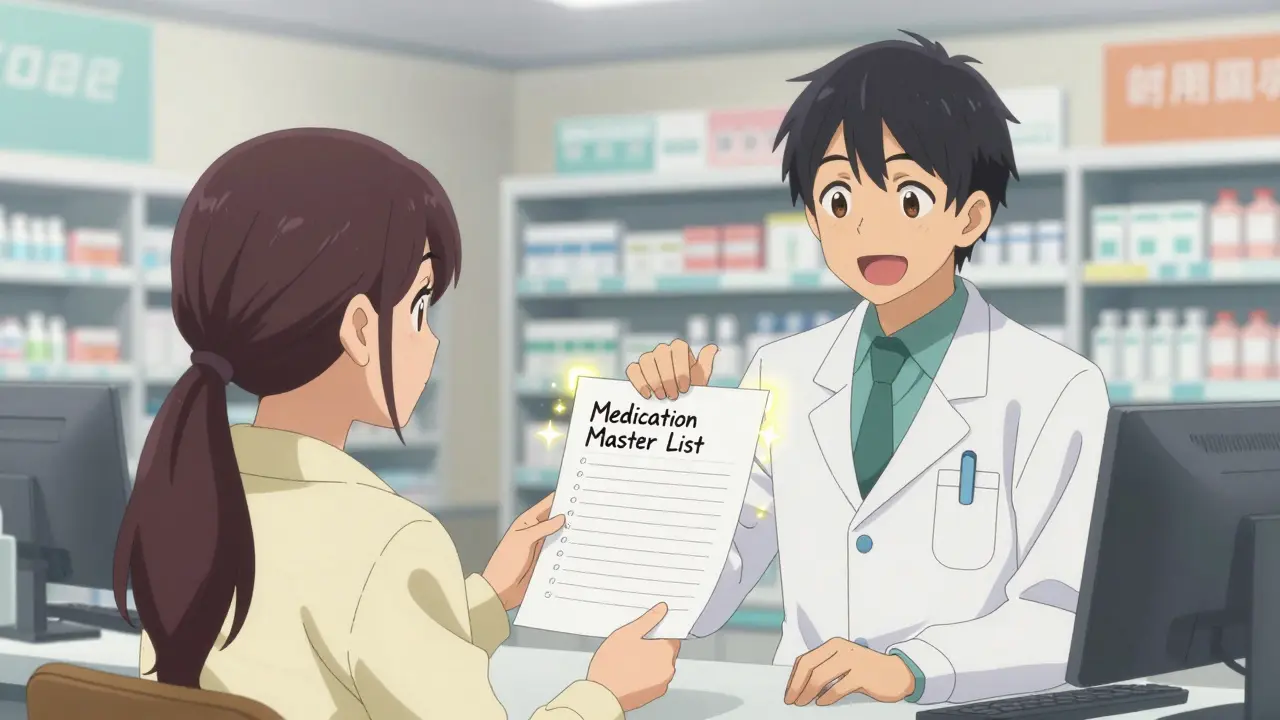
Using these resources shouldn't be a one-time event. To make them part of a real safety plan, you should create a "Medication Master List." Instead of relying on the pharmacy bottle, use DrugBank or DailyMed to note the drug's purpose, the most common side effect, and any critical interactions (like avoiding grapefruit juice or alcohol).
- Verify the Label: Use DailyMed to ensure your prescribed dose matches the official FDA guidelines.
- Check Specific Needs: If you are nursing, cross-reference every new supplement or med with LactMed.
- Map Interactions: Use DrugBank to identify any potential clashes between your prescriptions and over-the-counter vitamins.
- Consult Your Pro: Take your findings to your pharmacist. Instead of saying "I read online this is bad," say "I saw a boxed warning on DailyMed about X; does that apply to my specific health history?"
This shift from passive consumption to active verification turns a confusing pharmacy trip into a collaborative healthcare conversation.
The Future of Patient Medication Access
We are moving toward a world where you won't have to hunt for this information manually. The FDA is currently working on integrating DailyMed directly with Apple Health Records, meaning your official drug labels could soon live right inside your health app. There is also a push toward AI-powered summarization. NLM has been piloting tools that use LLMs to turn complex labels into 8th-grade reading level summaries in real-time.
While AI is exciting, it's also a risk. Some patients are already confusing AI-generated drug advice with official sources. Remember: an AI can hallucinate a dosage, but the DailyMed PDF is a legal document. Always prioritize the official source over a chatbot's summary when your health is on the line.
Is DailyMed more accurate than sites like WebMD?
Yes, in terms of clinical accuracy. DailyMed provides the verbatim FDA-approved labels, meaning there is no editing or interpretation that could introduce errors. Commercial sites often simplify language for readability, which can sometimes omit critical nuances or introduce inaccuracies to cater to a broader audience.
Do I need to pay for DrugBank?
Not for basic use. DrugBank offers a free public tier that allows patients to search for drug mechanisms and interactions. Professional subscriptions are only necessary for researchers or clinicians who need advanced clinical trial data and unlimited API access.
What should I do if I find a warning on DailyMed that scares me?
Do not stop taking your medication immediately. Many warnings are listed to ensure the highest level of safety but may not apply to your specific medical profile. Write down the specific warning and call your prescribing doctor or pharmacist to ask how it relates to your health history.
How often is the information on these sites updated?
DailyMed is updated daily as new submissions come in from the FDA. LactMed updates its peer-reviewed monographs weekly. DrugBank generally implements updates on a quarterly basis after cross-referencing with agencies like the FDA, EMA, and Health Canada.
Is LactMed safe for all breastfeeding concerns?
LactMed is considered the gold standard for breastfeeding medication safety, endorsed by the AMA. However, it should be used as a tool for discussion with your healthcare provider, not as a final medical prescription, as your personal health and the baby's health vary.

About Author





DailyMed is definitely the way to go for accuracy. I've seen a lot of people get spooked by the fine print, but if you just look for those patient-friendly highlights, it takes the edge off. It's always better to have the raw data than some summarized version that might miss a key interaction. Just remember to bring a printed copy to your doctor so you're both looking at the same thing during the appointment.
medlineplus is a great bridge for anyone struggling with the jargon
Oh sure, because trusting a government website is exactly what we need more of in this day and age. I'm sure the FDA is just incredibly transparent and never hides anything for the sake of the industry. Truly revolutionary advice here.
LactMed is an absolute game changer for new moms! I remember the sheer panic of trying to find if a simple headache pill was okay while breastfeeding and ending up on a forum where people were just guessing. This is the kind of evidence-based power we need to push! We should be demanding that every pharmacy provides a direct link to these databases on the receipt. Why are we still letting commercial sites dominate the search results when the gold standard is free? Get your lists together and start verifying everything!
i use drugbank all the time for checking interactions with vitamins and supplements since a lot of doctors dont actually know the chemistry behind the supplements we take it saves so much time and helps the convo with the pharmacist go way faster
The notion that a simple "Medication Master List" solves the systemic failure of medical communication is quaint, yet utterly naive. One does not simply "map interactions" using a quarterly updated database and expect a foolproof health outcome. It is a tedious exercise in false empowerment for those who enjoy pretending they are their own physician.
Most people can't even read a label. These tools are wasted on the average patient.
Why we only talk about US FDA? 🇮🇳 India has amazing pharmacy systems and we do not need these Western tools to tell us how to take medicine! Our doctors are world class and we know our meds better than some website 💊💪
It is wonderful to see resources that are accessible in so many languages. In many cultures, the family takes a collective role in managing health, and having a tool like MedlinePlus allows the whole family to understand the treatment plan together, which brings a lot of peace and clarity to the home.