Rhodiola and Antidepressants: Understanding the Risks of Serotonin Syndrome
Rhodiola Interaction Risk Checker
Select the medication you are currently taking to see the potential interaction risk with Rhodiola rosea.
Mixing natural supplements with prescription meds often seems like a great way to "boost" results, but when it comes to Rhodiola is an adaptogenic herb used to fight fatigue and stress and antidepressants, the combination can be dangerous. The core problem isn't just a mild side effect; it's the risk of a life-threatening condition called serotonin syndrome. If you're taking a prescription for depression or anxiety, adding this "natural" energy booster could push your brain's serotonin levels into a toxic range.
The Hidden Danger: How Rhodiola Affects Your Brain
To understand why this happens, we have to look at how Rhodiola rosea works. It isn't just a mild stimulant. This herb contains active compounds like salidroside and rosavin that act as monoamine oxidase inhibitors (or MAOIs). In simple terms, MAOIs stop your body from breaking down serotonin, norepinephrine, and dopamine.
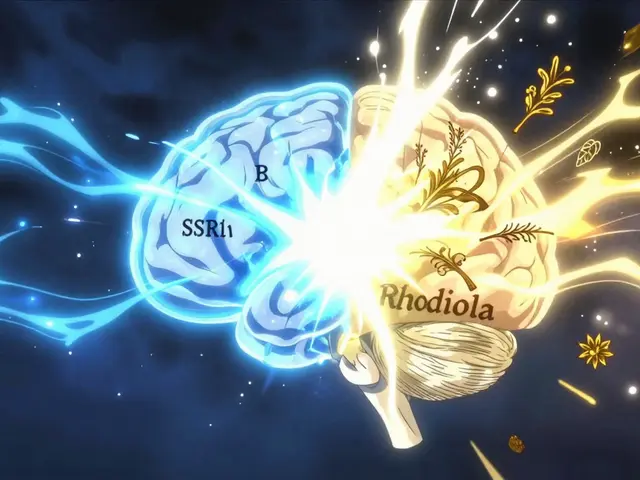
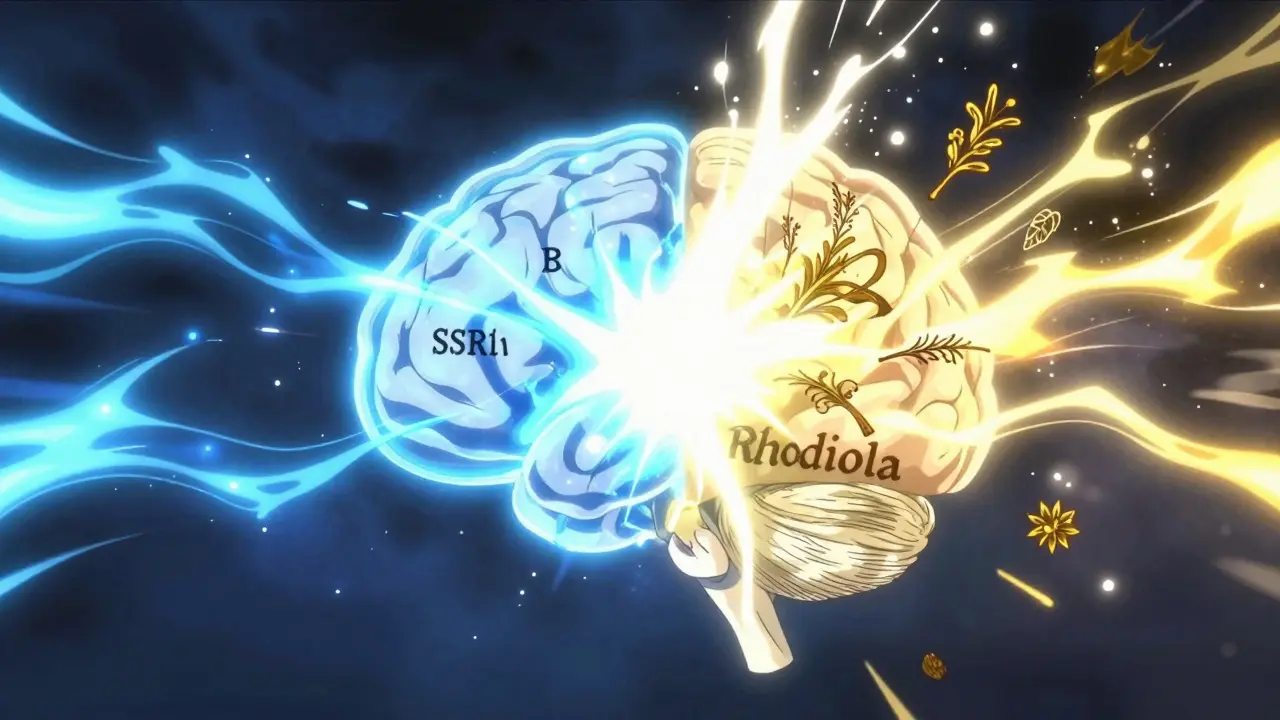
When you take an antidepressant-specifically SSRIs (Selective Serotonin Reuptake Inhibitors) or SNRIs (Serotonin-Norepinephrine Reuptake Inhibitors)-your medication is already working to keep more serotonin in your synapses. If you add Rhodiola to the mix, you're effectively attacking the problem from two sides: the medication stops the reuptake, and the herb stops the breakdown. This creates a "bottleneck" effect where serotonin builds up far beyond what your brain can handle.
What Exactly is Serotonin Syndrome?
Serotonin syndrome occurs when there's too much serotonin in the central nervous system. It's not just "feeling jittery." It can escalate quickly from mild discomfort to a medical emergency. A 2014 case report detailed a 69-year-old woman who developed this syndrome after taking Rhodiola alongside paroxetine (Paxil). Her experience is a stark warning that these interactions are real and potent.
If you or someone you know is combining these substances, watch for these red flags:
- Mental Status Changes: Sudden confusion, agitation, or extreme restlessness.
- Autonomic Instability: A rapid heart rate (sometimes exceeding 130 bpm), shivering, or heavy sweating.
- Neuromuscular Issues: Muscle rigidity, tremors, or "clonus" (involuntary muscle contractions).
- Hyperthermia: A high fever that doesn't respond to standard fever reducers.
Comparing Rhodiola and Common Antidepressants
Depending on which medication you are taking, the risk level may vary, but the underlying mechanism remains the same. The University of Toronto's Drug Interaction Database suggests that combining a typical dose of Rhodiola (360-600 mg) with escitalopram (Lexapro) can increase the risk of serotonin accumulation by over seven times.
| Feature | Rhodiola rosea | SSRI Antidepressants |
|---|---|---|
| Primary Action | Inhibits breakdown (MAO-A/COMT) | Blocks reabsorption (Reuptake) |
| Serotonin Level | Increases availability | Increases synaptic concentration |
| Regulatory Status | Dietary Supplement | FDA-Approved Prescription |
| Combined Risk | High risk of Serotonin Syndrome | |
Beyond Serotonin: Other Interaction Risks
While serotonin is the biggest worry, Rhodiola doesn't stop there. Because it affects multiple systems in the body, it can interfere with other common medications. For instance, if you're managing high blood pressure with a drug like lisinopril, Rhodiola might drop your blood pressure further, potentially causing dizziness or fainting.
People with diabetes should also be careful. Data shows that Rhodiola can lower blood glucose by 15-20 mg/dL. If you're already on insulin or sulfonylureas, this could lead to hypoglycemia (dangerously low blood sugar). Furthermore, if you have an autoimmune condition like rheumatoid arthritis, be aware that Rhodiola can stimulate the immune system, which might actually make your symptoms worse by increasing the production of certain inflammatory markers like TNF-alpha.
Why "Natural" Doesn't Mean "Safe"
There is a common misconception that because a supplement is plant-based, it can't interact with pharmaceuticals. In reality, the lack of regulation for supplements makes them *more* unpredictable. A 2018 USP verification study found that only about 13% of Rhodiola supplements actually contained the amount of salidroside claimed on the label. This means you never truly know the dosage you're getting, making the risk of an interaction a gamble.
Many people turn to Rhodiola because they've had bad experiences with prescription drugs. For example, some users report that standalone Rhodiola helps with burnout without the dry mouth associated with Zoloft. While monotherapy (taking only the herb) is generally better tolerated, the danger arises the moment you combine it with a prescription. The American Psychiatric Association classifies this combination as "Category X," which simply means: avoid it entirely.
Safe Practices and Next Steps
If you are currently taking both, do not stop your prescription medication abruptly, as this can cause withdrawal symptoms. Instead, contact your doctor immediately to discuss a safe tapering plan. For those looking to switch from an SSRI to a natural alternative, medical professionals often recommend a "washout period." Depending on the drug, this could be as long as two weeks to ensure the medication is completely out of your system before starting Rhodiola.
When talking to your healthcare provider, be specific about the brand and dosage of the supplement you're using. Since quality varies so much between manufacturers, your doctor needs to know exactly what you're putting in your body to accurately assess the risk.
Can I take a low dose of Rhodiola with my antidepressant?
While some niche reviews suggest very low doses (under 200 mg) might be okay, this is not supported by clinical trials. Most major medical associations, including the American Psychiatric Association, advise against any combination due to the unpredictable nature of supplement potency and the severe risk of serotonin syndrome.
How soon after stopping an SSRI can I start taking Rhodiola?
It depends on the specific medication. Some antidepressants stay in your system much longer than others. For example, paroxetine has a significant presence in the body, and some integrative medicine services recommend a full 14-day washout period. Always consult your doctor to determine the safe window for your specific medication.
Is Rhodiola safer than St. John's Wort?
Some people believe Rhodiola is safer because it's less commonly discussed in interaction warnings, but both can lead to serotonin syndrome when combined with antidepressants. Rhodiola's MAOI activity creates a similar risk profile to St. John's Wort in terms of serotonergic toxicity.
What are the first signs that I'm having a bad reaction?
The earliest signs are usually a combination of mental agitation, shivering, and a rapid heart rate. If you notice sudden confusion or muscle twitching after starting a supplement while on antidepressants, seek emergency medical care immediately.
Does Rhodiola interact with blood pressure meds?
Yes. Rhodiola can lower systolic blood pressure by 8-12 mmHg. If you are taking antihypertensives like lisinopril, this additive effect could lead to hypotension, making you feel lightheaded or faint.


About Author