
How to Read Children’s Medicine Labels by Age and Weight for Safe Dosing
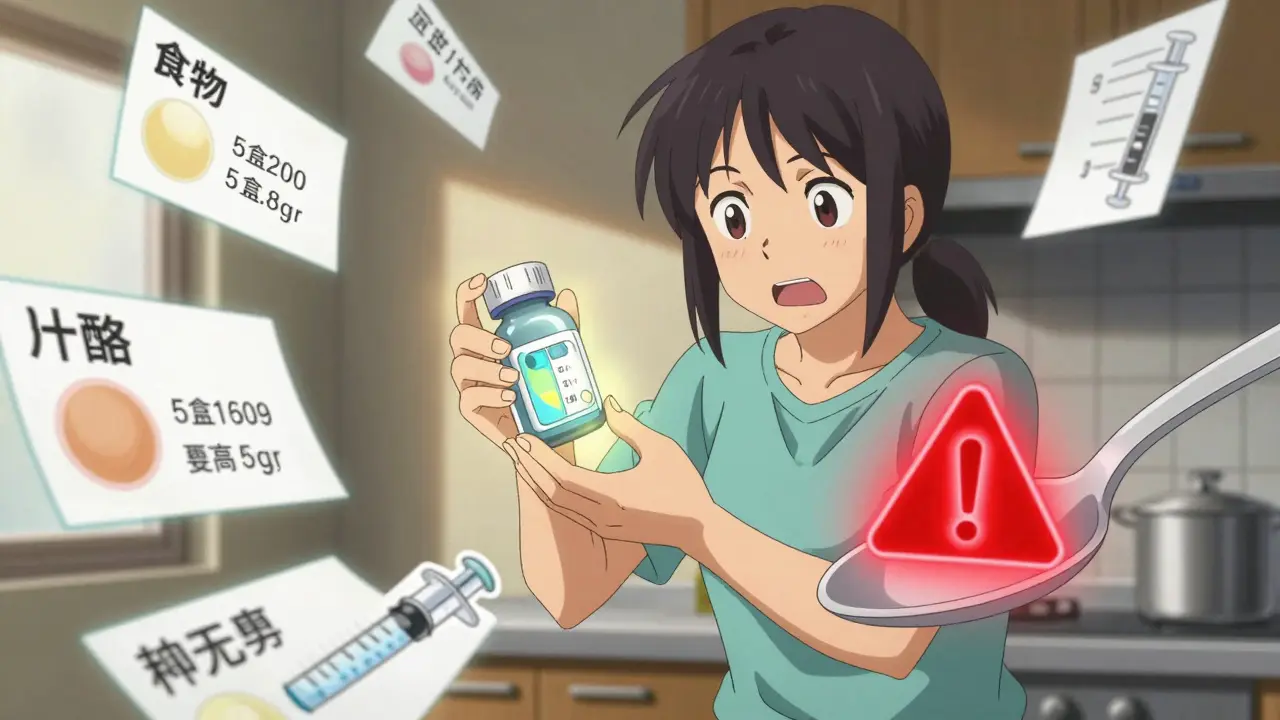
Every year, over 150,000 children in the U.S. end up in the emergency room because of medication errors. Most of these mistakes happen not because parents are careless, but because they don’t know how to read the label correctly. The difference between giving the right dose and a dangerous one often comes down to one thing: weight, not age.
Why Weight Matters More Than Age
You’ve probably seen it on the box: "For children 2-3 years: 5 mL." But what if your 3-year-old weighs 35 pounds, and your friend’s 3-year-old weighs 18 pounds? They’re the same age, but their bodies process medicine differently. That’s why experts say weight is the gold standard for dosing.A 2023 study in JAMA Pediatrics found that parents who used both age and weight instructions reduced dosing errors by over 50%. Why? Because a child’s metabolism, liver function, and kidney clearance all depend on body mass-not how many birthdays they’ve had. A 22-pound toddler needs less medicine than a 40-pound child, even if they’re both 4 years old.
The FDA and the American Academy of Pediatrics (AAP) have been pushing for weight-based dosing since 2002. Today, most labels include both, but many parents still default to age. That’s risky. In fact, 43% of parents misread the concentration on the bottle-like confusing infant drops (500 mg/1.25 mL) with children’s liquid (160 mg/5 mL). One mistake, and you could be giving three times the right dose.
The Seven Parts of a Children’s Medicine Label
Every OTC children’s medicine has a "Drug Facts" label. It’s not just marketing-it’s your safety guide. Here’s what to look for:- Active Ingredient: This tells you what’s actually in the medicine. For fever or pain, it’s usually acetaminophen or ibuprofen. Check the concentration: "160 mg per 5 mL" means every teaspoonful has 160 milligrams. Never assume-it changes between brands.
- Uses: What is this medicine for? Cough? Fever? Allergy? Don’t give a cold medicine for a fever unless it says so.
- Warnings: This section tells you when NOT to give the medicine. "Do not use in children under 2 years" is common. Also watch for allergy warnings, especially to inactive ingredients like dyes or alcohol.
- Directions: This is the most important part. Look for two sets of instructions: one by age, one by weight. If both are there, use weight. If only age is listed, call your pediatrician. Never guess.
- Inactive Ingredients: These are fillers, flavors, or preservatives. Some kids are sensitive to sugar, alcohol, or artificial colors. If your child has allergies, check this list.
- Purpose: Explains what the medicine does. "Analgesic" means pain reliever. "Antipyretic" means fever reducer. Knowing this helps you avoid doubling up.
- Other Information: Storage tips, expiration date, and manufacturer info. Never use expired medicine. Heat and moisture can break it down.
Prescription labels are different. They include your child’s full name, the doctor’s name, the pharmacy’s phone number, and the exact strength (like "amoxicillin 250 mg/5 mL"). Always double-check the name on the bottle. Mixing up kids’ meds is more common than you think.
How to Calculate the Right Dose by Weight
You need to know your child’s weight in kilograms (kg). Most scales in the U.S. show pounds. Here’s the simple math:Weight in kg = Weight in pounds ÷ 2.2
Example: Your child weighs 44 pounds. 44 ÷ 2.2 = 20 kg.
Now check the label:
- Acetaminophen: 10-15 mg per kg every 4-6 hours. Max 75 mg per kg per day.
- Ibuprofen: 5-10 mg per kg every 6-8 hours. Max 40 mg per kg per day.
So for a 20 kg child needing acetaminophen:
- Minimum dose: 20 kg × 10 mg = 200 mg
- Maximum dose: 20 kg × 15 mg = 300 mg
If the liquid is 160 mg per 5 mL, then:
- 200 mg = 6.25 mL
- 300 mg = 9.375 mL
That’s not a nice round number. But that’s okay. Use a syringe. Don’t round up. Underdosing is safer than overdosing.

Never Use Kitchen Spoons
A teaspoon is 5 mL. A tablespoon is 15 mL. But your kitchen spoon? It’s not accurate. A 2019 FDA study found that 68% of dosing errors happened because parents used spoons.One parent told me: "I gave my 5-year-old a tablespoon of cough syrup because the label said '1 tsp'-I thought it was a typo." That’s a 300% overdose. The FDA says that mistake causes hundreds of ER visits every year.
Always use the measuring tool that came with the medicine:
- Oral syringe (best for infants and toddlers)
- Dosing cup (for older kids who can sip)
- Medication dropper (for babies under 1 year)
Hold the syringe at eye level. Read the line at the bottom of the curve in the liquid. Looking down or up adds up to 23% error. That’s enough to make a safe dose dangerous.
What to Do for Babies Under 2 Years
Babies’ livers and kidneys aren’t fully developed. Their bodies handle medicine differently. That’s why the AAP says: never give any OTC medicine to a baby under 2 without talking to a doctor first.Even acetaminophen or ibuprofen can be risky. A 2023 review found that 28% of dosing errors in babies under 12 months led to hospitalization. If your baby has a fever, call your pediatrician. Don’t reach for the medicine cabinet.
For babies 12-24 months, if a doctor says it’s okay, use only the exact dose based on weight. Use a syringe. Write down the time you give it. Keep a log.
Common Mistakes and How to Avoid Them
A 2022 survey of 2,000 parents found these top errors:- Using kitchen spoons (41%) → Always use the syringe or cup.
- Misreading decimal points (29%) → "1.5 mL" is not "15 mL." Read slowly.
- Confusing concentrations (20%) → Infant drops are stronger. Check the mg/mL.
- Mixing up tsp and tbsp (16%) → 1 tbsp = 3 tsp. Never guess.
- Using old medicine (12%) → Check expiration dates. Liquid meds lose strength after 30 days.
Pro tip: Take a photo of the label after you measure. That way, if you’re unsure later, you can compare.
When in Doubt, Call the Pharmacist
Pharmacists are trained to help with this exact problem. In 2023, 93% of pharmacies offered free counseling for pediatric prescriptions. They’ll walk you through the label, show you how to use the syringe, and even write the dose on the bottle.One parent on HealthyChildren.org said: "My pharmacist drew a line on the syringe for my daughter’s exact dose. I’ve never been confused since." That’s the kind of help you can get for free.
Even if you’re not picking up a prescription, walk into any pharmacy with the bottle in hand and ask: "Can you show me how to give this to my 3-year-old who weighs 30 pounds?" They won’t mind.
Tools and Resources to Help
You don’t have to remember all this. Use these free tools:- AAP’s Safe Dosage Calculator app: Enter your child’s weight and it calculates the dose for acetaminophen, ibuprofen, and more.
- FDA’s Medicine: Play It Safe toolkit: Downloadable charts, videos, and printables.
- Children’s Hospital of Philadelphia dosing guide: Updated monthly, with weight-based tables for 10+ medications.
- CDC’s Medication Safety Checklist: Print it. Tape it to your fridge. Check off each item before giving medicine.
Walmart and CVS are now testing QR codes on medicine labels. Scan it with your phone, and you’ll get a 30-second video showing exactly how to measure the dose. It’s still new, but it’s the future.
Final Safety Check Before Giving Medicine
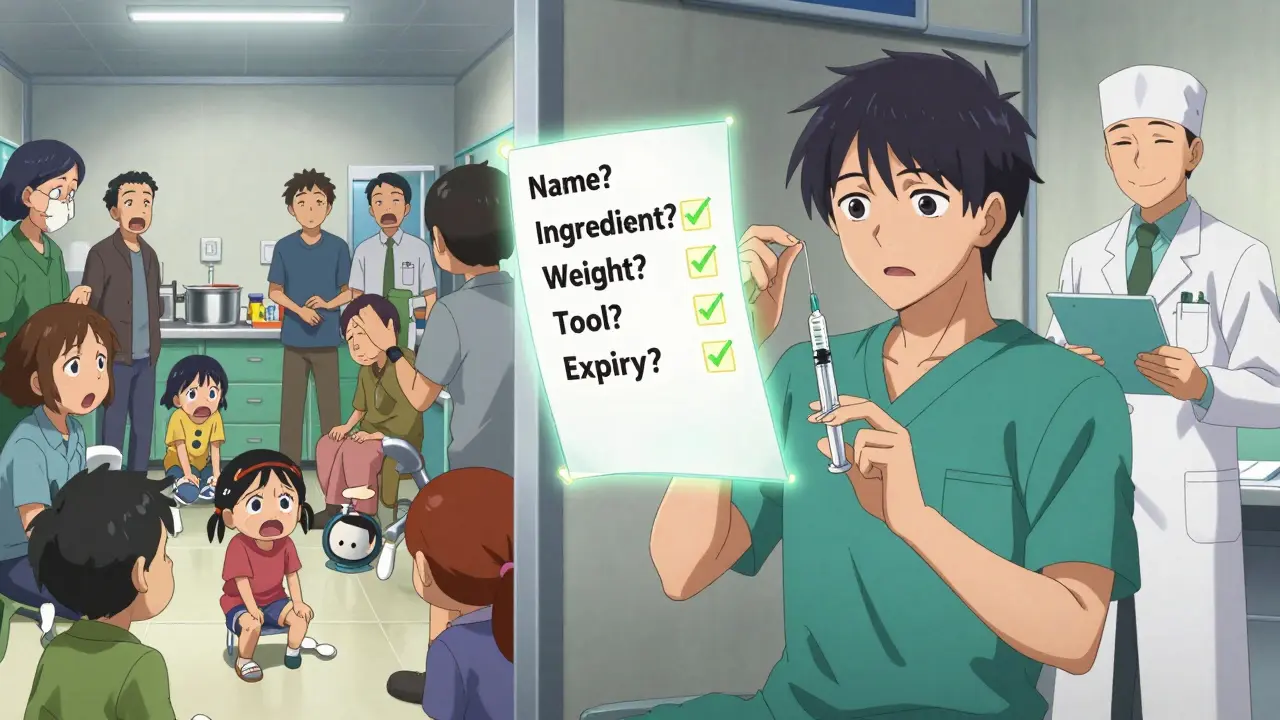
Before you hand your child that syringe, ask yourself these five questions:- Is this medicine labeled for my child’s name? (Especially if you have multiple kids.)
- Is the active ingredient correct? (Don’t give two medicines with the same active ingredient.)
- Does the dose match my child’s weight? (Not age.)
- Am I using the right measuring tool? (Syringe, not spoon.)
- Is it still in date? (Liquid meds expire faster than you think.)
If you answer yes to all five, you’re safe. If you’re unsure about even one-call your doctor or pharmacist. Better safe than sorry.
Medicine isn’t candy. A tiny mistake can have big consequences. But with the right knowledge, you can protect your child-and avoid the ER. All it takes is reading the label, knowing their weight, and using the right tool. That’s all.
Can I use the same medicine for my 2-year-old and my 5-year-old if they have the same symptoms?
No. Even if they have the same symptoms, their weight determines the dose. A 2-year-old weighing 25 pounds needs less medicine than a 5-year-old weighing 45 pounds. Always check the weight-based chart on the label. Never assume "it’s the same medicine, so it’s the same dose."
What should I do if I accidentally give too much medicine?
Call Poison Control immediately at 1-800-222-1222. Do not wait for symptoms. Acetaminophen overdoses can damage the liver without showing signs for hours. Keep the medicine bottle handy when you call-they’ll need the concentration and amount given.
Why do some labels say "infant drops" and others say "children’s liquid"?
Infant drops used to be more concentrated (80 mg/mL), but since 2011, the FDA required all children’s acetaminophen to be standardized at 160 mg/5 mL (which is the same as 32 mg/mL). Now, "infant drops" and "children’s liquid" are the same strength. But if you have old medicine at home, check the label. Never mix old and new bottles.
Is it safe to give children’s ibuprofen to a 9-month-old?
Only if your pediatrician says so. The FDA allows ibuprofen for children 6 months and older, but it’s not always recommended for infants under 1 year. Their kidneys are still developing. Always check with your doctor before giving ibuprofen to a baby under 12 months.
How often can I give my child acetaminophen?
Every 4 to 6 hours, but no more than five doses in 24 hours. Never give it more often than that-even if the fever isn’t gone. Overdosing can cause liver damage. Always check the label for the maximum daily dose in mg/kg. For most kids, that’s 75 mg per kg per day.


About Author



Weight-based dosing is a myth pushed by Big Pharma to sell more syringes. Kids have been getting medicine by age for generations and we didn’t have ER visits back then. Now every parent needs an app and a calculator just to give a Tylenol. It’s overcomplicated on purpose.
They don’t want you to know this, but the FDA changed the concentration standards in 2011 to force parents to buy new bottles. Old infant drops were 80mg/mL. Now they’re 32mg/mL. That’s a 60% price hike per dose. Same active ingredient, same efficacy, but now you need 2.5x the volume. Who benefits? The manufacturers. Not the kids.
This is so helpful!! I used to just eyeball it with a spoon until my niece got sick last year. Now I keep the syringe taped to the fridge with a sticky note: 'WEIGHT NOT AGE.' 🙏 I wish every parent could see this. Thank you for writing this.
Oh wow, so you’re telling me we’re not supposed to use the teaspoon that comes with the cereal box? Shocking. Next you’ll say don’t use your finger to scoop peanut butter. 🤦♂️ But seriously-this is gold. I’ve been using the syringe since I read this. My kid’s fever didn’t kill us. Progress.
Love this breakdown. I’m a dad of twins-one’s 28 lbs, the other’s 42 lbs. Same age, totally different doses. I used to panic every time. Now I keep a printed weight chart on my phone. I even took a pic of the label after measuring once and saved it. Best habit I’ve ever formed. Seriously, do this. It’s not extra work-it’s peace of mind.
From India-this applies here too. We don’t have the same access to syringes, but my sister uses a clean medicine cap she got from the pharmacy. She marks it with a permanent pen for each dose. Simple, cheap, safe. We need more awareness here. Thanks for sharing.
The data presented is methodologically flawed. The JAMA Pediatrics study fails to control for socioeconomic variables, parental education levels, and medication access disparities. Furthermore, the 50% reduction in dosing errors is likely correlated with increased healthcare engagement rather than label comprehension alone. The FDA’s standardization initiative, while well-intentioned, introduced logistical inconsistencies in formulation transitions that may have exacerbated confusion among caregivers. The reliance on weight-based dosing without standardized pediatric pharmacokinetic modeling remains an empirical, not evidence-based, approach.
I’ve been a nurse for 18 years. I’ve seen kids come in with liver damage from one wrong dose. This post? It’s the reason I still hand out printed dosing charts at the ER. The syringe isn’t optional. The weight isn’t a suggestion. The pharmacist isn’t a last resort-they’re your first line of defense. Just do it.
Okay, I’m going to be honest-I didn’t know about the concentration difference between infant drops and children’s liquid until I read this. I had both bottles in my cabinet for years and thought they were the same. I just assumed the label meant the same thing. I’m so embarrassed. I’ve been giving my daughter the same dose for her 18-month-old brother because he’s bigger. That’s terrifying. I just threw out the old bottle and got a new one with the right concentration. I’m printing out the CDC checklist and laminating it. I’m not taking any chances anymore. Thank you for being so clear. I didn’t even know I was at risk.
YES! I use the AAP app every time. It even tells me if I’ve given a dose too soon. 🎉 My 4-year-old has asthma and we use albuterol too-I used to panic about the dose until I found this. Now I just open the app, type in his weight, and boom-perfect dose. I even showed my mom and she uses it now too. We’re all safer because of this. 💕
You’re all being way too nice. If you’re using an app or a chart, you’re already doing it wrong. You should be able to eyeball a dose. If you can’t, you shouldn’t be a parent. This whole ‘weight-based dosing’ thing is just a distraction from the real problem: lazy, overmedicated kids. My son’s been on Tylenol since he was 6 months old. He’s fine. You’re overthinking it.
The pharmacokinetic variability in pediatric populations necessitates a more granular approach to weight-based dosing, particularly in the context of cytochrome P450 enzyme ontogeny and glomerular filtration rate maturation. While the FDA’s standardization of acetaminophen concentration to 160 mg/5 mL mitigates formulation confusion, it fails to account for inter-individual metabolic heterogeneity in children under 24 months. Consequently, the reliance on body weight as a surrogate for clearance capacity remains an oversimplification of the pharmacodynamic landscape. A population-based Bayesian dosing algorithm, calibrated against serum concentration data, would provide superior safety margins.