

Ringworm and Tinea: How Antifungal Creams Treat Fungal Skin Infections
Ringworm isn’t caused by a worm at all. That’s the first thing to clear up. The name is misleading, but the rash it leaves behind? Very real. It shows up as a red, circular patch on the skin, often with a raised, scaly border and a clearer center-like a ring. This is ringworm, also called tinea, and it’s one of the most common skin infections you can get. It’s not rare. It’s not exotic. In the U.S. alone, about 40 million cases happen every year. It’s the reason kids get sent home from school, athletes avoid locker rooms, and people start checking their skin every time they feel an itch.
What Exactly Is Ringworm?
Ringworm is a fungal infection caused by mold-like fungi called dermatophytes. These fungi live on dead skin, hair, and nails. They don’t burrow deep, but they don’t need to. They feed on keratin-the same protein your hair and nails are made of. The three main culprits are Trichophyton, a genus of fungi that causes most skin and nail infections, Microsporum, often linked to animal-to-human spread, and Epidermophyton, the main cause of jock itch. They thrive in warm, damp places: sweaty socks, wet gym floors, shared towels. If you’ve ever walked barefoot in a public shower, you’ve taken a risk.
It’s not just one thing. Ringworm shows up in different places, and each version has its own look and feel:
- Tinea corporis (body ringworm): The classic ring-shaped rash. Starts small-about the size of a coin-and spreads outward. It’s itchy, scaly, and red. Often appears on arms, legs, or torso.
- Tinea pedis (athlete’s foot): Affects feet, especially between the toes. Skin peels, cracks, or blisters. Smells bad. It’s the most common type after body ringworm.
- Tinea cruris (jock itch): Red, itchy patches on the inner thighs and groin. Worse when you sweat. More common in men, but women get it too.
- Tinea capitis (scalp ringworm): Mostly in kids. Patches of hair loss, scaly bumps, sometimes pus-filled lumps called kerions. Can leave scars if untreated.
- Tinea unguium (nail fungus): Toenails turn yellow, thick, brittle. Fingernails rarely get it. Takes months to clear.
How Do You Get It?
You don’t need to be dirty to get ringworm. It’s about exposure. About 60% of cases come from direct skin-to-skin contact-like wrestling, hugging, or sharing a bed. Another 30% come from touching contaminated stuff: towels, gym mats, combs, shoes. And 10%? From pets. Cats and dogs carry the fungus without showing symptoms. If your dog is scratching its ear, and you pet it, you’re at risk.
Some people are more likely to catch it:
- People who sweat a lot (hyperhidrosis affects 3% of adults)
- Wrestlers and athletes in contact sports (up to 84% of college wrestlers have had it)
- Those who go barefoot in locker rooms or pools (risk jumps 45% without shoes)
- People with weakened immune systems (diabetes, HIV, or on steroids)
- Children under 10 (they make up 60% of scalp ringworm cases)
It takes 4 to 14 days to show up after exposure. That’s why it spreads so easily. You don’t know you’ve picked it up until it’s already growing.
Antifungal Creams: What Actually Works?
For most cases-body, foot, or groin ringworm-a good antifungal cream is all you need. You don’t need a prescription. You can buy them over the counter. But not all creams are the same.
Here’s what’s in the top ones:
| Active Ingredient | Typical Concentration | Effectiveness | Treatment Duration |
|---|---|---|---|
| Clotrimazole | 1% | 70-80% | 2-4 weeks |
| Miconazole | 2% | 65-75% | 2-4 weeks |
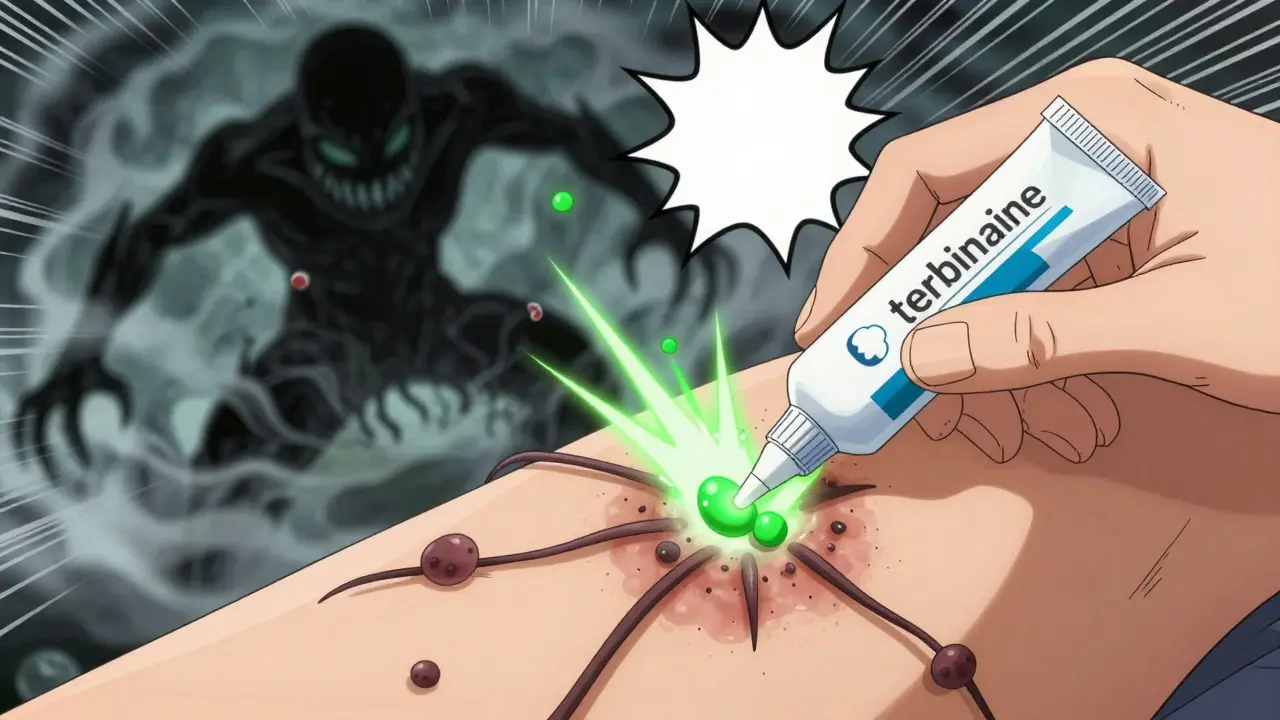
| Terbinafine | 1% | 80-90% | 1-2 weeks |
| Ketoconazole | 2% | 75-85% | 2-4 weeks |
Terbinafine, sold as Lamisil AT, is the most effective over-the-counter option. Studies show it clears the infection faster than others. Many users notice improvement in 3-5 days. Clotrimazole and miconazole take longer-usually 7-10 days before you see a difference. But they’re cheaper and work fine if you stick with them.
Here’s the catch: You have to use it long enough. Most people stop when the rash looks better. That’s a mistake. The fungus is still there under the skin. If you quit early, it comes back. In fact, 45% of people who stop treatment early get ringworm again. The American Academy of Dermatology says: apply the cream twice a day for at least two weeks-even if it looks gone after five days.
When Creams Aren’t Enough
Not all ringworm is the same. If it’s on your scalp, or if your nails are infected, creams won’t cut it. The fungus hides too deep. For scalp ringworm, you need oral medication. Terbinafine, taken as a pill (250mg daily), is the go-to. It cures about 85-90% of scalp cases in 4-6 weeks. Griseofulvin is another option, but it takes longer and has more side effects.
Nail fungus? Same deal. Oral terbinafine for 6-12 weeks. It’s not fun. You need blood tests to check liver function. But it works. Topical nail creams? They barely penetrate. Most fail.
And if you’re immunocompromised? You might need stronger treatment. Your doctor might prescribe longer courses or switch to other antifungals like itraconazole. Failure rates are 3.5 times higher in these cases.
What Doesn’t Work
There’s a lot of noise online about natural fixes. Tea tree oil. Coconut oil. Apple cider vinegar. Some people swear by them. But here’s what the science says: a 2021 Cochrane Review looked at 11 studies on tea tree oil for ringworm. Only 40-50% of people got better. Compare that to 70-90% with pharmaceutical creams. That’s not close.
Same goes for other home remedies. No solid evidence supports them. They might soothe the itch. But they won’t kill the fungus. And if you delay real treatment, the infection spreads. One study found that untreated ringworm can cover 30-50% more skin area in just two weeks.

Prevention: Stop It Before It Starts
Prevention is easier than treatment. Here’s what actually helps:
- Wear flip-flops in public showers, pools, and locker rooms. Reduces risk by 45%.
- Change socks daily. Twice a day if you sweat a lot.
- Avoid sharing towels, hats, combs, or sports gear.
- Keep skin dry. Use talc or antifungal powder in sweaty areas.
- Wash pets regularly. If your cat is scratching, take it to the vet.
- Don’t ignore itchy patches. Start treatment the day you notice it.
One thing people don’t talk about enough: the social side. Teens with ringworm on their face or arms get teased. A 2022 survey found 73% of adolescents with visible ringworm were bullied or avoided by peers. That’s why early treatment isn’t just about health-it’s about dignity.
What If It Doesn’t Go Away?
Some cases don’t respond. Why?
- You didn’t use the cream long enough.
- You didn’t apply it to the whole affected area-just the center.
- The fungus is resistant. A 2022 study found a 12% rise in terbinafine-resistant strains since 2018.
- You have another condition-like eczema or psoriasis-that looks like ringworm.
If the rash spreads, gets worse, or doesn’t improve after 4 weeks, see a doctor. They can do a skin scraping and test for fungus. Sometimes, you need a different medication-or a different diagnosis.
Cost and Accessibility
Over-the-counter creams cost $5 to $15. The average is $8.75. Prescription oral meds? $25 to $150, depending on insurance. In the U.S., ringworm costs about $500 million a year in direct medical expenses. Most of that is for OTC creams. That’s why it’s so important to use them right. Misuse leads to repeat visits, wasted money, and longer infections.
Is ringworm contagious?
Yes, ringworm is highly contagious. It spreads through direct skin contact, shared items like towels or clothing, and contact with infected animals. It can also survive on surfaces like gym mats or shower floors for months. The fungus thrives in warm, moist environments, making locker rooms and pools common hotspots.
Can ringworm go away on its own?
Sometimes, yes-but it can take months. And during that time, it can spread to other parts of your body or to other people. Without treatment, the infection may grow larger, become more itchy, or lead to secondary bacterial infections. Starting treatment early cuts healing time by 5-7 days and reduces the chance of spreading.
Can I use the same cream for athlete’s foot and body ringworm?
Yes, most antifungal creams work for both. Terbinafine, clotrimazole, and miconazole are effective for both tinea corporis and tinea pedis. The key is to apply the cream to all affected areas, including under the feet and between toes for athlete’s foot. Don’t reuse the same applicator for different body parts to avoid spreading it.
Why does ringworm keep coming back?
Most often, it’s because treatment was stopped too soon. People see the rash fade and assume it’s gone. But the fungus lives deeper in the skin. Other reasons: not treating all areas, re-exposure from contaminated shoes or bedding, or an underlying condition like diabetes. If it returns, check your environment-wash towels, disinfect shower floors, and replace old shoes if needed.
Are antifungal creams safe for kids?
Yes, most over-the-counter creams like clotrimazole and miconazole are safe for children. But scalp ringworm (tinea capitis) requires oral medication and should be treated by a doctor. Never use adult-strength products on young children without medical advice. Always wash hands after applying cream, and avoid contact with eyes.
Can I still go to work or school with ringworm?
Yes, if you’re using treatment and covering the rash. Most schools and workplaces don’t require exclusion if the infection is being treated. Cover the area with a bandage or clothing, wash hands frequently, and avoid sharing personal items. If it’s on the scalp or very large, check with your doctor or school nurse for guidance.
Ringworm is simple to treat-if you treat it right. It’s not a sign of poor hygiene. It’s a common infection that happens to millions. The real mistake isn’t getting it. It’s ignoring it.



About Author






I got ringworm last year and thought it was just a rash 😅 Started using clotrimazole and it was gone in 10 days. Don't overthink it. Just keep applying. And yeah, wash your damn socks.
Thank you for this thorough breakdown. It's so important to understand that ringworm isn't a reflection of cleanliness-it's a biological reality. Many patients feel shame, and education like this helps reduce stigma. Consistent treatment, proper hygiene, and compassion go a long way.
This whole thing is just a scam. They sell you cream so you keep buying it. I had it for 3 months and it went away on its own. No money spent. No drama.
You people are so gullible. Terbinafine? That's just Big Pharma's way of keeping you dependent. Tea tree oil works better. I've been using it since 2017. You think science knows everything? Think again. The truth is buried under clinical trials and profit margins.
Lmao I read all this and still don't know what to do. Just tell me which cream to buy. Is it Lamisil? Clotrimazole? I'm tired of reading. Just pick one.
The statistical framing here is statistically insignificant. The 45 million figure is likely inflated due to overdiagnosis. Furthermore, the efficacy percentages cited lack confidence intervals. This is not evidence-based-it's anecdotal marketing dressed as medical advice.
If you're not using terbinafine, you're doing it wrong. America leads in antifungal innovation. Stop wasting time on cheap generics. You want results? Use the best. No excuses.
In India, we use neem and turmeric paste for generations. It works. Not as fast as Western creams, but it's natural. No side effects. No chemicals. Why do we rush to import drugs when our own remedies have centuries of wisdom?
I had scalp ringworm as a kid. My mom didn't know what it was. Took months. Left a scar. If you're a parent reading this? Don't wait. Take your kid to the doctor. It's not embarrassing. It's just a fungus. And it's fixable.
I used to think ringworm was contagious only if you touched someone. Then I touched my dog's ear and boom. 2 weeks later. So yeah. Wash your hands. Clean your gym gear. Don't be a hero. Just be smart.
The claim that terbinafine is 80-90% effective is misleading. Clinical trials are often industry-funded. The true efficacy, when accounting for placebo effect and follow-up bias, is closer to 60%. You're being sold a myth.
I got ringworm on my neck and everyone stared at me like I had leprosy 😭 I cried for 3 days. Then I used Lamisil. Now I'm back to life. Don't let it break you. Treat it. Laugh at it. Move on.
I'm curious-how do we know the resistant strains are rising? Is there a national surveillance system tracking dermatophyte mutations? Or is this just a hypothesis from a single 2022 study? I want to dig deeper.
You people are weak. You let a fungus control your life. In my village, we just scrub with salt and lemon. No medicine. No fear. You need to toughen up. Stop buying pills. Start living.
Think about this: what if the real reason ringworm spreads is because the CDC and FDA are secretly using it to test population compliance with pharmaceutical protocols? Coincidence that terbinafine sales spiked right after the pandemic? I think not.