
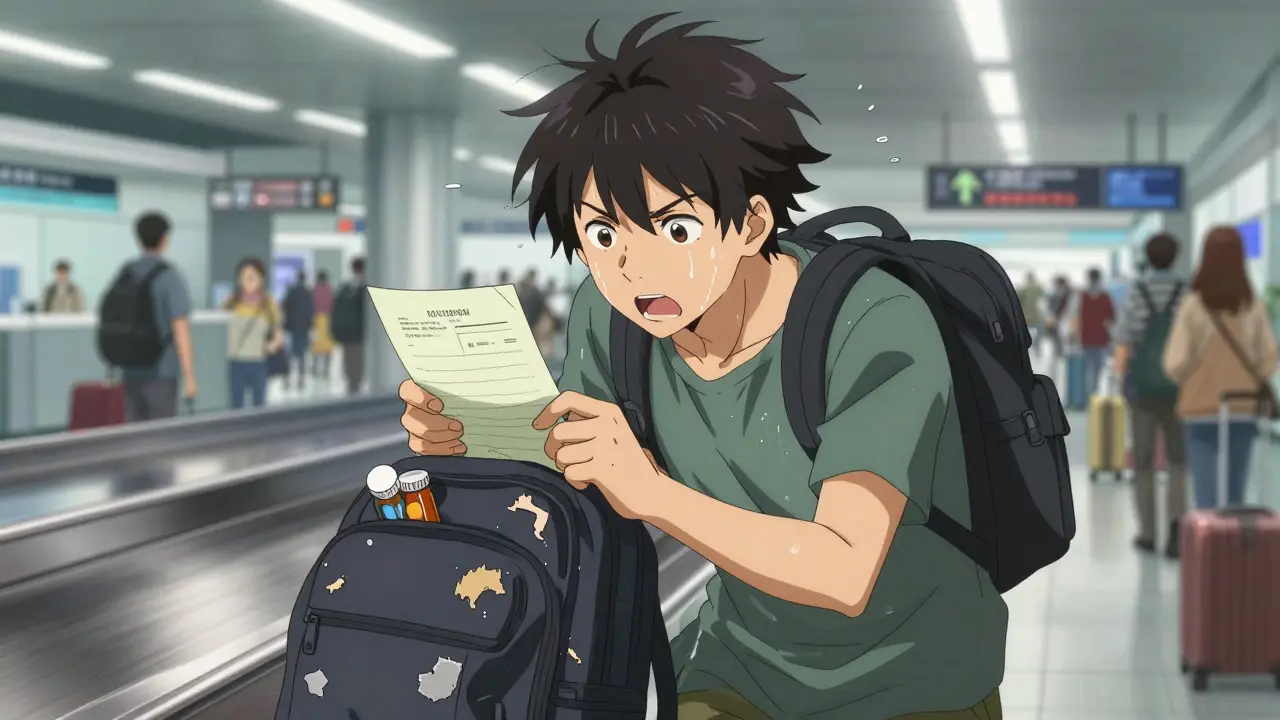
How to Replace Lost or Stolen Medications While Abroad
Running out of medication while traveling abroad isn’t just inconvenient-it can be dangerous. Whether your bag was stolen, your luggage got lost, or you simply forgot to pack enough, being without your pills can put your health at risk. The good news? You can replace your medications overseas. But it’s not as simple as walking into a local pharmacy and asking for a refill. Success depends on preparation, knowing the right steps, and understanding how different countries handle prescriptions.
Before You Even Leave: Document Everything
The single most important thing you can do before traveling is document your medications. Carry a printed letter from your doctor that includes:- Your full name and date of birth
- Each medication by its generic name (not brand name)
- Dosage and frequency
- Reason for use (e.g., "hypertension," "ADHD," "type 2 diabetes")
- Your doctor’s contact information
This letter is your lifeline. In 92% of countries, pharmacists and doctors will ask for it before even considering filling a prescription. The U.S. Department of State recommends this practice, and travel medicine specialists confirm it cuts replacement time by more than 70%.
Also, keep your original prescription bottles in your carry-on. Many countries require the pharmacy label to match your name and the medication. A bottle labeled "Amoxicillin 500mg, 10 days" with your name on it is far more convincing than a pill in a ziplock bag.
What You Can’t Replace (And Why)
Some medications simply can’t be replaced abroad-especially Schedule II controlled substances. This includes:- Adderall
- Ritalin
- OxyContin
- Vicodin
- Fentanyl patches
Under U.S. federal law, these drugs can’t be refilled without a new prescription, even at home. And abroad? Most countries treat them as illegal or highly restricted. Thailand bans pseudoephedrine. The UK allows codeine over the counter, but the U.S. doesn’t. Mexico might have the same drug under a different name-or none at all.
If you’re traveling with one of these, bring enough for your entire trip plus a 10-day buffer. There’s no legal workaround. Trying to buy them on the street or from unverified online pharmacies puts you at risk of counterfeit drugs, which the WHO estimates cause 500,000 deaths worldwide each year.
Step-by-Step: What to Do When You Lose Your Meds
If your medication is gone, follow this sequence:- Contact your travel insurance provider. Most comprehensive plans (68% of them, according to U.S. Travel Insurance Association) include emergency medication replacement. Call their 24/7 assistance line. They’ll connect you with a local doctor or pharmacy that’s vetted and trusted.
- Call your prescribing doctor. If you have insurance assistance, they’ll often handle this for you. Otherwise, call your doctor directly. Many will email a copy of your prescription to a local provider or authorize a telehealth consult. But be warned: 37% of U.S. doctors say they’re unavailable for same-day emergency calls.
- Find a local clinic or hospital. Go to a reputable hospital or clinic-preferably one recommended by your insurance provider. Bring your doctor’s letter, original bottles (if you have them), and your passport. In Western Europe, 82% of travelers get their meds within 24 hours. In Southeast Asia, that drops to 54%.
- Don’t buy from street vendors or unlicensed pharmacies. In parts of Southeast Asia and Africa, up to 30% of medications are fake. They might contain no active ingredient-or worse, toxic substances. Stick to chain pharmacies or hospital-affiliated outlets.
- File a police report if stolen. Airlines require theft reports within 21 days for baggage claims. Insurance companies need it too. A simple report from a local station can make the difference between getting reimbursed or paying out of pocket.
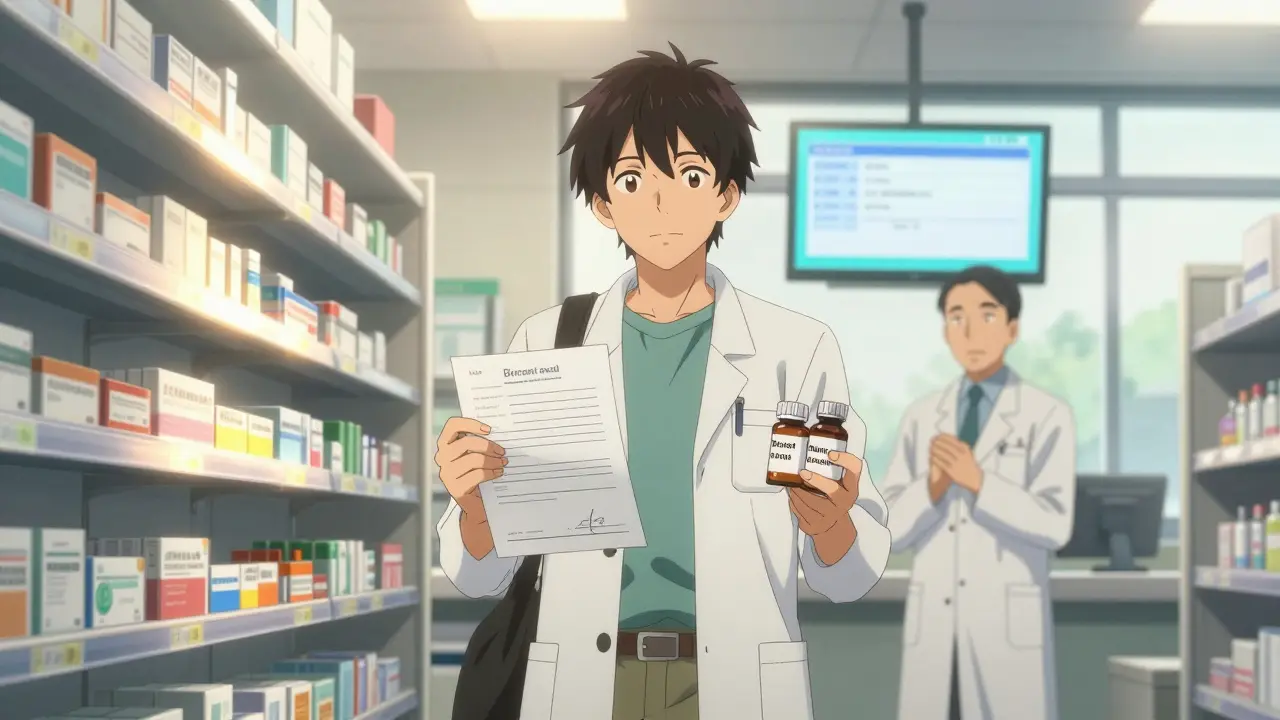
Telehealth: A Lifeline for U.S. Travelers
If you’re a U.S. citizen and your medication isn’t a controlled substance, telehealth services like MyUSADr can help. You can video chat with a U.S.-licensed doctor who can write a new prescription for non-controlled meds like antibiotics, blood pressure pills, or antidepressants. The prescription can be sent to a pharmacy in your location-though not all countries accept U.S. e-prescriptions.But here’s the catch: DEA rules block telehealth providers from prescribing Schedule II drugs-even if you’re on vacation. So if you need Adderall or OxyContin, telehealth won’t help. You’re stuck with what you packed.
Insurance Matters-A Lot
Not all travel insurance is created equal. Basic plans often exclude medication replacement. You need a comprehensive plan. Look for these features:- Emergency prescription coverage
- 24/7 medical assistance hotline
- Reimbursement limits ($500-$1,000 per incident is common)
- Global network of vetted providers
Travelers who use insurance assistance get their meds within 24 hours 78% of the time. Those who try to figure it out alone? Only 42% succeed. The difference isn’t just speed-it’s safety. Insurance providers work with trusted networks. You don’t have to guess who’s legitimate.
Special Cases: Insulin, Temperature-Sensitive, and Chronic Meds
If you take insulin, thyroid meds, or anything that needs refrigeration, you’re at higher risk. Heat and humidity can ruin them. The International Diabetes Federation found that 41% of travelers report reduced effectiveness after exposure to extreme temperatures.Always carry:
- A backup supply in your carry-on
- A portable cooler or cooling wallet (like those from Frio or MedAngel)
- A doctor’s note explaining the need for refrigeration
For chronic conditions like diabetes, hypertension, or mental health disorders, 76% of international doctors require an in-person visit before prescribing-even if you have a letter. Don’t assume they’ll trust a U.S. prescription. Be prepared to wait for an appointment.

What to Pack: The Travel Medication Checklist
Before you leave, make sure you’ve got these:- At least a 7-day extra supply of every medication (in carry-on)
- Original prescription bottles with pharmacy labels
- Doctor’s letter with generic names and dosages
- Copy of your prescription (digital and printed)
- Travel insurance card and emergency contact number
- List of all medications in your phone notes (and a printed copy)
- Portable cooler if needed
IATA data shows 1 in 150 checked bags are mishandled. That’s not rare. Never risk your meds in checked luggage.
Costs and Alternatives
If you don’t have insurance, replacing meds abroad isn’t cheap:- Western Europe: $75-$150
- Latin America: $120-$200
- South and Southeast Asia: $40-$90
Prices vary based on drug type and local economy. Generic versions are usually cheaper, but make sure they’re the same active ingredient. A 30-day supply of lisinopril might cost $12 in Thailand but $110 in Germany if you’re paying retail.
Apps like Medisafe let you store digital copies of your prescriptions using blockchain verification. But only 17% of countries accept them as official documentation. So don’t rely on your phone alone.
Final Tip: Research Before You Go
The CDC’s Yellow Book 2024 says 31% of medication-related travel emergencies could be avoided with pre-trip planning. Before you leave, check:- What drugs are banned or restricted in your destination
- Whether your meds have different names there
- If you need a special permit to bring them in (e.g., some countries require a letter from their embassy)
For example, melatonin is a supplement in the U.S. but a prescription drug in the UK. In Australia, you need a prescription for even low-dose codeine. Don’t assume rules are the same everywhere.
Can I get my prescription refilled at a foreign pharmacy?
Usually not. 89% of countries won’t fill a U.S. prescription unless it’s verified by a local doctor. Even then, you’ll likely need to see a physician in person. Always carry your doctor’s letter and original bottles to make the process smoother.
What if I lose my controlled substance like Adderall or OxyContin?
You cannot legally replace Schedule II controlled substances abroad. These drugs are tightly regulated or banned in most countries. The only solution is to bring enough for your entire trip plus a 10-day buffer. There are no telehealth or emergency workarounds under U.S. or international law.
Is it safe to buy medication from a local pharmacy abroad?
Only if it’s a licensed hospital pharmacy or a well-known chain. In Southeast Asia and parts of Africa, up to 30% of medications are counterfeit. Avoid street vendors, unmarked shops, or pharmacies that don’t ask for identification or a prescription. Look for signs of official licensing and ask for the generic name to verify it matches your original.
Does travel insurance cover lost medications?
Only comprehensive plans do-and only if they include emergency prescription coverage. Basic plans typically exclude it. Check your policy before you leave. If you’re unsure, call your provider. Plans like Allianz and AIG typically cover up to $1,000 for replacement meds with proper documentation.
Can I use my U.S. prescription to get meds in Canada or Mexico?
Sometimes, but it’s not guaranteed. Canada and Mexico have stricter rules than you might think. Some pharmacies will fill a U.S. prescription if you have the original bottle and doctor’s note, but others won’t. Always call ahead. And never assume prices will be cheaper-some U.S. drugs cost more in Canada due to import taxes.
What should I do if my meds are stolen from my hotel room?
File a police report immediately. Even if it’s not required by law, your travel insurance will need it to process a claim. Get the report number and a copy. Then contact your insurance provider’s emergency line. They can guide you to a local provider who can help replace your meds quickly and safely.
Are digital prescriptions accepted overseas?
Rarely. Only 17% of countries accept digital prescriptions as official documentation. Even if you use an app like Medisafe, you’ll still need a printed doctor’s letter and original bottles. Don’t rely on your phone alone. Always carry physical copies.
How long does it usually take to replace meds abroad?
With proper documentation and insurance help, most travelers get their meds within 24 hours in Western Europe and North America. In Southeast Asia or remote areas, it can take 2-3 days. Without documentation, delays can stretch to a week or more. The key is preparation.



About Author



I lost my antidepressants in Thailand last year 😭 Turned out the local pharmacy had the generic but they wouldn’t give it to me without a doctor’s note. Thank god I had one printed in my wallet. Never travel without it again. 🙏
Okay but like… why do people even travel with Adderall? I mean, if you’re that dependent on a Schedule II drug to function, maybe don’t go to a country where it’s illegal? You think the world owes you your little brain boost? 🤦♀️ I’ve been to 14 countries and never needed anything but ibuprofen and Imodium. You’re not special, Karen.
US people always think their prescriptions work everywhere. In Nigeria we dont even have most of these drugs. If you lose your meds you die. Simple. No drama. No insurance. No magic. Just pray
I’ve helped a few friends navigate this abroad. The doctor’s letter is non-negotiable. One guy in Mexico had his insulin ruined by heat and the hospital refused to help until he showed the refrigeration note. That little piece of paper saved his life. Always carry it. Always.
Oh so now we’re supposed to carry a doctor’s letter AND original bottles AND a printed copy AND a digital copy AND a cooler AND a police report just to not die on vacation? Sweet. Let me just pack my entire pharmacy in my carry-on and call it a day. Meanwhile, my 80-year-old aunt in Ohio can’t even get her blood pressure med refilled without a 3-week wait. But sure, let’s make travel medicine a competitive sport.
America thinks its drugs are god given. In Africa we dont even know what Adderall is. We have real problems like malaria and clean water. You think your ADHD is more important than our childrens lives? Your pills are not global currency
30% fake meds in SE Asia? Thats low. In Mumbai I saw a pharmacy selling Viagra in bottles labeled as insulin. The guy behind the counter smiled. No paperwork. No questions. Just hand over cash. You want to die? Go ahead. But dont act surprised when your kidneys give out
I had to replace my thyroid med in Portugal. Took 36 hours. Had to go to a public hospital, show my letter, and wait in line with a bunch of locals who didn’t speak English. The pharmacist finally said, 'Ah, levothyroxine. We call it Euthyrox here.' We both laughed. It worked. But I cried when I got it. Never again without backups.
Just pack extra. Always. I bring a 30-day supply even for a 7-day trip. My mom had diabetes and once lost her insulin in Italy. She got help because she had a doctor’s note and called her insurance. They found her a pharmacy within 4 hours. It’s not magic. It’s planning. You can do this too.
I just got back from Bali and I swear… if you don’t have a printed doctor’s letter, you’re basically playing Russian roulette with your health. I saw a guy trying to buy Adderall from a guy on the beach… he ended up in the hospital with liver damage. Please. Don’t be that guy. Or girl. Or non-binary person. Just… bring your meds. And your letter. And your insurance card. And maybe a little faith. 🙏❤️