
How to Use Patient Assistance Programs When No Generic Medication Exists
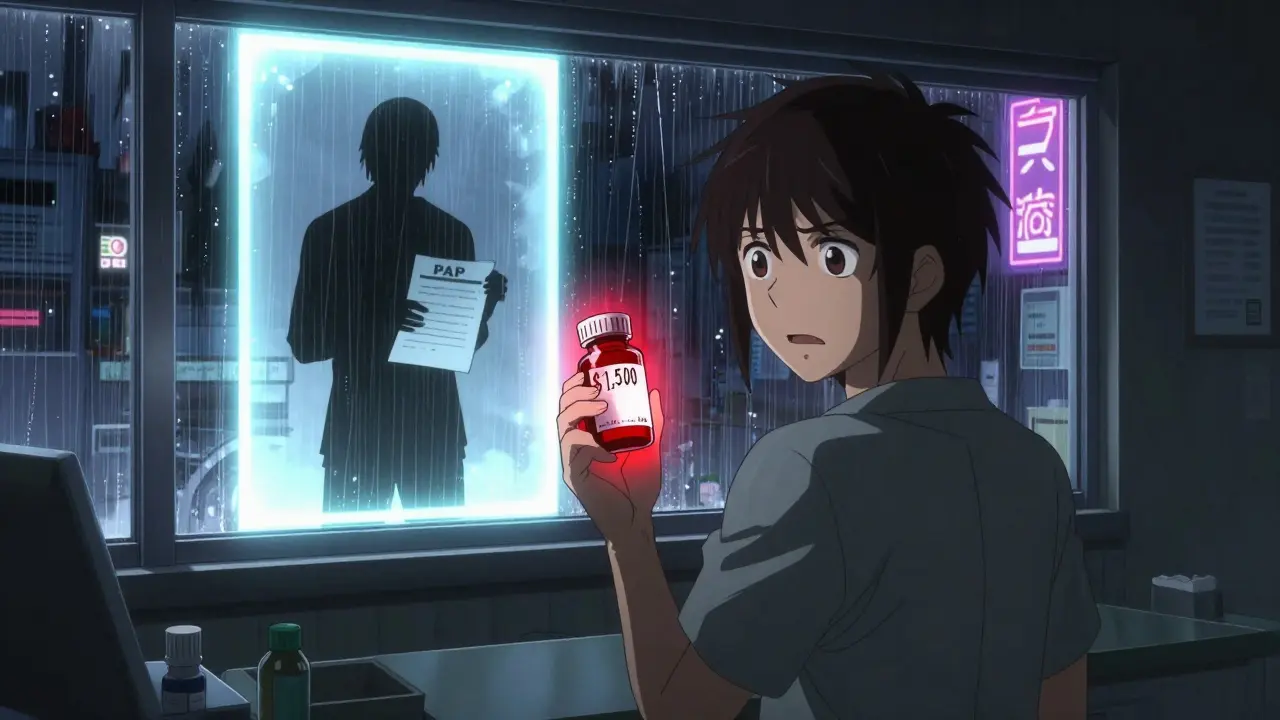
When you’re prescribed a life-saving medication and there’s no generic version available, the cost can feel impossible. Some drugs cost more than $10,000 a month. Insurance might cover part of it, but your deductible could be $8,000. You’re stuck between paying rent and staying alive. That’s where Patient Assistance Programs (PAPs) come in - not as a bonus, but as a lifeline.
What Patient Assistance Programs Actually Do
PAPs are programs run by drug makers, nonprofits, and sometimes states to help people afford brand-name medications when generics aren’t an option. These aren’t charity handouts. They’re structured financial aid. In 2022 alone, PAPs gave out $4.7 billion to over a million patients in the U.S. Most of that went to people taking drugs like Soliris, Tasigna, or HIV medications - drugs where the list price is half a million dollars a year and no cheaper version exists. The goal? To stop people from skipping doses, splitting pills, or just giving up. Research shows patients using PAPs for cancer drugs were 37% less likely to skip treatment because of cost. That’s not just money saved - it’s lives saved.Who Qualifies? It’s Not Just the Uninsured
You might think PAPs are only for people without insurance. That’s not true. While they’re most common for the uninsured (who make up 89% of users), they also help people with insurance - if their plan has high deductibles, copays, or accumulator programs. Most programs use income as the main filter. The cutoff? Usually 400% of the Federal Poverty Level. In 2023, that was $60,000 for a single person. But many programs are stricter - some only accept people under 200% FPL ($30,000). You’ll need proof: tax returns, pay stubs, or a letter from your employer. If you’re on Medicare, you’re in a tougher spot. Federal rules block drugmakers from giving copay help to Medicare Part D users. That means you’ll need to rely on nonprofit foundations, not the drug company itself.How Much Help Can You Get?
The help varies. About 55% of PAPs cover 100% of your drug cost. That means $0 out of pocket. Another 30% give you help based on income - maybe $50 a month, maybe $500. Only 15% offer a flat dollar amount, like $250 per prescription. For a drug that costs $15,000 a month, that’s life-changing. One patient on Reddit shared: “Without the PAP for my HIV drug, I’d have chosen homelessness over bankruptcy.” That’s not an exaggeration. For others, the help is partial - but still enough to keep the medication going.The Hidden Trap: Accumulator Adjustments
Here’s the ugly secret: even if you get approved for PAP help, your insurance might still make you pay. Many pharmacy benefit managers (PBMs) like Express Scripts and Optum use something called “accumulator adjustment.” It means the PAP’s payment doesn’t count toward your deductible or out-of-pocket maximum. So if your drug costs $12,000 a month and your PAP covers it, your insurer still says, “You haven’t paid anything.” You’re stuck paying your full deductible - maybe $8,700 - before your insurance kicks in. One patient reported paying over $20,000 out of pocket in one year, even though her PAP covered the full drug cost. The PAP paid $144,000. She paid $20,700. That’s not a mistake. That’s policy. If you’re insured, ask your insurer: “Do you use accumulator programs?” If yes, you might need to switch to a foundation-run PAP - ones that aren’t tied to drugmakers and aren’t subject to these rules.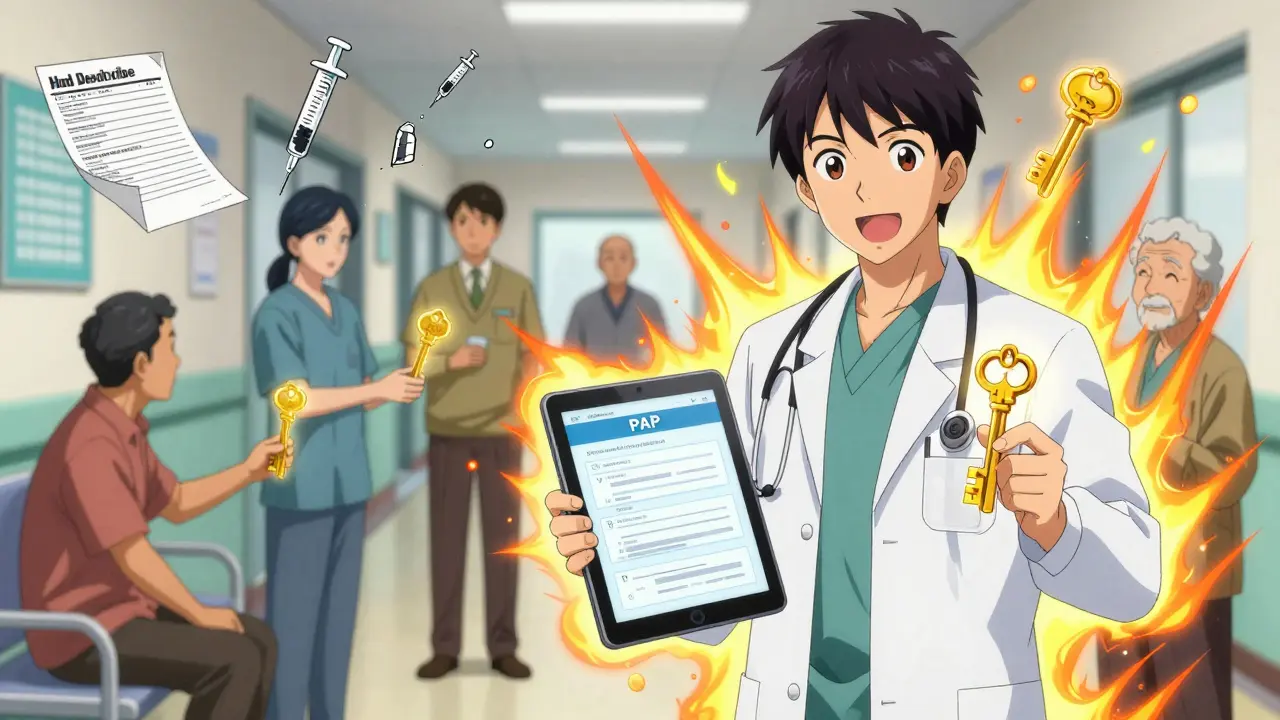
How to Apply: Step by Step
Applying isn’t easy. The average application takes 45 minutes and asks for 17 pieces of info. But you don’t have to do it alone.- Find the right program. Use RxHope’s free online screener. It covers 92% of manufacturer programs. Just enter your drug name and income.
- Gather documents. You’ll need: a copy of your prescription (on doctor’s letterhead), proof of income (W-2 or tax return), and proof of insurance (or lack thereof). If you’re denied by insurance, get a denial letter.
- Get your doctor involved. Most programs require a physician form. Ask your doctor’s office if they have a medication access specialist. If they do, they’ll handle 85% of the paperwork.
- Submit and follow up. Manufacturer programs take 7-10 days. Foundation programs take 14-21. Call after a week if you haven’t heard back.
Who Can Help You?
You don’t have to fight this alone. Many hospitals now have medication access specialists - staff trained to navigate PAPs. In 2023, 98% of U.S. hospitals had them. Ask your clinic if they have one. Nonprofits like the Patient Advocate Foundation and the Chronic Disease Fund offer free case managers. They’ll help you fill out forms, call insurers, and appeal denials. The Patient Advocate Foundation says 41% of initial applications get denied - but most of those can be fixed with a simple appeal.What If You’re on Medicare?
Medicare Part D beneficiaries can’t get help from drugmakers. That’s federal law. But you still have options. Look for foundation-run PAPs - ones not funded by pharmaceutical companies. Programs like the Patient Access Network Foundation (PAN) and the HealthWell Foundation give out grants to Medicare users. Eligibility varies, but many accept income up to 500% FPL. You’ll still need prescriptions and income proof, but you won’t be blocked by the same rules that hurt others.
Why PAPs Are Flawed - But Still Essential
Experts agree: PAPs are a band-aid on a broken system. Drug companies set list prices at $500,000 a year because they know PAPs will cover the cost. They don’t lower prices - they rely on assistance programs to make their high prices bearable. One doctor put it bluntly: “PAPs let companies keep prices sky-high and call it compassion.” But here’s the reality: without PAPs, people die. A patient with chronic myeloid leukemia nearly stopped taking her $14,000-a-month drug because of copays. After enrolling in the PAP, she paid $0. But it took her 11 hours of paperwork over three weeks. That’s the cost of survival.What’s Changing in 2026?
New tools are emerging. Eli Lilly’s “Simple Bridge” program cut its insulin PAP application from 17 steps to 5. Approval now takes 48 hours. Epic, the big electronic health record system, is adding PAP tools directly into doctors’ charts. That means your doctor can check your eligibility and start the application before you even leave the office. The CMS also now requires insurers to clearly state if they use accumulator programs in their plan documents. That’s a small step toward transparency. But the big question remains: will drug prices ever come down? Until then, PAPs are the only thing standing between patients and ruin.What to Do Right Now
If you’re taking a brand-name drug with no generic:- Go to RxHope.org and type in your drug name.
- Call your pharmacy and ask if they have a medication access specialist.
- If you’re insured, ask your insurer: “Do you use accumulator programs?”
- If you’re on Medicare, contact the Patient Access Network Foundation.
- Don’t give up after one denial. 41% of approvals come after an appeal.
It’s not easy. But it’s possible. Thousands of people get help every day. You can too.
Can I use a Patient Assistance Program if I have insurance?
Yes, you can - but only if your insurance doesn’t use accumulator programs. These programs prevent PAP assistance from counting toward your deductible or out-of-pocket maximum. If your plan has this rule, you may still qualify for foundation-run PAPs that aren’t tied to drugmakers. Always ask your insurer if they use accumulator adjustments.
Do I need to be uninsured to qualify for a PAP?
No. While most PAP users are uninsured, many programs accept people with insurance if their out-of-pocket costs are too high. Income is the main factor, not insurance status. Most programs require income below 400% of the Federal Poverty Level, which was $60,000 for a single person in 2023.
Can Medicare beneficiaries get help from drug companies?
No. Federal rules prohibit drugmakers from giving copay assistance to Medicare Part D beneficiaries. However, nonprofit foundations like the Patient Access Network Foundation and HealthWell Foundation do provide grants to Medicare patients. These programs have different income limits and require separate applications.
How long does it take to get approved for a PAP?
Manufacturer-sponsored PAPs typically approve applications in 7-10 business days. Foundation-sponsored programs take longer - usually 14-21 days - because they require more documentation and review. If you’re in a hurry, ask your doctor’s office if they have a medication access specialist who can speed up the process.
What documents do I need to apply for a PAP?
You’ll usually need: 1) a prescription on your doctor’s letterhead, 2) proof of income (W-2, tax return, or pay stub), 3) proof of insurance or a denial letter from your insurer, and 4) a signed form from your doctor. Some programs may also ask for a photo ID or Social Security number. Keep copies of everything.
What if my PAP application is denied?
Don’t give up. About 41% of initial applications are denied - but most can be appealed. Common reasons include incomplete paperwork, outdated income documents, or missing doctor signatures. Call the program’s help line, ask for a denial reason in writing, and fix the issue. Many patients get approved on the second try.
Can I use GoodRx instead of a PAP?
GoodRx usually doesn’t help much with brand-name drugs that have no generic. It averages only 8.3% savings on these medications - sometimes just a few dollars. PAPs, on the other hand, often eliminate costs entirely. If your drug costs $10,000 a month, GoodRx won’t make a difference. Use PAPs for major savings - GoodRx for minor discounts on generics.


About Author



So let me get this straight - drug companies charge $500k/year for a pill, then pat themselves on the back for 'helping' people who can’t afford it? 🤡 I mean, congrats, you turned charity into a PR stunt. Meanwhile, I’m over here watching my neighbor split her $12k/month cancer med in half just to keep the lights on. This isn’t compassion. It’s capitalism with a Band-Aid and a LinkedIn post.
PAPs work but the system is rigged. Accumulator programs are a scam. Insurance companies don’t count PAP payments toward your deductible. So you pay $20k out of pocket even when the drug is covered. That’s not a bug. It’s a feature.
In India we don’t have this luxury 😔 Our medicines cost $10/month. But here? $10,000? 😂 Americans think they’re special because they have 'healthcare'. Meanwhile, my cousin in Mumbai gets his HIV meds for $3/month. The US system is a joke. 🤦♂️
Let me tell you what really happened last year. My sister had to wait 11 HOURS of paperwork. Eleven. Hours. For a drug that keeps her alive. She cried in the parking lot of the clinic because the form asked for her tax return from 2020 - and she’d lost it. The doctor’s assistant? She cried too. We’re not talking about bureaucracy. We’re talking about soul-crushing humiliation. And the drugmaker? They made $2 billion in profit. This isn’t healthcare. It’s performance art.
Why do we even have PAPs? Just make the drugs cheaper. Stop making us jump through hoops. I'm tired of being treated like a charity case. We're not poor. We're just not rich enough to afford what you're charging.
It’s wild how many people don’t know about RxHope.org. I helped my mom apply last month - took 30 minutes, got approved in 5 days. She’s paying $0 now. 🙌 Also - if you’re on Medicare, PAN Foundation is your best friend. They don’t play games. I’ve seen them fight insurers for people. Real heroes.
Oh. My. GOD. I just got off the phone with my PAP case manager - and let me tell you, it’s a NIGHTMARE. I had to submit: 1) my original prescription (on letterhead, no photocopies!), 2) my 2023 tax return (signed, notarized, with a notary stamp that wasn’t smudged), 3) a doctor’s form that said 'I swear this patient is not a robot from Mars' - and then they called me to verify my dog’s name because 'it’s part of identity verification'. I cried. I screamed. I threw my laptop. And I STILL got denied on the first try. 41% denial rate? More like 100% if you’re not a lawyer with a highlighter.
Just apply. It’s not that hard. My friend did it. She got help. You can too. Don’t overthink it.
My cousin just got approved for her PAP. She’s been on this drug for 3 years. Zero out of pocket. 🥹 I’m so happy for her. The system is broken but this part? This part works. Keep going. Don’t give up.
PAPs expose a deeper truth: healthcare shouldn’t require this much effort to survive. The fact that we celebrate a 100% coverage rate as a win says everything about how broken the system is. We’re not asking for miracles. We’re asking for dignity.
Of course Big Pharma runs PAPs - it’s a trap. They want you dependent. They want you begging. They want you too tired to protest. And while you’re filling out forms, they’re lobbying Congress to block price caps. This isn’t help. It’s psychological manipulation wrapped in a nonprofit logo. Wake up. The same companies that gave you this 'lifeline' also pushed opioids. They don’t care. They just want your silence.
Bro, I’m from India and I’ve seen how this works. We get generics for pennies. But here? You’re forced into this maze because the system is designed to fail you. But hey - don’t give up. I helped my buddy apply last week. Took 3 days. He’s alive now. You got this. 💪
Just do it. Start with RxHope. Call your pharmacy. They have people for this. You’re not alone.
Accumulator programs are the real villain. I’ve seen patients pay $20k out of pocket even when PAP covered the full cost. Insurance doesn’t count it. That’s not an accident. That’s policy.