
Proton Pump Inhibitors: Long-Term Risks and When to Stop
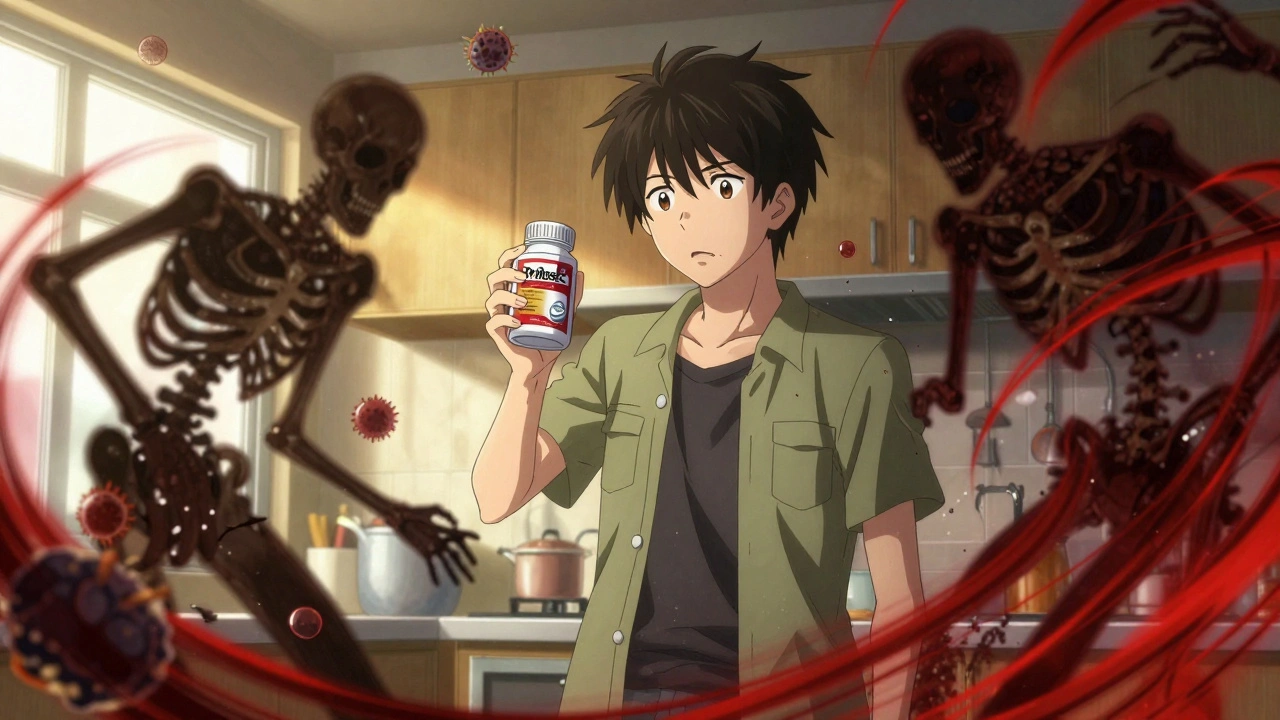
Proton pump inhibitors are among the most common medications prescribed in the U.S. - millions of people take them daily for heartburn, acid reflux, or ulcers. They work fast, they work well, and for many, they feel like a lifeline. But what happens when you take them for months? Or years? The truth is, these drugs aren’t harmless. While they’re excellent at shutting down stomach acid, long-term use comes with real, documented risks that many patients - and even doctors - don’t fully understand.
What Proton Pump Inhibitors Actually Do
Proton pump inhibitors - or PPIs - stop your stomach from making acid. They target the final step: the proton pumps in the stomach lining that push acid into your digestive tract. By blocking those pumps, PPIs reduce acid production by up to 99%. That’s why they’re so effective for healing erosive esophagitis, treating ulcers, and managing severe GERD. Common brands include Prilosec (omeprazole), Nexium (esomeprazole), and Protonix (pantoprazole). You can buy some of them over the counter, but even OTC versions come with warnings: don’t use them for more than 14 days without talking to your doctor.
They’re not instant relief like Tums or Pepcid. It takes 1 to 4 days for PPIs to build up to full strength. That’s why people often feel like they’re not working at first - but they’re not meant for quick fixes. They’re designed for ongoing control.
The Hidden Risks of Long-Term Use
Just because a drug is widely used doesn’t mean it’s safe forever. The FDA has issued seven safety warnings about PPIs since 2010. Here’s what the evidence shows:
- Fracture risk: Long-term PPI use increases your chance of breaking a hip, spine, or wrist. One study found people who took PPIs for 6 to 8 years had a 55% higher risk of hip fractures compared to non-users. The risk drops after stopping - bone density can recover.
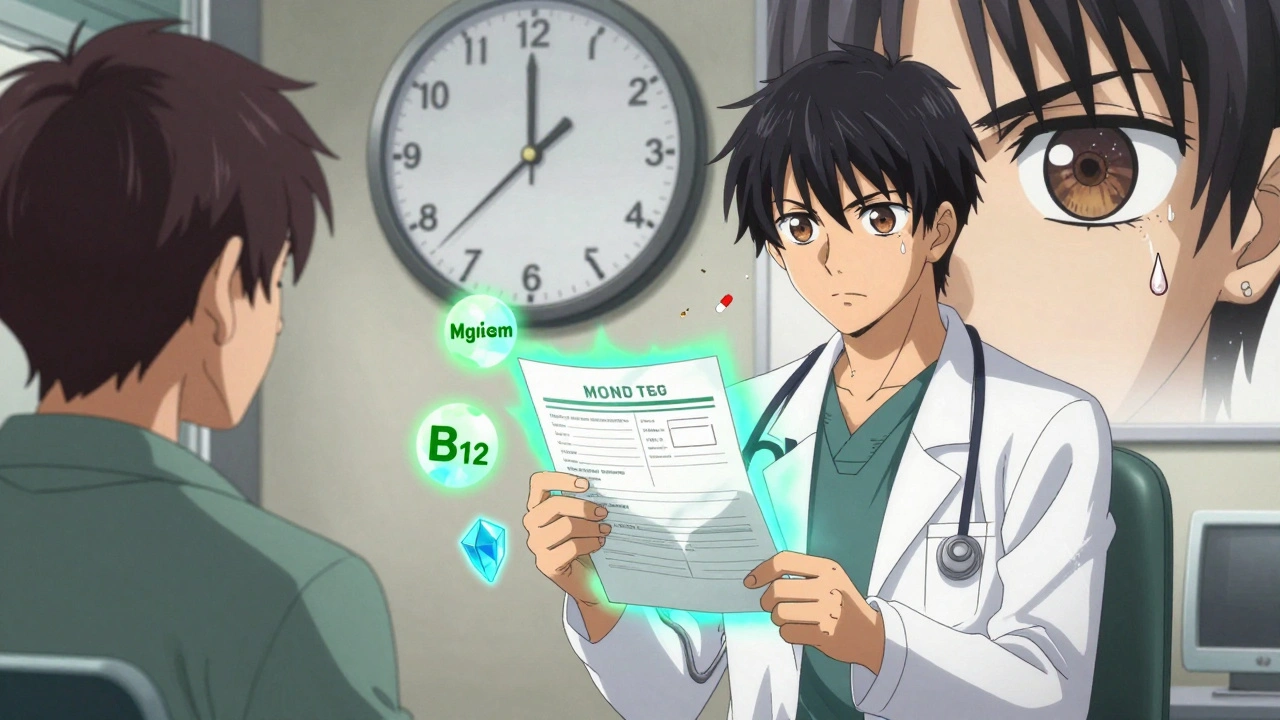
- Magnesium deficiency: PPIs interfere with magnesium absorption. Levels can drop slowly over time, leading to muscle cramps, irregular heartbeat, or seizures. The FDA now recommends checking magnesium levels after one year of daily use.
- Vitamin B12 deficiency: Stomach acid helps break down B12 from food. Less acid means less absorption. About 1 in 7 long-term PPI users becomes deficient. Symptoms include fatigue, numbness, memory issues, and even depression.
- C. diff infections: Your stomach acid normally kills harmful bacteria. With less acid, C. difficile - a dangerous gut bug - can survive and cause severe diarrhea, especially in hospitals or nursing homes. The risk doubles with PPI use.
- Acute interstitial nephritis: This is a rare but serious kidney inflammation. It can lead to permanent kidney damage if not caught early. Symptoms include fever, nausea, fatigue, and changes in urination.
- Rebound acid hypersecretion: This is the biggest reason people can’t stop PPIs. After months or years of suppression, your stomach overcompensates. When you quit cold turkey, acid surges back - worse than before. That’s why many think they need to stay on them forever. But it’s not a permanent problem. It’s a withdrawal effect.
Some studies have linked PPIs to dementia, heart disease, or kidney disease. But these are mostly observational - meaning they show a connection, not proof that PPIs caused it. People who take PPIs long-term often have other health issues: diabetes, obesity, smoking, or chronic illness. These factors could be the real culprits. Experts like Dr. William Ravich from Yale Medicine say: "Many of these studies didn’t isolate PPIs. They looked at people with multiple risks and assumed the PPI was the problem."
Who Should Be on PPIs Long-Term?
Not everyone needs to be on PPIs forever. The American College of Gastroenterology says PPIs should be used at the lowest dose for the shortest time possible. Here are the situations where long-term use makes sense:
- Severe, healing esophagitis (grade C or D)
- Barrett’s esophagus (a precancerous condition)
- Recurrent ulcers caused by NSAIDs or H. pylori
- Zollinger-Ellison syndrome (a rare tumor that overproduces acid)
For most other cases - like mild heartburn, occasional reflux, or unexplained dyspepsia - PPIs are often unnecessary. Lifestyle changes, H2 blockers like famotidine, or on-demand use work just as well. Yet, studies show 40% of PPI prescriptions are for dyspepsia without any endoscopic confirmation of disease. That’s overprescribing.
How to Stop PPIs Safely
Stopping PPIs isn’t as simple as skipping a pill. If you’ve been on them for more than 3 months, quitting suddenly can trigger severe rebound acid - heartburn so bad it feels worse than before you started.
Here’s how to do it right:
- Don’t quit cold turkey. Abrupt stopping leads to rebound in 40% to 80% of people.
- Reduce your dose gradually. Cut your daily dose in half for 1 to 2 weeks. For example, go from 40 mg to 20 mg.
- Switch to on-demand use. Once you’re on half-dose, take it only when you feel symptoms - not every day.
- Use H2 blockers as a bridge. Famotidine (Pepcid) or ranitidine (if available) can help control acid during tapering. They don’t cause rebound like PPIs.
- Try lifestyle changes. Avoid late meals, cut out caffeine and alcohol, lose weight if needed, and sleep with your head elevated.
- Give it time. Rebound usually lasts 2 to 8 weeks. After that, acid production returns to normal.
Some people can stop completely. Others need to stay on a low dose. The goal isn’t always to quit - it’s to use the least amount needed to stay symptom-free.
What to Do If You’re on PPIs Now
If you’re taking a PPI daily, ask yourself these questions:
- Did a doctor diagnose a condition that requires long-term acid suppression?
- Have I had an endoscopy to confirm the reason I’m on this drug?
- Have I tried stopping before and had terrible rebound?
- Am I using an OTC version longer than 14 days without seeing a doctor?
If you answered yes to any of these, it’s time to talk to your provider. Don’t wait until you feel sick. Schedule a review. Ask: "Is this still necessary? Can we try to taper?"
Also, get tested if you’ve been on PPIs for over a year. Check your magnesium and B12 levels. These are simple blood tests. Catching a deficiency early prevents nerve damage, fatigue, or heart rhythm problems.

The Bigger Picture: Why So Many People Are on PPIs
Why are so many people on these drugs? Partly because they work. Partly because patients demand them. And partly because doctors don’t always challenge them.
Between 2002 and 2012, PPI prescriptions jumped 72%. Today, about 15 million Americans are on prescription PPIs. Another 7 million are using OTC versions longer than recommended. That’s 22 million people - and a huge chunk of them don’t need them.
It’s also expensive. Inappropriate PPI use costs the U.S. healthcare system over $12 billion a year. That’s not just money - it’s risk. Every extra pill increases the chance of side effects.
And the perception that PPIs are "harmless" is dangerous. They’re not like aspirin. They change how your body works. Long-term suppression of acid has ripple effects - on your gut bacteria, your nutrient absorption, your bone health, your kidneys.
What’s Next? New Options Are Coming
Researchers are working on alternatives. One promising drug is vonoprazan - a potassium-competitive acid blocker (P-CAB). It works faster than PPIs and may not cause the same rebound or nutrient issues. It’s already used in Japan and South Korea. The FDA approved it in late 2023 for certain cases. But long-term safety data? Still limited.
For now, PPIs remain the gold standard for severe acid-related diseases. But they’re not the only tool. H2 blockers, lifestyle changes, and smart tapering can work just as well - and without the long-term risks.
Can I stop taking PPIs on my own?
No, not if you’ve been taking them daily for more than 3 months. Stopping suddenly can cause severe rebound acid, making heartburn worse than before. Always work with your doctor to taper down slowly. Use H2 blockers like famotidine during the process if needed.
Do PPIs cause kidney damage?
PPIs can cause acute interstitial nephritis - a sudden kidney inflammation - in rare cases. This can lead to permanent damage if untreated. However, studies linking PPIs to chronic kidney disease are inconclusive. The risk is low, but it’s real. If you notice swelling, fatigue, or changes in urination, get tested.
Are over-the-counter PPIs safer than prescription ones?
No. OTC PPIs have the same active ingredients and risks as prescription versions. The only difference is the dose - OTC is usually 20 mg, while prescriptions can be higher. The FDA limits OTC use to 14 days every 3 months because long-term self-medication is dangerous. If you need it longer, you need a doctor’s evaluation.
Can PPIs cause vitamin deficiencies?
Yes. Long-term use (over 2 years) can lower levels of vitamin B12, magnesium, calcium, and iron. B12 deficiency affects 10-15% of long-term users. Magnesium deficiency, while rare, can be life-threatening. Get blood tests if you’ve been on PPIs for more than a year.
Is it true that PPIs increase the risk of fractures?
Yes. Studies show a 40-55% higher risk of hip, spine, and wrist fractures in people who take PPIs daily for 4-8 years. The risk comes from reduced calcium absorption and lower bone density. The good news? Fracture risk drops back to normal within 2 years of stopping PPIs.
What are the signs I might be dependent on PPIs?
If you feel worse when you skip a dose, or if you can’t go more than a day without heartburn, you may be experiencing rebound acid. This isn’t addiction - it’s your stomach overproducing acid after long-term suppression. It’s a physiological response, not a psychological one. Tapering slowly will help.
Final Thoughts: Use Wisely, Not Forever
PPIs are powerful tools - but they’re not meant to be taken for life without review. If you’ve been on them for years, it’s not too late to reassess. Talk to your doctor. Get tested. Try tapering. You might find you don’t need them anymore. And if you do? Use the lowest dose possible. Your body will thank you.

About Author





OMG YES THIS!! I was on PPIs for 5 years and didn't realize I was basically starving my body of B12... I had numb hands and felt like a zombie. Got tested, started supplements, and tapered slowly with Pepcid. Now I'm off and feel like a new person!! 🙌❤️
Ofc the pharma giants don't want you to know this. They make BILLIONS off PPIs. Meanwhile, your bones crumble and your kidneys fail... but hey, at least your heartburn's gone, right? 😏 #BigPharmaLies #PPIConspiracy
So... you're telling me that 'just take this pill' isn't the answer? Shocking. 🙄 I've been telling my doctor this for years. Also, OTC PPIs are NOT safer. Stop lying to yourselves.
It is imperative to note that the causal relationship between prolonged PPI usage and adverse physiological outcomes remains statistically indeterminate in numerous peer-reviewed longitudinal analyses. Correlation does not, in fact, imply causation.
I totally get it. I was on Nexium for 7 years and thought I needed it forever. Then I started walking 30 mins a day, stopped eating pizza at midnight, and switched to H2 blockers on bad days. It took 6 weeks of mild discomfort, but now I feel better than I have in a decade. You can do it! 💪 Don't give up!
People just don't take responsibility anymore. You eat garbage, drink soda all day, lie down after meals, and then expect a pill to fix it. PPIs are a band-aid on a bullet wound. The real problem is your lifestyle. Stop blaming the medication and start blaming yourself.
This made me cry. I didn't know my fatigue and brain fog were from B12 deficiency. I've been on PPIs since 2018... I'm scheduling my doctor's appointment tomorrow. Thank you for writing this. 🤍
I read this and immediately DM'd my mom who's been on Prilosec for 12 years. She's like 'but I need it!' and I'm like 'BUT YOUR BONES ARE TURNING TO DUST' 🤯 She's gonna get tested. We got this fam.
As a registered dietitian, I can confirm: PPI-induced B12 and magnesium deficiencies are underdiagnosed and often misattributed to aging or stress. Blood tests are simple, cheap, and critical. If you're on PPIs >1 year, get your levels checked. Don't wait for symptoms.
I love how we've turned medicine into this 'pill for everything' culture. Back in my day, we ate oatmeal, avoided coffee after 4pm, and slept propped up. Now we just pop a pill and call it a day. We've lost touch with the basics.
I think the government is hiding the truth. PPIs are linked to 5G, AI brain chips, and the moon landing being fake. Also, my cat got sick after I started taking them. Coincidence? I think not. 🐱🔮
Thank you for writing this with such clarity. I'm a nurse and see this every day. Patients come in terrified to stop. We need more education - not just for patients, but for doctors too.
I tapered off after 4 years and it was brutal for 3 weeks... but now I don't even miss it. I just eat slower and avoid spicy food. My doctor said I'm a success story. 💕
Wait so... if I stop, my stomach will make MORE acid? Like... it gets mad? That's wild. I thought it was broken. So it's not broken, it's just... overcompensating? That's kinda cool. I'm gonna try this.
You're all wrong. I've been on PPIs for 15 years. I'm 32. My bones are fine. My B12 is perfect. I got my bloodwork done last week. You're all just scared of medicine. Trust your doctor, not Reddit.