
What Is an ANDA? The Complete Guide to Abbreviated New Drug Applications and FDA Approval
Every time you pick up a generic pill at the pharmacy-say, a $4 version of a brand-name blood pressure medicine-you’re benefiting from something called an ANDA. That’s short for Abbreviated New Drug Application. It’s not a fancy term, but it’s one of the most powerful tools in American healthcare. Since 1984, the ANDA pathway has saved U.S. consumers over $2.2 trillion by letting generic drugmakers bring affordable alternatives to market without repeating expensive clinical trials. But what exactly is an ANDA? And how does it actually work?
What Is an ANDA, Really?
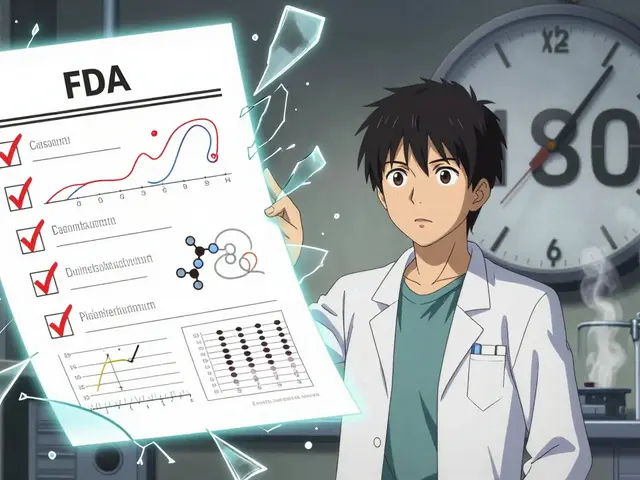
An ANDA is a formal request submitted to the U.S. Food and Drug Administration (FDA) asking permission to sell a generic version of a brand-name drug. It’s called “abbreviated” because it doesn’t require the same mountain of clinical data as the original drug’s application. Instead, the generic company only needs to prove one thing: that their version works the same way as the brand-name drug already approved by the FDA.
The brand-name drug is called the Reference Listed Drug (RLD). You can find it listed in the FDA’s Orange Book, which tracks every approved drug and its patent status. The generic maker must match the RLD exactly in four key areas: the active ingredient, the strength, the dosage form (like tablet or injection), and how it’s taken (by mouth, through skin, etc.).
That’s it. No need to prove the drug works in thousands of patients. No need to test it in animals for years. The FDA already did that for the original drug. The ANDA process is built on trust-trust that the original data is solid, and trust that the generic version is made to the same high standards.
How the ANDA Process Works Step by Step
Getting an ANDA approved isn’t simple, but it’s structured. Here’s how it plays out in real life:
- Choose the right reference drug. The generic company picks an FDA-approved brand-name drug from the Orange Book. They can’t just copy any drug-they have to pick one that’s off-patent or whose patents they’re legally challenging.
- Prove bioequivalence. This is the core of the ANDA. The generic drug must be absorbed into the bloodstream at the same rate and to the same extent as the brand. To prove this, companies run small studies with 24 to 36 healthy volunteers. Blood samples are taken over time to measure how much of the drug enters the system (called AUC) and how fast it peaks (called Cmax). The results must fall within 80% to 125% of the brand’s numbers. That’s the FDA’s strict but fair threshold.
- Match the manufacturing. The generic company must show they can make the drug consistently, in clean, controlled facilities. They submit detailed info on how the active ingredient is made, how it’s mixed with fillers, how it’s pressed into tablets, and how it’s packaged. Every step must be documented and repeatable.
- Submit the labeling. The drug’s package insert (the fine print that comes with the medicine) must match the brand’s exactly-except for the brand name and manufacturer info. No false claims. No extra warnings. No missing side effects.
- Wait for FDA review. The FDA has 10 months to review a standard ANDA under current timelines set by GDUFA (Generic Drug User Fee Amendments). If everything checks out, they approve it. If not, they send a “complete response letter” listing what’s missing or wrong.
Once approved, the generic drug gets its own six-digit ANDA number-like ANDA 214455 for the generic version of Eliquis. That number stays with the product forever, even if the company changes hands.
ANDA vs. NDA: Why the Difference Matters
Before the ANDA, every new drug had to go through a New Drug Application (NDA). That’s the full, expensive, decade-long process. An NDA requires:
- Years of animal testing
- Multiple phases of human clinical trials (Phase I, II, III)
- Thousands of patients enrolled
- Over $2 billion in development costs
An ANDA? It skips all that. The average cost to develop a generic drug is between $1 million and $5 million. The timeline? Three to four years. That’s why there are now over 11,000 approved generic drugs in the U.S.-and why 90% of prescriptions filled are generics.
Think of it like this: The NDA is building a new house from the ground up. The ANDA is buying a blueprint and rebuilding the exact same house with different bricks and paint. The structure is identical. The function is identical. The cost? A fraction.
Who Benefits from ANDA Approval?
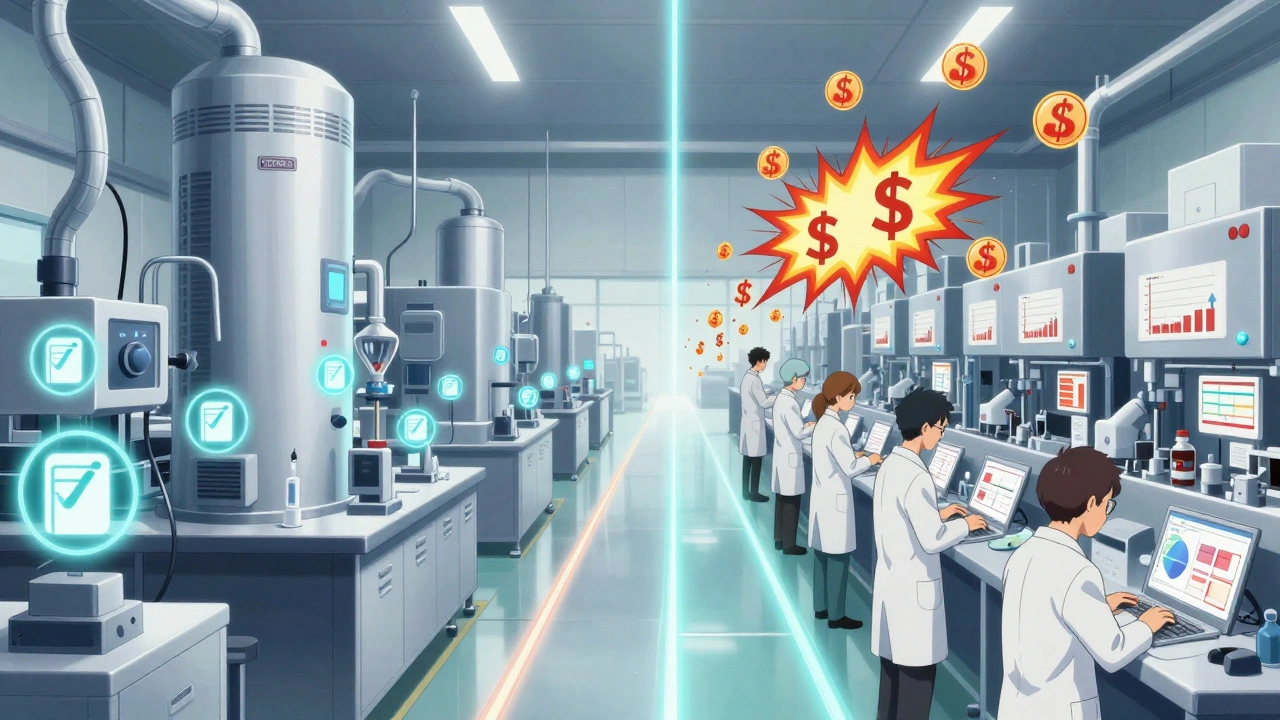
The savings are staggering. In 2023, generic drugs saved the U.S. healthcare system $313 billion. That’s not just money in patients’ pockets-it’s money that keeps insurance premiums lower, Medicare solvent, and hospitals stocked with essential meds.
Patients get access. A brand-name insulin might cost $300 a vial. The generic? $25. A generic statin for cholesterol? $4 a month. Without ANDAs, millions of Americans couldn’t afford their prescriptions.
Even the brand-name companies benefit indirectly. When generics enter the market, they force innovation. Companies can’t just rest on their patents-they have to keep developing better drugs or risk losing market share.
Where the ANDA Process Gets Tricky
It’s not all smooth sailing. Some drugs are harder to copy than others. These are called “complex generics.” Think inhalers, topical creams, eye drops, or injectables with special delivery systems. For these, proving bioequivalence isn’t as simple as checking blood levels.
Take a generic asthma inhaler. The active ingredient might be the same, but if the propellant or nozzle design is slightly off, the drug won’t reach the lungs the same way. The FDA has been working since 2022 to create new guidance for these products. But approval times are longer, and rejection rates are higher.
Another headache? Patents. The Hatch-Waxman Act lets generic companies challenge brand-name patents. If they do, they can get 180 days of exclusive market rights-meaning no other generic can enter during that time. That’s why big generic makers like Teva and Mylan often fight patent battles. But it also means smaller companies can get stuck waiting years if a patent lawsuit drags on.
And then there’s manufacturing. The FDA inspects thousands of facilities worldwide. Many ANDA-approved drugs are made in India or China. A single inspection failure can delay a product for months. In 2022, 32% of FDA rejection letters cited problems with manufacturing controls.
Why Generic Drugs Are Just as Safe
One of the biggest myths is that generics are “weaker” or “inferior.” That’s not true. The FDA requires them to meet the same quality, purity, and strength standards as brand-name drugs. In fact, many brand-name drugs are made in the same factories as generics-just under a different label.
Studies show that 97% of generic drugs are therapeutically equivalent to their brand-name counterparts. That means patients get the same clinical results-same effectiveness, same side effects, same safety profile.
Even the American Medical Association and the FDA itself say generics are safe and effective. If you’ve ever switched from brand to generic and felt no difference, that’s by design.
What’s Next for ANDAs?
The FDA’s latest plan, GDUFA IV, aims to get 90% of ANDAs approved on the first try by 2027. Right now, only about 65% clear it on the first submission. That means more efficiency, fewer delays, and faster access to low-cost drugs.
Experts predict that by 2028, 25% of all generic drugs will be complex ones-like injectables or nasal sprays. That’s a big shift. It means the ANDA process is evolving to handle more sophisticated medicines, not just simple pills.
But challenges remain. Supply chain risks are real. Over half of generic drug ingredients come from just two countries. If there’s a disruption-like a natural disaster or trade restriction-drug shortages can happen fast. The FDA is pushing for more diversified manufacturing, but it’s a slow process.
Still, the big picture is clear: ANDAs work. They’re the backbone of affordable medicine in America. They’re not perfect, but they’re the best system we have for making sure everyone, not just the wealthy, can get the drugs they need.
Is an ANDA the same as a generic drug?
No. An ANDA is the application submitted to the FDA to get approval to make and sell a generic drug. The generic drug is the actual product that results after the ANDA is approved. Think of the ANDA as the paperwork, and the generic drug as the medicine you pick up at the pharmacy.
Can any company file an ANDA?
Technically, yes-but it’s not easy. The company must have the scientific expertise, manufacturing facilities, and regulatory team to meet FDA standards. Most ANDAs come from established generic drug manufacturers like Teva, Mylan, or Sandoz. Smaller companies often struggle with the complexity, especially around bioequivalence testing and manufacturing controls.
Do generic drugs take longer to work than brand-name drugs?
No. Because they’re required to be bioequivalent, generic drugs enter the bloodstream at the same rate and to the same extent as the brand-name version. If you take a generic version of a pain reliever, it will work just as fast as the brand-name version. Any perceived difference is usually psychological or due to inactive ingredients (like fillers or coatings), not the active drug.
Why are generic drugs cheaper if they’re the same?
They’re cheaper because they don’t have to pay for the original research, clinical trials, or marketing campaigns. The brand-name company spent billions developing the drug and promoting it. Generic companies only pay for proving equivalence and manufacturing. That savings gets passed directly to patients and insurers.
How long does it take to get an ANDA approved?
Under current FDA timelines, a standard ANDA takes about 10 months to review. But if the application is incomplete or has issues, the FDA will issue a complete response letter, and the clock resets. On average, companies resubmit 2-3 times before approval. With the FDA’s new GDUFA IV goals, they aim to cut that down to mostly first-time approvals by 2027.
Are all generic drugs approved through an ANDA?
Almost all. In the U.S., 98% of generic drugs enter the market via the ANDA pathway. The only exceptions are very rare cases where a drug is considered “complex” and doesn’t fit the standard bioequivalence model-those may use special FDA programs, but they’re still based on the same principles.
Final Thoughts
If you’ve ever wondered why your prescription costs so much less than it used to, the answer is usually an ANDA. It’s not glamorous. It doesn’t make headlines. But it’s one of the quietest, most effective public health tools ever created. It turns innovation into accessibility. It turns monopoly pricing into competition. It turns hope into a pill you can actually afford.
The system isn’t flawless. It needs updates for complex drugs. It needs stronger supply chains. But it works. And for millions of people, that’s everything.

About Author

Just read the part about bioequivalence thresholds-80% to 125%? That’s wild. It means a generic could technically be 20% weaker or 25% stronger and still be approved. I get why they do it for practicality, but it still feels like a gamble when your life depends on it.
Oh please. The FDA’s ‘trust but verify’ system is a joke. They approve generics made in factories where inspectors have to fly halfway across the globe just to find a mouse turd in the production line. And you call that ‘the same quality’? The brand-name drug was tested on 10,000 people. The generic? 36 college kids on a Tuesday morning. Don’t fool yourself.
One must observe that the regulatory framework governing Abbreviated New Drug Applications represents a paradigmatic triumph of utilitarian ethics in pharmaceutical policy. The reductionist epistemology underpinning bioequivalence metrics-while statistically defensible-nonetheless obscures the ontological integrity of therapeutic equivalence. One is left to ponder: Is sameness in pharmacokinetics sufficient for moral equivalence in clinical outcomes?
idk man i just take the cheap one and it works. i dont care if its made in india or china. my blood pressure aint gonna care if the tablet has a different color dye in it. the drug is the drug. stop overthinking it.
Excellent breakdown! Truly, the ANDA system is a beacon of hope for millions who cannot afford life-saving medications. I have seen patients in rural India who rely on these generics to survive-each pill is a lifeline. Let us continue to support transparent manufacturing and global collaboration to ensure safety and accessibility for all.
And who really owns the patents? Big Pharma. And who controls the FDA? Big Pharma. And who gets the 180-day monopoly? Big generic companies that are owned by the same VCs. It’s all one big game. The ‘cheap’ generic? Still priced to make someone rich. The real winners? Hedge funds. The losers? You and me. Wake up.
Let’s be real: 32% of rejections are manufacturing issues? That’s not a glitch-it’s a feature. The FDA lets subpar facilities slide because they’re too busy approving 1,000+ applications a year. And don’t get me started on how they greenlight drugs made in plants with zero U.S. oversight. You think your ‘generic’ insulin was made under sterile conditions? Maybe. Maybe not.
Why are we letting foreign countries make our medicine? China and India are our enemies. We should ban all ANDAs unless the pills are made in America. End the outsourcing. End the dependency. End the weakness. Make America’s medicine again.
Actually, generics are worse. I switched to a generic antidepressant and felt like a zombie for two weeks. My doctor said ‘it’s the same.’ But my brain knew better. The brand had a different filler-something that subtly affected absorption. They don’t test that. They don’t care. And now I’m paying more to go back to the brand. Thanks, capitalism.
So you’re saying the FDA approves drugs based on 36 people’s blood tests? That’s not science-that’s a coin flip. And now we’re supposed to trust this system with our lives? No thanks. I’ll pay extra for the brand. At least I know who made it. And it wasn’t some guy in a basement in Hyderabad.
generic? more like generic trash. you think america needs to be dependent on china for our heart meds? no way. this is national security. if china cuts off supply, we die. and you’re all just sitting here like ‘oh cool, $4 pill’? dumbass.
Costs less. Works same. No drama. Take it.
And yet… the FDA approves ANDAs from factories that have been caught falsifying data… again… and again… and AGAIN. This isn’t regulation-it’s a farce. We’re playing Russian roulette with our meds, and the FDA is just smiling while spinning the chamber. I’d rather pay $300 for a brand-name pill than risk dying because someone in Bangalore skipped a quality check.
It is deeply troubling that the American public has been conditioned to accept pharmaceutical mediocrity under the guise of affordability. One cannot equate cost reduction with ethical responsibility. The erosion of clinical rigor, even under the banner of efficiency, represents a moral failure of the highest order.
the real hero here is the guy who figured out how to prove bioequivalence without testing on 10k people. genius. saved billions. no one talks about it. but it’s the quietest revolution in modern medicine. i’m glad i get to take it.