
Esketamine Nasal Spray: What You Need to Know About Dissociation, Blood Pressure, and Monitoring
Esketamine Side Effect Estimator
Esketamine Side Effect Calculator
Estimate expected blood pressure changes and dissociation intensity based on your treatment parameters.
Expected Effects
Intensity of Dissociation
Blood Pressure Changes
Important: These are estimates based on clinical trial data. Individual responses may vary significantly. Always consult your healthcare provider for personalized advice.
When traditional antidepressants don’t work, esketamine nasal spray - sold as Spravato - offers a real, science-backed option. But it’s not like taking a pill at home. This treatment comes with intense side effects, strict rules, and a monitoring process that feels more like a medical procedure than a routine doctor’s visit. If you or someone you know is considering esketamine for treatment-resistant depression, understanding what happens during and after administration isn’t optional - it’s essential.
How Esketamine Works Differently
Most antidepressants target serotonin, norepinephrine, or dopamine. Esketamine doesn’t. It works on glutamate, the brain’s main excitatory neurotransmitter, by blocking NMDA receptors. This unique mechanism is why it can lift depression in hours or days, not weeks. The effect isn’t just faster - it’s deeper for people who’ve tried four, five, or even six other meds without relief. In clinical trials, nearly 60% of patients with treatment-resistant depression saw a significant drop in symptoms within 24 hours of their first dose.But that same mechanism also causes dissociation and blood pressure spikes. When esketamine blocks NMDA receptors on inhibitory neurons, it accidentally turns up the volume on other brain circuits. That’s why people feel detached from their bodies, as if they’re floating or watching themselves from outside. It’s not a hallucination in the classic sense, but it’s close enough to be alarming if you’re not prepared.
Dissociation: More Common Than You Think
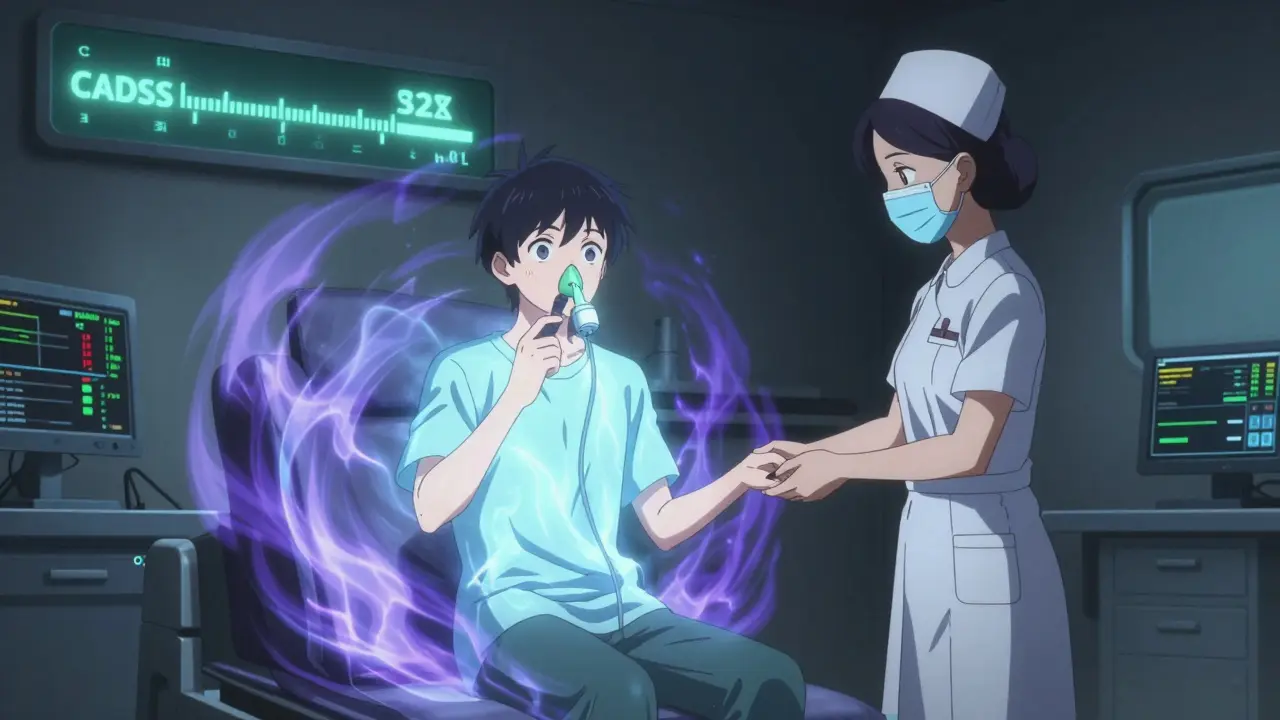
In clinical studies, over half of patients on esketamine experienced dissociation - compared to just 14% on placebo. At the highest dose (84 mg), that number jumps to 61%. Symptoms include feeling unreal, numb, disconnected from surroundings, distorted time perception, and sometimes mild visual or auditory changes. These aren’t rare side effects - they’re expected.The peak hits around 40 minutes after spraying. That’s when most people report the strongest sense of detachment. For many, it feels like being in a dream. One patient described it as “being underwater while everyone else is on land.” Most symptoms fade within 90 minutes, and by two hours, nearly everyone is back to normal. With repeated doses, the intensity often drops. Many patients say the third or fourth session feels much milder than the first.
Healthcare providers use a tool called the CADSS (Clinician-Administered Dissociative States Scale) to measure how severe it is. If someone scores above 3, it’s considered severe. That happened in about 6% of cases during trials. Clinics are trained to respond - dimming lights, speaking calmly, offering reassurance. Benzodiazepines are kept on hand, but they’re rarely needed. Only 1.2% of treatments required them.
Blood Pressure Spikes: A Real Risk
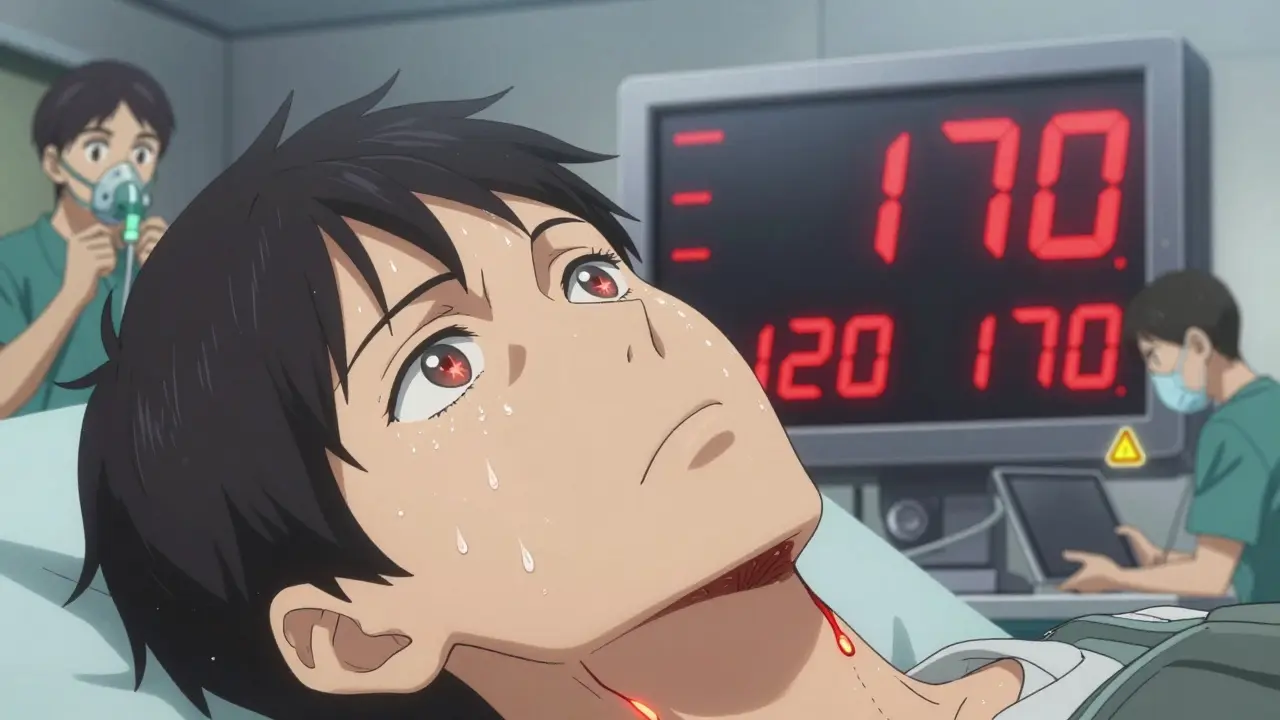
Esketamine doesn’t just affect your mind - it affects your body. Within five minutes of spraying, blood pressure begins to rise. Systolic pressure (the top number) can jump 14 to 23 points. Diastolic (the bottom number) can climb 7 to 16 points. That’s enough to trigger warning signs in people with heart conditions.Over 30% of patients in trials developed treatment-emergent hypertension - meaning their blood pressure hit or exceeded 140/90. For comparison, only 14% of those on placebo did. These spikes are temporary. Almost all return to normal within 90 minutes. But that doesn’t make them safe for everyone.
Patients with uncontrolled high blood pressure (above 160/100) are excluded from treatment. Those with a history of aneurysms, recent heart attacks, or vascular malformations are also turned away. In real-world use, about 28% of patients report noticeable increases, but 87% of those cases resolve without intervention. Still, clinics check blood pressure every 5 to 10 minutes for the first 30-40 minutes. If pressure climbs too high, the session is paused or stopped.
The REMS Program: Why You Can’t Take This Home
Esketamine is one of the few antidepressants in the U.S. that can’t be prescribed for home use. It’s locked under the FDA’s Risk Evaluation and Mitigation Strategy (REMS) program. That means you must receive it in a certified clinic, under direct supervision, and stay for at least two hours after each dose.The rules are strict:
- You must sign a Patient-Provider Agreement before every session.
- Staff must be trained and certified in REMS protocols.
- Clincs must have oxygen, emergency meds, and monitoring equipment on site.
- Vital signs - blood pressure, heart rate, oxygen levels - are checked every 5-10 minutes for the first half-hour, then every 15-30 minutes after.
- Dissociation is assessed at the 40-minute mark using standardized scales.
There’s no flexibility. Even if you feel fine, you can’t leave early - unless you’re part of a new FDA-approved pilot. In September 2023, the FDA allowed some patients to be discharged after one hour if their vital signs stayed stable and dissociation was mild (CADSS score under 10). This change came from the SUSTAIN-2 trial, which showed 63% of patients met those criteria after the first hour.
Still, 95% of clinics stick to the full two-hour rule. The risk isn’t worth the shortcut.
What Patients Really Say
Online communities like r/Spravato (with over 12,000 members) and Healthgrades offer real, unfiltered feedback. The most common comment? “It was scary the first time - but worth it.”One user wrote: “My first session, I felt like I was floating out of my body. I couldn’t speak. I thought I was dying. The nurse just sat quietly, held my hand, and said, ‘This is normal. It’ll pass.’ By 90 minutes, I was crying - not from sadness, but relief. I hadn’t felt this clear in years.”
Another, with a history of hypertension, shared: “I had to stop after two sessions. My blood pressure hit 170 even though I was on meds. The clinic was great, but my body just couldn’t handle it.”
On Drugs.com, 91% of positive reviews mention the staff’s competence as the reason they felt safe. That’s the biggest factor - not the drug itself, but the system around it. People don’t leave because they hate the side effects. They leave because they didn’t feel supported.
Cost, Access, and the Future
Spravato costs around $1,000 per dose. Insurance often covers it for treatment-resistant depression, but prior authorizations can take weeks. Many clinics report delays of 3-6 weeks just to get approval.Access is uneven. Urban areas have over three certified centers per 100,000 people. Rural areas have less than one. That means many who could benefit never even get to the clinic.
Companies are working on alternatives - oral versions, IV infusions, even digital tools to monitor dissociation remotely. But none have matched esketamine’s effectiveness yet. The FDA hasn’t relaxed REMS rules, even as telehealth expands. Why? Because dissociation and blood pressure spikes are built into how the drug works. You can’t separate the benefit from the risk.
Still, sales grew 28% in 2022, and over 125,000 people in the U.S. have used it. The number of certified clinics has jumped from 350 in 2019 to over 2,800 today. That’s progress. But the real test isn’t how many clinics exist - it’s whether every patient who needs it can get it safely.
Final Thoughts
Esketamine nasal spray isn’t a miracle cure. It’s a powerful tool with real, measurable risks. Dissociation isn’t a glitch - it’s a sign the drug is working. Blood pressure spikes aren’t a mistake - they’re a signal to pause and watch.If you’re considering this treatment, ask yourself: Do I have access to a certified clinic? Can I commit to two hours every week for the first month? Am I okay with feeling disconnected, even briefly? Can I handle the emotional weight of knowing my body is reacting this way?
For many, the answer is yes. The relief from depression - the return of sleep, appetite, motivation - outweighs the discomfort. But it’s not for everyone. And that’s okay. The system is built to protect those who need it most, even if it makes access harder.
The future may bring better options. Until then, esketamine remains the only rapid-acting antidepressant approved for treatment-resistant depression. Its side effects are loud. But so is its impact.
Is esketamine nasal spray addictive?
Esketamine is not considered addictive in the way opioids or stimulants are. It doesn’t produce euphoria or cravings in clinical use. However, because it’s chemically related to ketamine - a drug with abuse potential - the FDA requires strict monitoring under the REMS program. There’s no evidence patients develop dependence when used as directed for depression.
How long does it take for esketamine to start working?
Many patients notice improvements in mood within 24 hours of the first dose. In clinical trials, significant symptom reduction was seen as early as day 2. This is much faster than traditional antidepressants, which often take 4-6 weeks. The full effect usually builds over 4-6 weeks of weekly treatments.
Can I drive myself home after treatment?
No. You must arrange for someone to drive you home. Dissociation, dizziness, and impaired coordination can last up to 2 hours. Even if you feel fine, your reaction time and judgment may still be affected. The REMS program requires you to leave the clinic with a responsible adult.
What happens if my blood pressure stays high after 2 hours?
If your blood pressure remains elevated beyond 2 hours, the clinic will monitor you longer and may contact your primary care provider. In rare cases, they may administer a short-acting blood pressure medication. This is uncommon - over 95% of patients return to normal within 2 hours. But clinics are prepared for these situations.
Do the side effects get worse over time?
No. In fact, most patients report that dissociation and blood pressure spikes become milder with repeated doses. The body adapts. Long-term studies (like the ongoing RECOVER trial) show no cumulative increase in side effects after months of treatment. This is one reason why maintenance dosing (every 1-2 weeks) is safe for many patients.
Can I use esketamine if I have anxiety?
Yes - many patients with treatment-resistant depression also have anxiety. Esketamine has been shown to reduce both depression and anxiety symptoms. However, if your anxiety is severe enough to trigger panic attacks, your provider may recommend starting with a lower dose (56 mg) and ensuring you have strong emotional support during sessions. The clinic staff will help you stay grounded.
What if I can’t afford the treatment?
Janssen, the manufacturer of Spravato, offers a patient assistance program that can reduce or eliminate out-of-pocket costs for eligible individuals. Many clinics also have financial counselors who help navigate insurance appeals. Don’t assume it’s unaffordable - explore options before giving up.
Next Steps If You’re Considering Esketamine
1. Confirm you’ve tried at least two antidepressants without success. Esketamine is only approved for treatment-resistant depression. 2. Talk to your psychiatrist. They’ll need to refer you to a certified clinic and review your medical history, especially for cardiovascular risks. 3. Find a certified Spravato provider near you. Use the official Spravato REMS website to locate one. 4. Prepare for the first session. Bring someone to drive you. Wear comfortable clothes. Avoid caffeine or heavy meals beforehand. 5. Ask questions. What’s their dissociation protocol? How do they handle high blood pressure? Do they use the CADSS scale? A good clinic will welcome your questions.This isn’t a quick fix. It’s a commitment. But for people who’ve lost years to depression, it’s one of the few paths back.


About Author

So we're just gonna hand out psychedelic nasal sprays like candy now? Next they'll be prescribing LSD for procrastination.
I mean, if you’re crying from relief after floating out of your body, congrats? You just got spiritually mugged by Big Pharma and called it therapy. 🤡 I’ve seen more genuine healing in a 10-minute walk in the woods than in 12 sessions of this $1k dissociation rave.
I'm so tired of people treating dissociation like it's a spa day. 😔 If you're feeling like you're underwater while everyone else is on land... that's not enlightenment. That's your brain getting hijacked. And you're paying $1000 for it? I'm sorry, but that's not healing - that's exploitation.
I’ve been following this thread because I’m considering it for my sister. She’s tried 7 meds. Nothing. The first time she heard about esketamine, she cried - not from fear, but because someone finally said, 'There’s another way.' I’m not blind to the side effects. But if someone’s been suicidal for 8 years and suddenly smiles at breakfast? I’ll take the 90-minute weirdness.
The clinical data is compelling, but what struck me most was the emphasis on human presence during treatment. The nurse holding the patient’s hand - that’s not pharmacology, that’s care. In a system that often reduces mental health to dosage charts, this level of attentiveness is rare and valuable.
The REMS protocol is not excessive - it is necessary. The pharmacokinetics of intranasal esketamine produce rapid, systemic effects that require vigilant monitoring. Failure to enforce these standards would constitute a breach of the standard of care in psychiatric therapeutics.
bro i tried this last year. first time i felt like i was watching myself from the ceiling. thought i was gonna die. nurse just sat there like 'yeah this is normal, breathe' and i was like ohhhhh okay. by hour 2 i was crying for no reason and then... i just felt normal. like i hadn't in 5 years. worth every second. even the $1k.
The pharmacodynamic profile of esketamine, when administered under REMS-compliant conditions, demonstrates a statistically significant improvement in HDRS-17 scores (p < 0.001) relative to placebo, with a number needed to treat (NNT) of approximately 4.3. This represents a paradigm shift in the treatment of TRD.
Why do we let pharmaceutical companies make mental health a luxury? In Europe they’re researching oral versions. Here? We make you sit in a clinic for two hours like you’re in rehab for coke. We’re so backwards.
Oh look, another American miracle drug that costs more than a used car and requires a 2-hour supervised meditation session. Meanwhile, Germany has a national mental health plan. We’re still arguing if floating out of your body counts as 'therapy'.
my cousin did this and it changed her life. she was so quiet for years, barely left the house. after the third session she started cooking again, called her mom, even went to a concert. the dissociation scared her at first - but the staff were so gentle. they didn’t rush her. that’s what matters more than the science.
it’s not magic. it’s not evil. it’s just a tool. if your brain’s been broken for a decade and nothing else worked… why not try something that works? the body reacts. so what? you don’t panic when your heart beats faster during a run. this is just your brain doing a reboot.
I’m just so proud of how far we’ve come 🙌 We used to lock people up for depression. Now we have clinics where people cry from relief after floating out of their bodies. 🌈💖 It’s not perfect, but it’s a start. And that’s beautiful.
Stop acting like this is some dangerous experiment. People are dying from untreated depression. If a drug can save lives - even with side effects - then we owe it to them to make it accessible. Stop letting bureaucracy kill people because you’re scared of dissociation. Get real.