
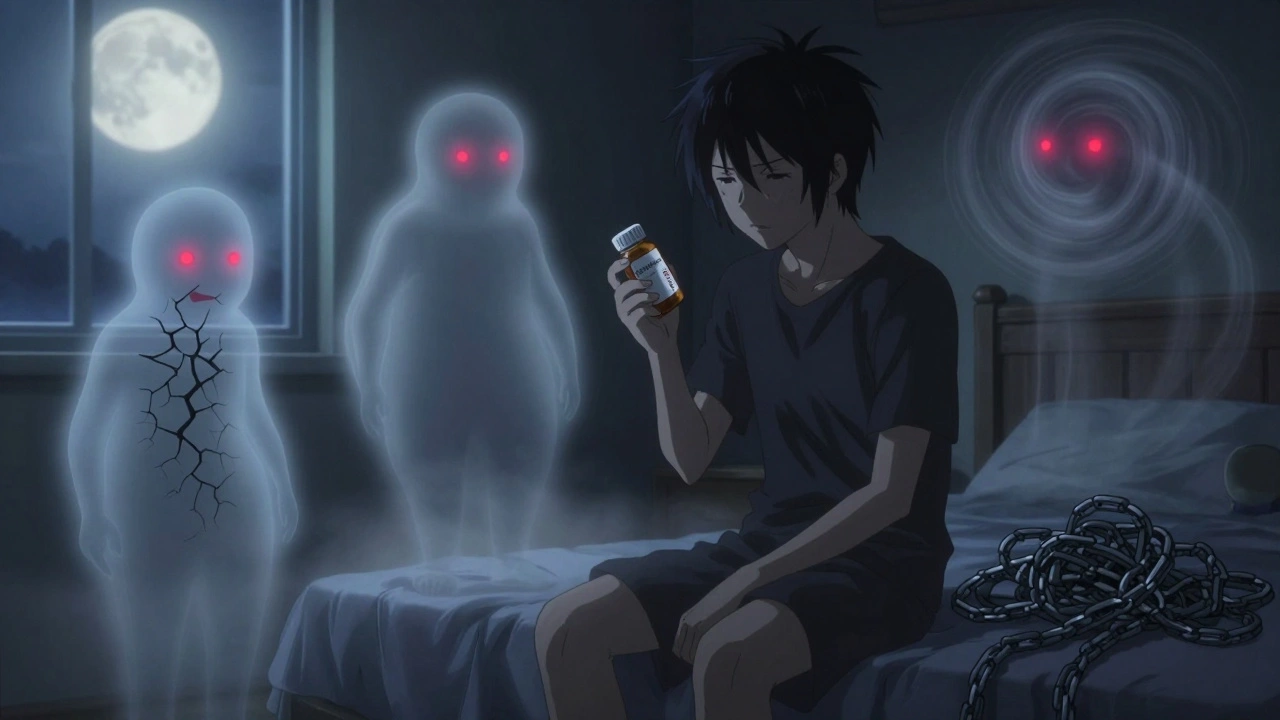
Tricyclic Antidepressant Side Effects: Amitriptyline, Nortriptyline, and Other TCAs Explained
TCA Safety Checker
Check Your TCA Safety
This tool helps assess your personal risk factors for TCA-related side effects based on the article. It does not replace medical advice.
Tricyclic antidepressants (TCAs) like amitriptyline and
How TCAs Work (And Why They Cause So Many Side Effects)
TCAs like amitriptyline, nortriptyline, and desipramine don't just target serotonin and norepinephrine. That’s the basic job of antidepressants. But TCAs also slap into other receptors in your body like a bull in a china shop. They block acetylcholine (anticholinergic), histamine (causing sleepiness), and alpha-1 adrenergic receptors (messing with blood pressure). That’s why one pill can cause dry mouth, blurry vision, constipation, dizziness, and fatigue-all at once.
Amitriptyline is the heavyweight here. It has the strongest grip on those receptors. Nortriptyline? It’s the lighter cousin. It’s a metabolite of amitriptyline, meaning your body turns amitriptyline into nortriptyline naturally. But because it’s less aggressive on those extra receptors, it tends to be better tolerated. That’s why doctors often switch patients from amitriptyline to nortriptyline when side effects get too rough.
Common Side Effects You Can’t Ignore
Up to 40% of people on amitriptyline feel so sleepy they can’t drive or work. That’s not just "feeling a little tired." That’s needing a nap after lunch, struggling to stay awake in meetings, or falling asleep while watching TV. Nortriptyline hits about 25% of users the same way. It’s not always listed as a "side effect" on the label, but it’s one of the top reasons people quit.
Dry mouth is another big one. It’s not just annoying-it’s dangerous. Saliva protects your teeth. Without enough of it, cavities multiply fast. One user on Reddit said they went through three bottles of Biotene a week and still got two cavities in six months. Dentists see this all the time with TCA users. Brushing more, drinking water constantly, and avoiding sugary drinks isn’t optional-it’s necessary.
Constipation hits 20-25% of users. It starts as mild discomfort. Then it becomes a daily battle. If left unchecked, it can lead to bowel obstruction-a medical emergency. Urinary retention is another hidden risk, especially for men over 50 with enlarged prostates. Some report being unable to urinate at all, needing catheterization. These aren’t rare. They’re common enough that doctors should screen for them before prescribing.
Orthostatic hypotension-dizziness when you stand up-is everywhere. Your blood pressure drops suddenly because the medication blocks the receptors that normally tighten your blood vessels when you move. One wrong step and you’re on the floor. People over 65 are especially at risk. Falls are the leading cause of injury in older adults on TCAs. One study found a 70% higher fall risk compared to non-users.
The Dangerous Stuff: Heart, Brain, and Overdose
TCAs are not safe for everyone. If you have heart disease, a history of arrhythmias, or even just high blood pressure, you need to be extra careful. These drugs can prolong your QTc interval-the time your heart takes to recharge between beats. A normal QTc is under 450 milliseconds. Amitriptyline can push it up by 20-40 ms. That might sound small, but it can trigger a deadly rhythm called torsades de pointes. Sudden cardiac death is rare, but it happens. That’s why doctors order an ECG before starting and again after a few weeks.
For older adults, the brain takes a hit. Confusion, memory lapses, disorientation-these aren’t just "getting older." They’re direct effects of anticholinergic burden. The Beers Criteria, the gold standard for safe prescribing in seniors, says to avoid amitriptyline entirely in people over 65. Studies show a 50% higher risk of cognitive decline in just one year. That’s not a risk worth taking unless there’s absolutely nothing else.
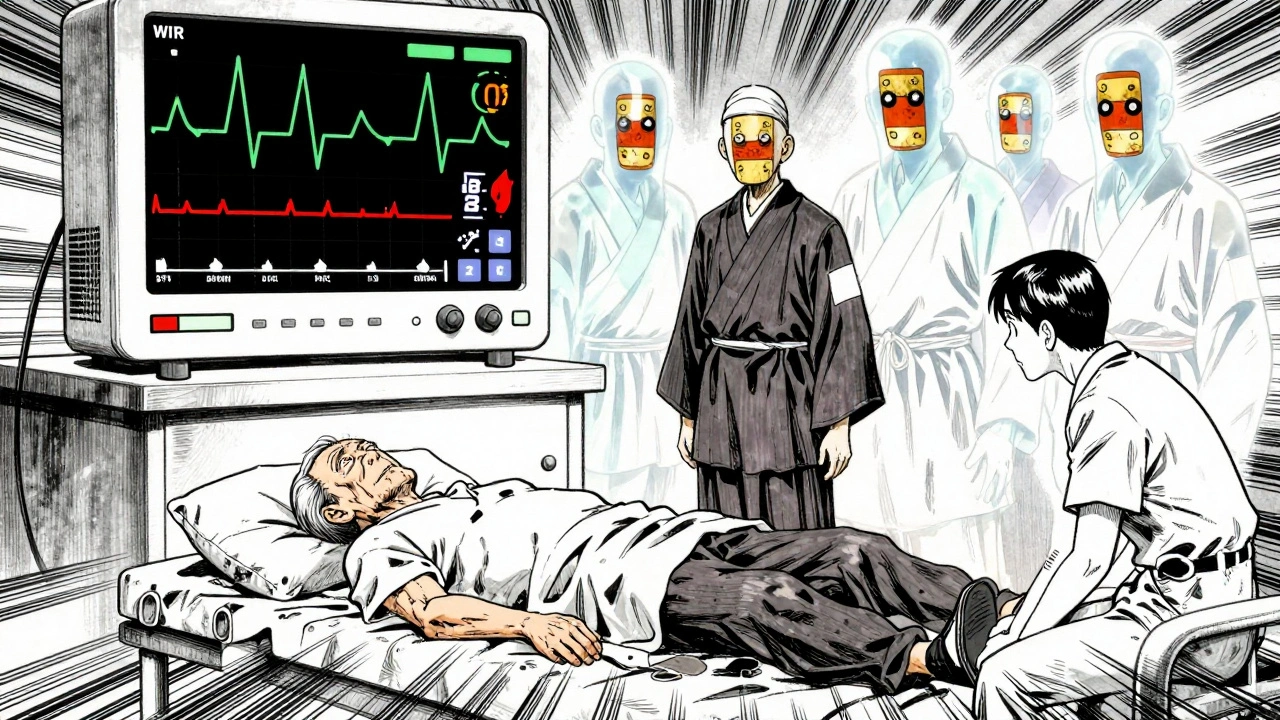
Overdose is terrifying. TCAs have one of the narrowest safety margins of any psychiatric drug. Take 10 extra pills? You could die. Symptoms include a widened QRS complex on ECG (over 100 ms), seizures, low blood pressure below 90 mmHg, and trouble breathing. Death usually comes from heart failure or respiratory arrest. Emergency rooms treat TCA overdoses as life-threatening emergencies. And unlike with SSRIs, there’s no antidote. Treatment is supportive-monitoring, fluids, maybe a ventilator. Prevention is everything.
Why Doctors Still Prescribe Them
If they’re so risky, why are 12 million prescriptions written for amitriptyline every year in the U.S.? Because for certain conditions, they’re the best tool we have.
For neuropathic pain-like diabetic nerve pain or post-shingles pain-amitriptyline works better than most newer drugs. A Cochrane Review found it gives at least 50% pain relief to 35-40% of patients. Duloxetine, an SNRI often used for this, only helps 20-25%. That’s a big difference when you’re in constant pain.
For migraines, it’s a proven preventive. One user reported going from 15 migraines a month to just 3 after starting amitriptyline. That’s life-changing. For treatment-resistant depression-when SSRIs and SNRIs have failed-TCAs still show a 65-70% response rate, compared to 50-55% for newer drugs. They’re not first-line anymore, but they’re third-line heroes.
Who Should Avoid TCAs-and Who Might Benefit
Don’t take a TCA if you:
- Have heart disease, recent heart attack, or arrhythmias
- Are over 65 (especially with memory issues or mobility problems)
- Have glaucoma, enlarged prostate, or severe constipation
- Take other medications that affect heart rhythm (like certain antibiotics or antifungals)
- Have a history of seizures
You might benefit if:
- You’ve tried at least two SSRIs or SNRIs and they didn’t work
- You have chronic nerve pain that’s not responding to gabapentin or pregabalin
- You have severe migraines and need prevention
- You’re under 65, otherwise healthy, and willing to monitor side effects closely
Nortriptyline and desipramine are often better choices than amitriptyline for older adults or those with heart concerns. They have fewer anticholinergic effects. Dosing matters too. Many people start too high. The real secret? Start low. 10-25 mg at bedtime. Wait four weeks. Then go up slowly. Most side effects fade over time-but not all. And if they don’t, you can switch.

Managing Side Effects Like a Pro
If you’re on a TCA, here’s what you actually need to do:
- Take it at night. That helps with drowsiness and lowers the risk of orthostatic hypotension during the day.
- Drink water constantly. Keep a bottle with you. Use sugar-free gum or lozenges for dry mouth.
- Brush and floss daily. See your dentist every 6 months. Ask for fluoride treatments.
- Stand up slowly. Count to three before walking after sitting or lying down.
- Watch for urinary issues. If you can’t start peeing, or it feels like you’re straining, tell your doctor immediately.
- Don’t stop suddenly. Withdrawal can cause electric shock sensations, nausea, and anxiety. Taper over 4-6 weeks with your doctor’s help.
- Get an ECG. Especially if you’re over 50 or on more than 100 mg daily.
Some patients combine low-dose amitriptyline (10-25 mg) with an SSRI. This can boost mood without pushing TCA side effects to the edge. It’s not for everyone, but it’s an option your doctor might not mention unless you ask.
The Bottom Line
TCAs aren’t bad drugs. They’re powerful, old-school tools with a lot of baggage. For the right person-someone with treatment-resistant depression, severe nerve pain, or chronic migraines-they can be life-changing. But for the wrong person, they can be dangerous.
If you’re considering one, ask your doctor: "Is this the best option for me, or just the cheapest?" Generic amitriptyline costs as little as $4 a month. But if you end up in the ER because of a fall or heart issue, the cost skyrockets.
Don’t let price or convenience override safety. If your doctor pushes you toward a TCA without checking your heart, your age, or your meds, get a second opinion. You deserve better than a pill that fixes one problem and breaks five others.
For many, TCAs are the last resort. But for those who’ve tried everything else? They’re the only thing that works. Just make sure you’re not just surviving-you’re truly better off.
Are tricyclic antidepressants still prescribed today?
Yes, but rarely for depression alone. TCAs like amitriptyline and nortriptyline are mostly used today for chronic nerve pain, migraine prevention, and treatment-resistant depression when newer drugs like SSRIs have failed. They account for only 5-7% of antidepressant prescriptions in the U.S., down from 30% in the 1990s.
Which TCA has the fewest side effects?
Nortriptyline and desipramine generally have fewer side effects than amitriptyline or imipramine. They’re secondary amine TCAs with lower affinity for anticholinergic and histamine receptors, meaning less dry mouth, drowsiness, and constipation. That’s why they’re often preferred for older adults or people sensitive to side effects.
Can amitriptyline cause weight gain?
Yes. Weight gain is common with amitriptyline, averaging 10-15 pounds in the first 6 months. It’s caused by increased appetite and slowed metabolism from histamine receptor blockade. Some users report cravings for carbs and sweets. Monitoring diet and activity helps, but weight gain is a frequent reason for discontinuation.
How long does it take for TCAs to work?
It usually takes 2 to 4 weeks to feel the full effect for depression or pain. Some people notice small improvements in sleep or pain within the first week, but full benefit takes time. Many quit too early because they don’t see immediate results. Patience and sticking with the dose are critical.
Is it safe to take TCAs with other medications?
Not always. TCAs can dangerously interact with MAOIs, SSRIs, certain antibiotics (like clarithromycin), antifungals (like fluconazole), and medications that affect heart rhythm. Always tell your doctor and pharmacist about every medication, supplement, and herb you take. Some combinations can cause serotonin syndrome or fatal heart rhythms.
Can TCAs cause memory problems?
Yes, especially in older adults. Amitriptyline and other high-anticholinergic TCAs are linked to confusion, forgetfulness, and faster cognitive decline. The Beers Criteria advises avoiding them in people over 65. Studies show a 50% increased risk of dementia-like symptoms with long-term use. If you’re over 65 and on a TCA, ask your doctor if it’s still necessary.
What should I do if I miss a dose?
If you miss a dose, take it as soon as you remember-if it’s still early in the day. If it’s close to bedtime, skip the missed dose and take your next one at the regular time. Never double up. Missing doses can cause withdrawal symptoms like nausea, dizziness, or "electric shock" feelings. Consistency matters more than perfection.
Do TCAs affect sexual function?
Yes. Up to 40% of male users report sexual side effects like reduced libido, erectile dysfunction, or delayed orgasm. This is due to the drug’s effect on neurotransmitters and hormones. It’s often underreported because patients feel embarrassed. If it’s a problem, talk to your doctor-dose adjustments or switching to nortriptyline may help.
About Author




Anyone else notice how doctors just push amitriptyline because it's cheap? I mean, it's $4 a month but my grandma fell three times and broke her hip. Now she's in a nursing home. This isn't medicine, it's negligence wrapped in a generic pill.
As a clinical pharmacist, I've seen firsthand how TCAs remain indispensable in refractory neuropathic pain management. The anticholinergic burden is non-trivial, but when NNT for pain relief is 2.8 vs 4.9 for gabapentinoids, the risk-benefit calculus shifts dramatically. Always titrate slowly and monitor QTc.
I'm a 52-year-old with chronic migraines. I tried everything: topiramate, propranolol, Botox... nothing worked. Then my neurologist suggested nortriptyline at 25mg at night. Within two weeks, my headaches dropped from 18/month to 4. I get dry mouth, but I chew sugar-free gum and drink water constantly. I also get a little sleepy, so I take it right before bed. It's not perfect, but it's the only thing that gave me my life back. Don't write these off until you've tried them properly.
Also, get an ECG. Mine was normal, but my doc said if my QRS widened past 100ms, we'd stop. That peace of mind? Worth it.
TCAs work. But only for some. Always start low. 10mg. Wait. Do not rush. Many side effects fade. But heart and brain risks do not. Be careful.
Why are we even talking about this? SSRIs are fine for most people. If you need a TCA you're probably just too lazy to do therapy or change your diet. This post is fearmongering.
I appreciate how thorough this post is. I’ve been on nortriptyline for 18 months for fibromyalgia and chronic fatigue. The drowsiness was brutal at first-I slept 10 hours a night. But after six weeks, it settled into a manageable level. Dry mouth? I keep a water bottle at my desk and use Xylimelts at night. Constipation? I started magnesium citrate and it’s been a game-changer. I also got my ECG done and my QTc is 420ms. No red flags. I’m not saying TCAs are perfect, but I’m alive, functional, and pain-free. That’s more than I can say for the last five years. Just don’t go in blind. Do your homework. Talk to your doctor. And don’t let fear stop you from trying something that might actually work.
hmm. so tcas are like the grandpa of antidepressants. still works but kinda creaky. i get the dry mouth thing-i used to spit like a dragon. but honestly? after 10 years of depression, i’d take a dry mouth over crying in the shower every morning. no antidote for sadness, but there is one for amitriptyline overdose. just dont take 50 pills. lol.
OMG YES!! I was on amitriptyline for nerve pain and I lost 15 lbs because I couldn't eat without feeling like my throat was glued shut. But then I switched to nortriptyline and my mouth feels normal again!! Also I started using Biotene spray and my dentist said my teeth are holding up. I still get dizzy when I stand up too fast though-now I count to 3 like the article said. 🙌 So grateful for this info!
Let’s be clear: TCAs are not obsolete. They are underutilized and misunderstood. The data is robust for neuropathic pain, migraine prophylaxis, and treatment-resistant depression. The side effect profile is predictable, not random. The risk is manageable with proper screening, dosing, and monitoring. The real problem isn’t the drug-it’s the lack of clinical patience. Doctors want quick fixes. Patients want instant relief. But neuroscience doesn’t operate on Amazon Prime delivery schedules. If you’re willing to wait, titrate, and monitor, TCAs remain among the most effective tools we have. Don’t dismiss them because they’re old. Dismiss them because they’re ineffective for you-not because they’re scary.
I find it fascinating how the medical establishment still clings to these antiquated compounds. In the age of precision medicine and SSRIs with 90% fewer side effects, why are we still prescribing drugs with such a narrow therapeutic index? It’s not evidence-based-it’s inertia. And the fact that they’re cheap doesn’t make them right. It makes them convenient. For whom? For insurers. Not for patients.
My mom was on amitriptyline for 3 years and it almost killed her. She had urinary retention, fell, broke her pelvis, and spent 6 months in rehab. They never even checked her prostate or did an ECG. I cried for weeks. Now she’s on gabapentin and she’s back to gardening. If your doctor pushes a TCA without a full workup? Walk out. Seriously. Your life is worth more than $4.