

Eye Allergies: Itching, Redness, and the Best Antihistamine Drops for Relief
Itchy, red, watery eyes that won’t quit? You’re not alone. Nearly 40% of people in the U.S. deal with eye allergies every year, especially during spring and fall when pollen levels spike. Unlike pink eye caused by infection, eye allergies aren’t contagious - but they can feel just as miserable. The real culprit? Your body’s overreaction to harmless things like grass pollen, pet dander, or mold spores. When these allergens land on your eyes, your immune system releases histamine, triggering swelling, redness, and that unbearable itch. The good news? You don’t have to suffer. Antihistamine eye drops are one of the most effective, fast-acting solutions available - and not all of them are the same.
What Exactly Are Eye Allergies?
Eye allergies, or allergic conjunctivitis, happen when your conjunctiva - the thin, clear layer covering the white part of your eye - reacts to airborne irritants. This isn’t just a minor annoyance. For many, it’s a daily battle. Studies show that 92% of people with eye allergies report intense itching as their top symptom, followed closely by redness (88%) and watery eyes (85%). Swollen eyelids and burning sensations are also common. Unlike bacterial or viral pink eye, which often comes with thick yellow or green discharge, allergic conjunctivitis produces clear, watery tears and rarely causes pain.
The key to diagnosing it? Timing and triggers. If your eyes flare up every time you step outside on a windy day, after petting your dog, or during cleaning season, it’s likely allergies. Symptoms usually hit within minutes of exposure and worsen during peak pollen hours - early morning and late afternoon. The European Academy of Allergy and Clinical Immunology says you need at least two of these symptoms - itching, redness, tearing, or swelling - to confirm it’s allergic, not infectious.
Why Antihistamine Eye Drops Work So Well
Antihistamine eye drops target the root cause: histamine. When allergens trigger your immune system, mast cells in your eyes release histamine, which makes blood vessels expand (causing redness) and nerves fire (causing itch). Antihistamine drops block those receptors, stopping the signal before it reaches your brain.
There are two main types on the market:
- First-generation - like pheniramine (Naphcon-A). These work fast - often within 3 to 5 minutes - but need to be used every 4 to 6 hours. They can sting when you put them in, and about 25% of users report discomfort.
- Second-generation - like olopatadine (Pataday), ketotifen (Zaditor, Alaway), and epinastine (Elestat). These are the current gold standard. They not only block histamine but also stabilize mast cells to prevent future releases. That means longer-lasting relief: 12 to 24 hours per dose. They sting less (8% of users) and are more effective overall.
A 2023 meta-analysis found that combination antihistamine/mast cell stabilizers reduce itching by 70-85% in clinical tests, compared to just 50-60% for plain antihistamines. That’s a big difference when you’re trying to focus at work or get through a family picnic.
Pataday vs. Zaditor: Which One Should You Choose?
If you’ve shopped for eye drops, you’ve seen these names. Here’s how they stack up:
| Brand/Active Ingredient | Dosing | Onset of Relief | Duration | Cost (2.5mL bottle) | Stinging Risk |
|---|---|---|---|---|---|
| Olopatadine 0.2% (Pataday Once Daily) | Once daily | 3-5 minutes | 16 hours | $42.99 (brand) | Low (8%) |
| Ketotifen 0.025% (Zaditor, Alaway) | Twice daily | 3 minutes | 8-12 hours | $12.99 (generic) | Low (8%) |
| Epinastine 0.05% (Elestat) | Twice daily | 5-10 minutes | 12 hours | $35-45 (prescription) | Low (10%) |
| Pheniramine (Naphcon-A) | Every 4-6 hours | 3-5 minutes | 4-6 hours | $10-15 (OTC) | High (25%) |
Pataday (olopatadine 0.2%) is the most popular prescription option. In FDA trials, it reduced itching scores from 2.8 to 0.7 on a 4-point scale within 3 minutes - and kept it down for 16 hours. That’s why many users say, “I only need one drop in the morning and I’m good all day.”
Zaditor (ketotifen) is the go-to for budget-conscious buyers. It’s available over-the-counter and works almost as fast. But you’ll need to reapply after 8-12 hours. A Reddit user summed it up: “Zaditor saves me money, but Pataday saves my day.”
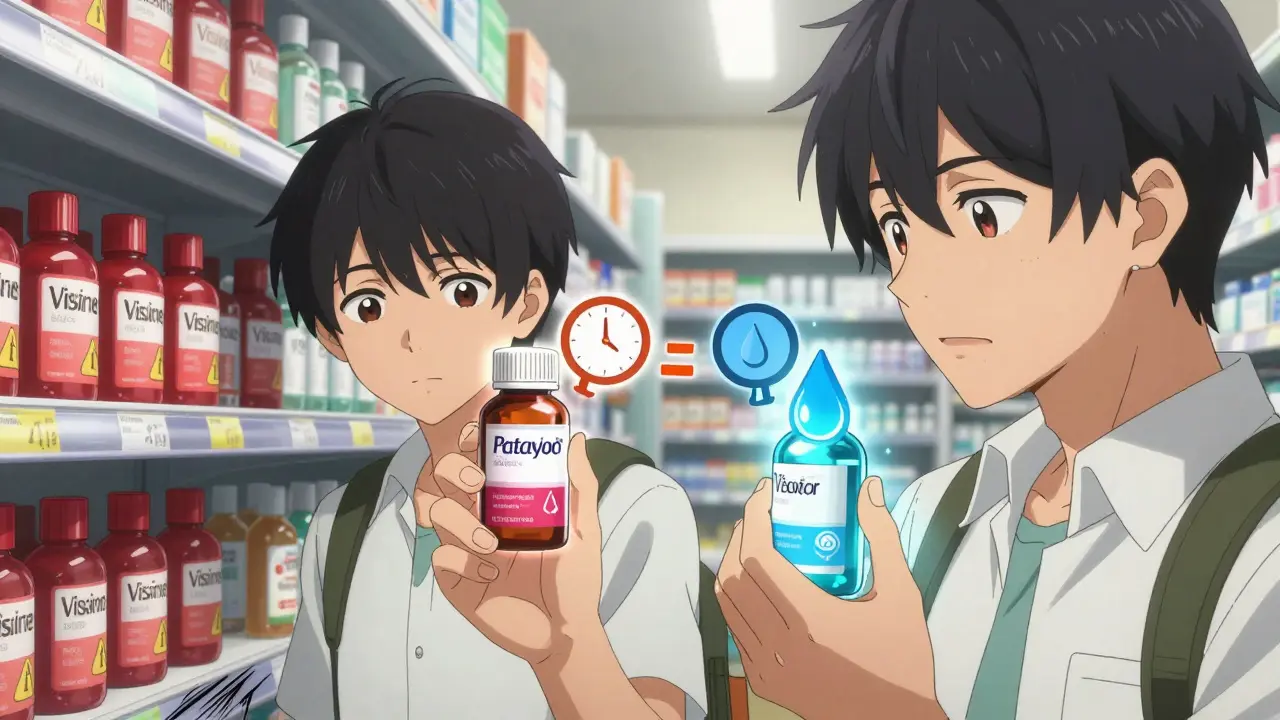
What About Decongestants and Oral Pills?
Don’t be fooled by the bright red bottles. Products like Visine-A contain decongestants (tetrahydrozoline) that shrink blood vessels to reduce redness. Sounds great - until it doesn’t. After just 3-5 days of use, your eyes can rebound with even worse redness. Studies show 65% of people who use these drops daily for over a week end up with worse symptoms than before.
Oral antihistamines like Zyrtec or Claritin help with nasal symptoms, but they’re not ideal for eyes. In fact, they can dry out your eyes - worsening the problem. A 2022 study found 40% of users experienced increased dryness and irritation after taking oral meds for allergies. If your eyes are already watering, dryness isn’t the fix.
For severe cases, doctors may prescribe steroid drops like loteprednol. But these aren’t for daily use. Long-term use can raise eye pressure or even cause cataracts. Only use them under strict medical supervision.
How to Use Eye Drops Correctly (And Why It Matters)
Even the best drop won’t work if you don’t use it right. Here’s how to do it properly:
- Wash your hands.
- Tilt your head back and look up.
- With one finger, gently pull down your lower eyelid to create a small pocket.
- Hold the bottle above your eye - don’t touch your eye or eyelid.
- Squeeze one drop into the pocket.
- Close your eye gently for 30 seconds. Press lightly on the inner corner near your nose to keep the drop from draining into your throat.
Why does this matter? 50% of people mess up the technique, which cuts effectiveness in half. Touching the bottle to your eye can also contaminate it. And if you’re using a multi-dose bottle, always replace it after 4 weeks - even if there’s liquid left. Bacteria can grow inside.
What Else Helps Beyond Drops?
Medication helps, but avoiding triggers is just as important. Try these steps:
- Wash your face and eyelids with cool water after being outside.
- Use preservative-free artificial tears 4-6 times a day to flush out allergens.
- Wear wraparound sunglasses outdoors - they block up to 50% of pollen.
- Keep windows closed during high pollen days (check your local pollen count).
- Use a HEPA filter in your bedroom.
- Change pillowcases daily during allergy season.
Some people swear by cold compresses. Placing a chilled, damp cloth over closed eyes for 10 minutes can soothe swelling and itching. One Reddit user wrote: “Pataday in the morning + cold compress at lunch - my eyes went from unbearable to manageable in 48 hours.”

When to See a Doctor
If your symptoms last more than 2 weeks despite using drops correctly, it’s time to see an eye doctor. About 20% of people who think they have allergies actually have dry eye disease, blepharitis, or another condition that mimics allergy symptoms. A simple exam can rule those out.
Also, if you’re considering long-term treatment - like allergy shots (immunotherapy) - talk to an allergist. It takes 6-12 months to start working, but after 3-5 years, 60-80% of patients see major improvement. It’s the only treatment that changes your body’s response to allergens, not just masks the symptoms.
What’s Next for Eye Allergy Treatment?
The field is evolving fast. In 2023, the FDA approved Bepreve (bepotastine), another once-daily drop that works as well as Pataday. And new tech is on the horizon: a tiny insert placed in the tear duct that releases medication for up to 3 months. Early trials show 65% symptom reduction.
Climate change is making things worse, too. Pollen counts have risen 21% globally since 1990, and experts predict eye allergies will affect 40% more people by 2035. That means better, longer-lasting treatments aren’t just nice to have - they’re becoming essential.
For now, stick with proven options: antihistamine/mast cell stabilizer drops like Pataday or Zaditor, paired with simple environmental tweaks. You don’t need to live with itchy eyes. With the right approach, relief is just a drop away.
Can eye allergies cause permanent damage?
No, allergic conjunctivitis doesn’t cause permanent eye damage. However, constant rubbing can scratch the cornea or lead to keratoconus in rare cases. The inflammation itself is temporary, but ignoring symptoms or using decongestant drops too long can make things worse. Always treat the root cause - not just the redness.
Are generic antihistamine eye drops as good as brand names?
Yes, for most people. Generic ketotifen (Alaway) works just as well as brand-name Zaditor. The active ingredient is identical. The main difference is cost - generics are often 70% cheaper. Pataday’s active ingredient (olopatadine 0.2%) is only available as a brand or prescription generic, but it’s still more effective than older generics because of its once-daily dosing and stronger formulation.
Can I use eye drops while wearing contacts?
Only if the label says it’s safe. Most antihistamine drops contain preservatives that can build up on contacts and irritate your eyes. Remove your contacts before using drops, wait 15 minutes, then reinsert them. Some newer drops - like Zaditor Plus - are formulated for contact wearers. Always check the packaging.
Why do my eyes feel worse after using Visine-A?
That’s called rebound hyperemia. Decongestants shrink blood vessels temporarily, but when they wear off, your eyes overcompensate by dilating even more. After 3-5 days of daily use, your eyes become dependent on the drop just to look normal. Stop using it immediately and switch to a proper antihistamine drop. Redness will return to normal in a few days.
Do antihistamine eye drops make you drowsy?
No, not like oral antihistamines. Eye drops deliver the medicine directly to your eyes, so very little enters your bloodstream. You won’t feel sleepy. That’s one reason they’re preferred over pills for eye allergy relief.
Next Steps: What to Do Today
Don’t wait for symptoms to get worse. Here’s your simple action plan:
- Stop using decongestant drops like Visine-A immediately.
- Start using a second-generation antihistamine/mast cell stabilizer drop - Zaditor for budget, Pataday for long-lasting relief.
- Wash your face after being outside and use preservative-free artificial tears 4 times a day.
- Wear sunglasses outdoors, even on cloudy days.
- If symptoms don’t improve in 7-10 days, schedule an eye exam.
Eye allergies are common, treatable, and manageable. You don’t have to live with itchy, red eyes. With the right drops and habits, you can reclaim your comfort - and your vision.



About Author



so like... i used visine-a for 3 weeks. now my eyes look like they’ve been through a sandstorm. thanks, big pharma. 🙃
The pharmacokinetic profile of second-generation antihistamine/mast cell stabilizers demonstrates significantly higher ocular bioavailability and prolonged receptor occupancy, making them clinically superior to first-gen agents. The 70-85% reduction in itching scores is statistically significant (p<0.01).
This whole post is just a Pataday ad. You didn't mention how much these cost. $43 for a bottle that lasts 3 weeks? That's robbery. And don't even get me started on how many people use these drops wrong. Half the time they're just squirting it into their eyeball like a water gun.
In India, we call this 'gulaab jal' season. My grandma used to wash eyes with rose water. Now I use Zaditor. Both work. But the bottle doesn't cost a month's salary. 😊
Ah yes, the noble quest for ocular relief. One mustn't forget that the true aristocrat of eye drops is not Pataday, but the elusive, artisanal, cold-pressed, organic, single-use, hand-squeezed, Himalayan spring water-infused drops... sold only by a monk in Nepal who chants mantras while filling the vial. But alas, we are mere mortals, and must settle for Ketotifen. How tragic.
The data is solid but the formatting is garbage. Why is the table rendered as HTML in a markdown post? And why is the meta-analysis citation just "2023"? No DOI? No journal? This reads like a sponsored blog draft.
I used to think eye allergies were just a vibe. Turns out they’re a full-blown immune system glitch. I tried everything - cold tea bags, rubbing with my sleeve, even just crying it out. Then I found Zaditor. Life changed. Also, don’t touch your eyes. Seriously. Your fingers are basically bacterial disco balls.
I love how you mentioned HEPA filters! 🌬️✨ My mom in Delhi uses one with a humidifier - her eyes haven’t flared up in 2 years. Also, wash your pillowcases daily. I know it sounds extra, but your pillow is basically a pollen buffet. 🛏️🙈
So you say Pataday works great but you don't mention the fact that it's a prescription only in some states? And you totally skipped over how many people get rebound redness from Zaditor if they use it too much? And why are you so obsessed with the cost? Are you trying to sell these drops? I'm not dumb. I know this is a marketing piece. You're not fooling anyone.
I just wanna say... I cried when I switched to Pataday. Not from pain. From relief. My eyes haven’t felt this calm since 2019. 🥹🌸 Also, cold compresses are magic. I keep mine in the freezer with a little lavender oil. It’s like a spa day for my eyeballs. 💆♀️
I’ve been using these drops for 5 years. I’ve tried everything. You think this is about allergies? It’s not. It’s about how your body is screaming at you that you’re living wrong. You’re eating sugar. You’re sleeping 5 hours. You’re not drinking water. The drops are just a bandaid on a bullet wound. And you’re all just here buying more bandages. Wake up.
Zaditor works fine. Don't overthink it. Wash your face. Stop touching your eyes. Done.
This was so helpful! I’ve been using Visine for years and had no idea it was making things worse 😅 I just switched to Zaditor and already feel better. Also, the pillowcase tip? Game changer. I’m washing mine every other day now 🙌✨